Joan’s Apple Crumble

JoanWe all know that children need good role models. But do we ever stop growing up? I think adults also need older friends to look up to and think “That’s how I want to be when I’m that age”. Such friends are a rare commodity and to be treasured.
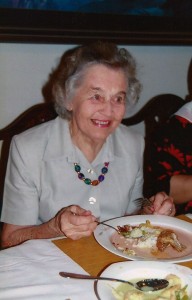
When I married and moved to Canberra I left my friends and family in Europe. Fortunately a lovely lady called Joan Tyrrel, thirty years my senior, took me under her wing. She became my surrogate mother, friend and confidante.

As our family grew Joan and her husband John became an extra set of grandparents for our kids and godparents to our daughter. John had taught Matthew English at Canberra Grammar School where he was also the Chaplin for many years. The Tyrrels had three married children of their own and grandchildren. But they had enough love to go around and we were the fortunate beneficiaries.

When I rang and asked if it was okay to call in for coffee or lunch Joan never said sorry I’m busy, or it’s not convenient. She led a very full life – one of the secrets to longevity – but she always had time for me. Our shared love of cooking meant we often talked about food and swapped recipes, home grown vegetables, jars of home-made jam and chutney. People of all ages enjoyed Joan’s company because she was interested in what they were doing. With such a positive and vibrant personality, she never seemed old. I remember once asking John how he was. “I’m very well thank you” he replied, “Joan says I’m not allowed to say anything else”. We all laughed, but it was so like her.

Having grown up during the War Joan hated waste. When she switched on her dishwasher there wasn’t room for another spoon or fork. And she always cut the Finish tablets in half, swearing that half did just as good a job as a whole one.

Joan died in February 2011 aged 88, after a short battle with cancer and John followed about a year later of old age and because he was completely lost without Joan. They were very much a team and I miss them both, but mostly I miss my special friend and mentor. Her last words to me were “We had such fun together, didn’t we?”

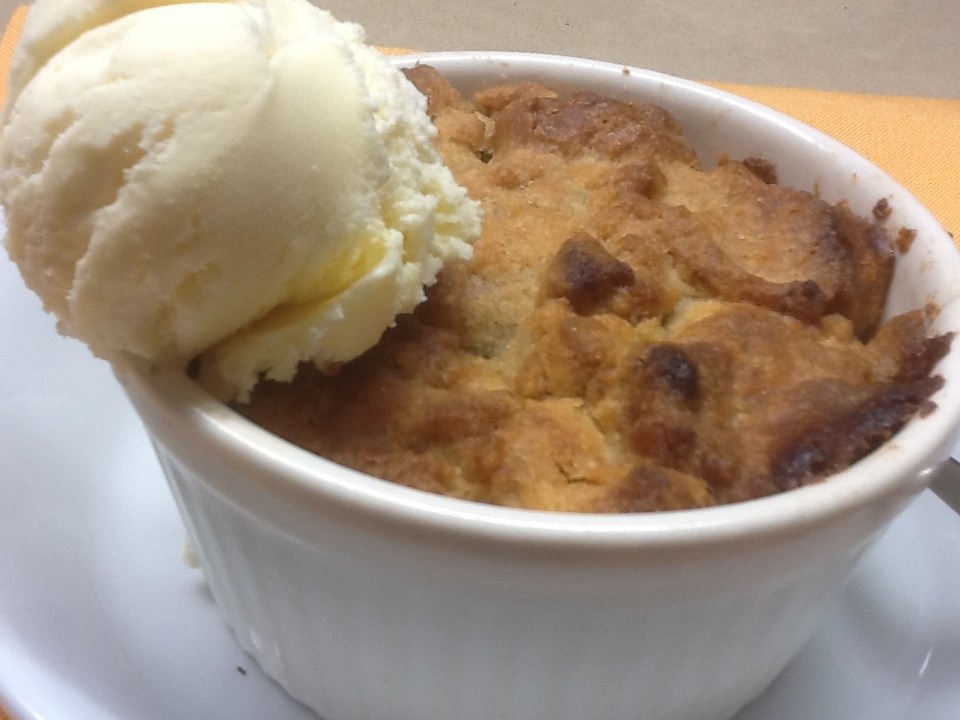
Joan’s recipe for a quick and delicious apple crumble is different because she always left the skin on the apples and melted the butter for the topping.

Joan's Apple Crumble5 apples
1-2 Tbs sugar, to taste (Joan always used raw sugar)
Topping:
125g butter
½ cup brown sugar
1 tsp cinnamon
1 cup plain flour

Preheat oven to 180°C. Core and slice apples and arrange in a buttered pie dish or in 6 individual ramekins. Sprinkle with sugar.

Melt butter, add sugar and cinnamon. Lastly add flour and crumble between fingers. Sprinkle over the apples, then bake at for 30-40 minutes, or until golden brown and bubbly. Serve with cream or vanilla ice cream.

Once cooked the individual apple crumbles will keep in the fridge for 5-6 days, covered. Just zap in the microwave for a minute, top with some ice cream and serve for an instant mid-week dessert.

Serves 6

Home-made Pizza

A proper Italian pizza has a thin, crispy crust and minimal topping. Nothing remotely like the thick, soggy versions sold in many fast food chains. The Associazione Verace Pizza Napoletana says that when cooked a pizza base should be no more than 4mm thick at the centre, though it will be thicker around the edges. And they should know, they invented them.

Home-made pizzaWhen our kids were growing up pizza featured regularly on the menu. The pizza delivery motorbikes never came to our house because my view is that anything home-made is better than the bought version, not to mention cheaper. At the time our offspring thought they were deprived, but now they have their own families and also make their own.

For a larger group make 3-4 times the recipe and form the dough into balls. Have the toppings ready in small dishes and let people choose their own. With a salad and a bottle or two of vino you’re all set for a casual meal which appeals to all ages.

Home-made pizza15g fresh yeast or 7g dry yeast
1 tsp sugar
½ tsp salt
2 cups plain flour (preferably 00)
1 Tbs olive oil
½ to ¾ cup warm water

Mix ½ cup warm water with yeast and sugar. Leave for 10 minutes. Sift flour and salt into a bowl, add oregano, oil and yeast mixture. Mix well, adding more warm water until you have a firm, not sticky, dough. If preferred make in a food processor or in a mixer with a dough hook.

Turn dough onto a floured surface and knead for a couple of minutes until smooth and springy. Form into a ball, place in a lightly oiled bowl and turn to coat with oil. Cover and leave at room temperature for an hour, or until doubled in size. Alternatively, cover and refrigerate overnight to prove more slowly.

Preheat oven to its highest temperature. If using, put pizza stone in the oven to get really hot. Knead dough lightly and form into a ball (or two balls) and leave, covered with a tea towel for about 20 mins or until doubled in size.

To assemble pizzas place a ball of dough on a lightly oiled pizza pan and press out to size using oiled fingers, working from the middle out. If using a pre-heated pizza stone, or a wood-fired pizza oven, press dough out into a large round on a well-floured pizza paddle.

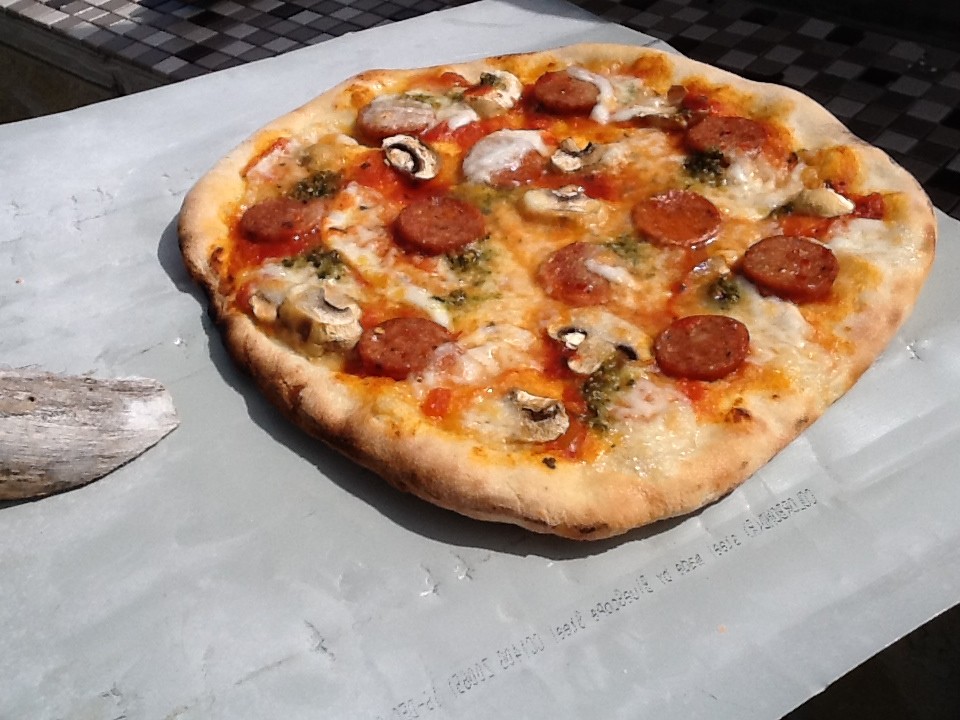
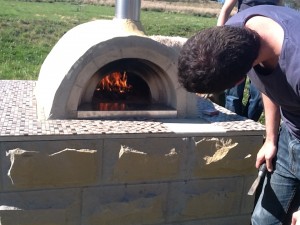
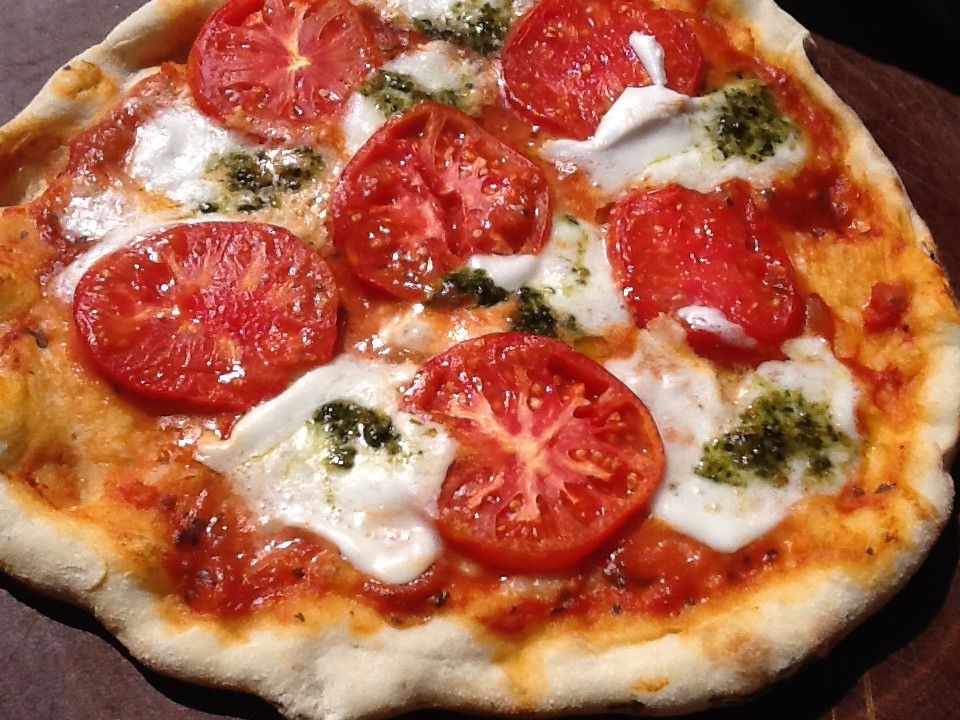
Home-made pizzaArrange toppings on pizza – be sparing – less is more. Slide onto stone if using one and bake for about 5 minutes or until golden and crispy. Time will vary depending on your oven. Our outdoor wood-fired oven shown in the photo heats up to over 400°C, so pizzas only take about 3 minutes. In an ordinary oven they can take up to 12 minutes. Keep an eye on it.

Makes one very large or two medium photopizzas

Topping suggestions:

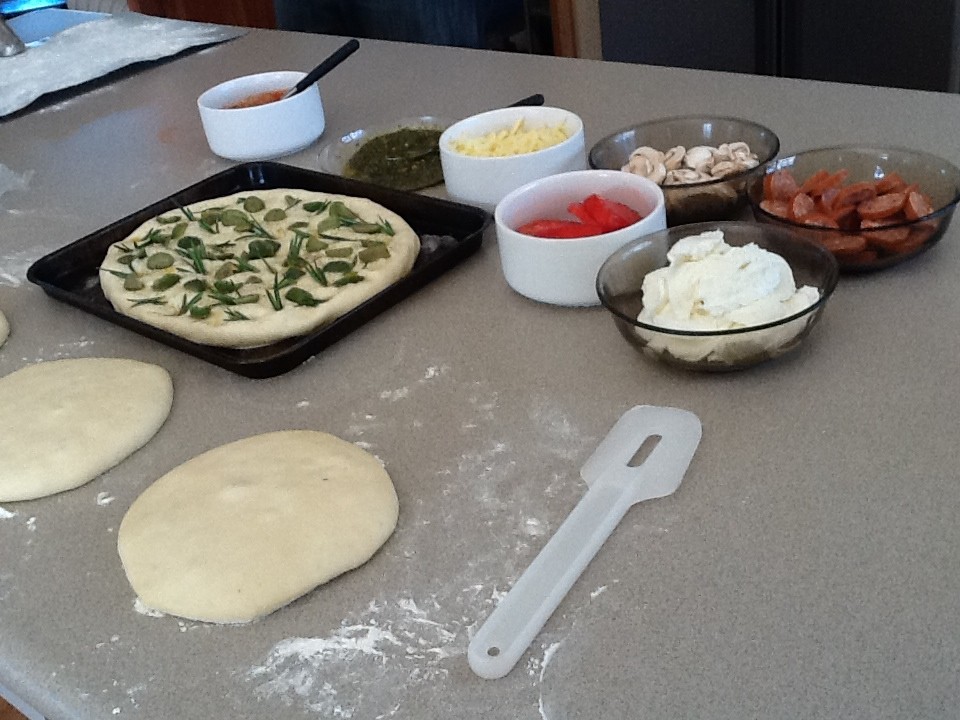
  • Tomato sugo (sold in jars to go with pasta) with thinly sliced mushroom, sliced pepperoni or chorizo and grated mozarella
  • Pesto with sliced fresh buffalo mozarella and sliced fresh tomatoes
  • Pesto, peeled prawns, grated mozarella and pine nuts
  • Additional toppings: stoned olives, anchovies, sun-dried tomatoes, caramelized onions, extra oil, fresh herbs

Dream Bars

This recipe first appeared in the Australian Women’s Weekly Big Book of Beautiful Biscuits when it was published in 1982. I’ve been making it ever since and it’s always popular.

The original recipe uses 2 cups fruit mince (mincemeat) but I use a cup of dried fruit and a cup of jam instead. It’s great for using up all those bits of jam and marmalade at the bottom of jars – something my family say I’m famous for. It’s always a great achievement when you can find things in the fridge which need using up and turn them into something finger lickin’ good.

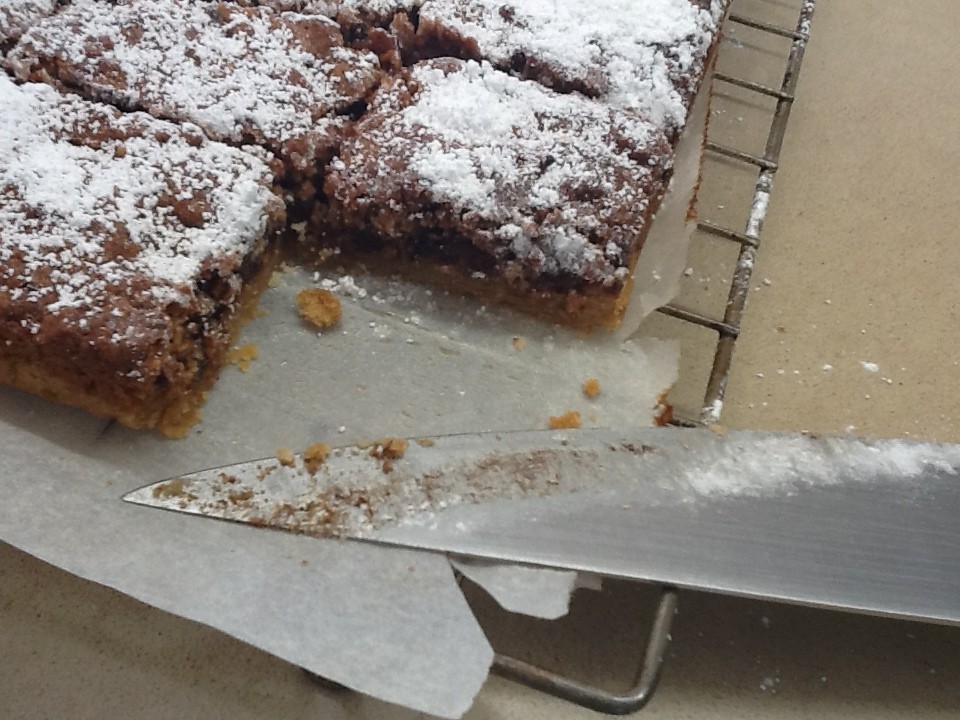
When I returned to take the photo someone, who shall remain nameless and blamed the dog, had already eaten a piece.

photo

Base:
180g butter at room temp
2/3 cup brown sugar, lightly packed
2 cups plain flour
Topping:
4 eggs
1 cup brown sugar, firmly packed
2 tsp vanilla essence
2 Tbs Plain flour
1 tsp Baking Powder
3 cups dessicated coconut
1 cup jam (any flavour)
1 cup dried fruit

Preheat oven to 180°C. Process butter and sugar in food processor until creamy. Add sifted flour and mix until you have crumbs which are starting to stick together. Press mixture into a greased Swiss Roll tin or slice tin (mine is 35x25cm) lined with baking paper. It doesn’t have to look very smooth but it does need to be evenly spread to cover the base. Bake for 10 mins or until golden.

Process eggs, sugar and vanilla in food processor. Add coconut, jam and fruit and process just enough to mix. Spread topping over the cooked base, bake for 25-30 mins or until firm and golden brown. Cool, dust with sifted icing sugar and cut into squares.

Variation: Frangipane Bars: make the base as above. When cooked, spread with about a cup or so of raspberry jam or lemon curd. For the filling mix 125g butter, softened, with 1 cup caster sugar in food processor until light and fluffy. Add 4 eggs, ¼ cup plain flour, 3 cups almond meal (or another ground nut) and a tsp of vanilla or almond essence. Spread evenly over the base, sprinkle with flaked almonds and bake for 25-30 mins or until firm and golden brown.

Staples Special

Major and Mrs H.W. Staples, and their four children - Pat, Edwin, Margaret and Daphne outside their home, Dragona, shortly after their arrival on Malta in January 1939.

Major and Mrs H.W. Staples and their five children – Patrick, Edwin, Margaret, Daphne and Joan outside their home, Dragona, shortly after their arrival in Malta in January 1939.

My grandfather, Herbert William Staples, was posted to Malta from the UK in January 1939 with the Royal Engineers. When War broke out later that year he was offered the chance to leave with his wife and five children, aged between 10 and 14. But leaving by ship was risky, with many being bombed and sunk, so they opted to stay. My mother Margaret was almost 10 at the time and spent the next 6 years on the island with her younger twin sisters Joan and Daphne and two older brothers, Patrick and Edwin. At the end of the War she received a medal for never having missed a day of school, despite periods of heavy bombing when she had to get there via air raid shelters.

More bombs fell on this little island of just 121 square miles than fell on London during the Blitz. The Germans wanted to capture it for strategic reasons, due to its proximity to Axis shipping lanes. But they didn’t succeed and at the end of the War Malta was awarded the George Cross for bravery.

Feeding a family of seven was a constant challenge for my Irish grandmother Hilda Mary. Strict rationing allowed just one slice of bread per person per day. My mother remembers her brothers asking if they could have another slice and my grandmother giving them hers, half each. Nana Staples was skin and bone at the end of the War, but she made up for it afterwards! There were no cattle on the island, which meant no dairy industry. Sometimes the Quartermaster would issue a few cans of food to each British family. My mother still likes tinned peaches served with evaporated milk, for nostalgic reasons. While onions and tomatoes were easy to grow and Mediterranean fruit such as figs, grapes and pomegranates were plentiful in season, food-wise life was tough.

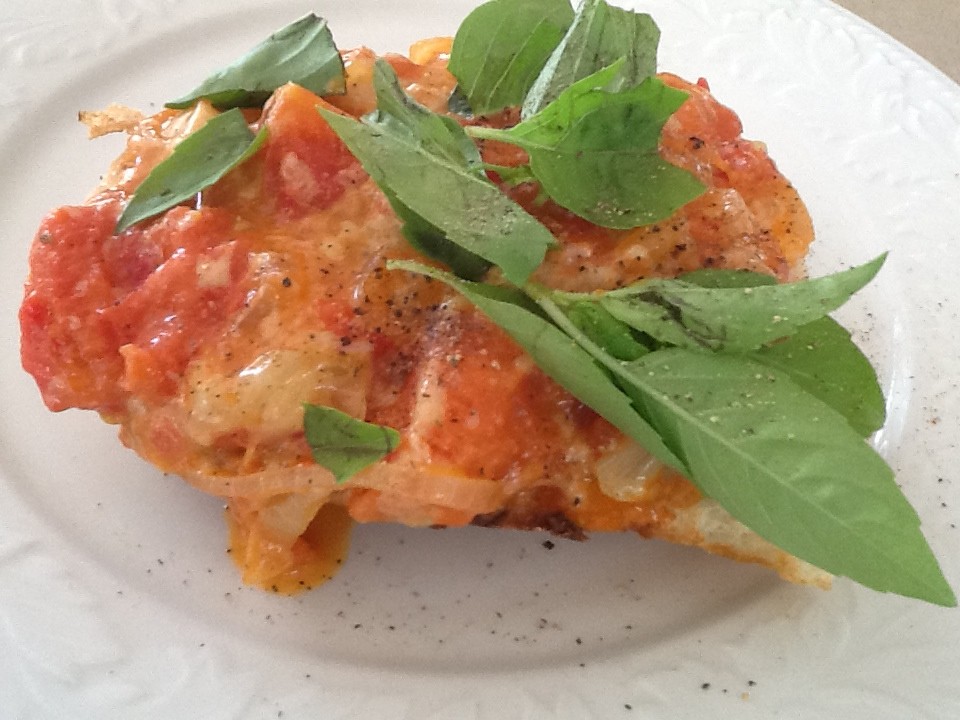
My Uncle Pat was a very good diver and could hold his breath for a long time. One day he heard that a ship had been sunk in the bay so he dived down and inside the wreck he found a whole cheddar cheese, weighing about 10 kilos. He wrapped it in his towel and staggered home, triumphant. My grandmother was thrilled and as she had tomatoes and onions in the garden she invented Staples Special with what she had available.

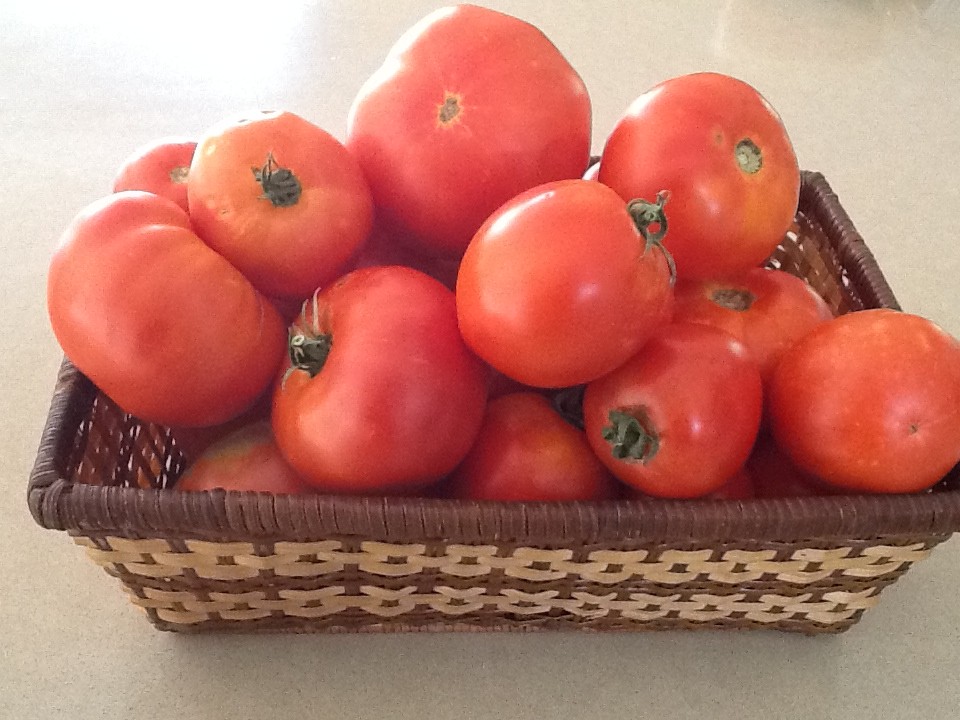
Home grown tomatoes

Fortunately I’ve never known what it is to go hungry or be unable to buy enough food for my family. But I still make Staples Special because it’s so delicious and makes a perfect Saturday lunch or Sunday evening supper. It’s important to use vine-ripened tomatoes from the garden or local market. Those tasteless ones you buy in supermarkets during winter just won’t work in this recipe. The same goes for the toast – the better the bread, the better the toast.

My Dad was a nurseryman and for many years his main crop was tomatoes, grown under glass in Kent, in south-east England. All my tomato-growing knowledge came from him and I think he would be proud of this year’s crop from our Canberra garden. To be honest Matthew does all the work, but I do cook the produce. One cardinal rule I learnt from my Dad and that’s never, ever store tomatoes in the fridge.

1 large onion, halved and slicedStaples Special
2 Tbs olive oil
500-600g ripe tomatoes, skinned and roughly chopped
1 tsp sugar
salt and freshly ground black pepper to taste
3 cups grated cheddar cheese
6 large slices buttered toast (Turkish bread is nice)
Basil leaves, torn up (optional)

Heat oil in a large frying pan and cook onion, stirring, over moderate heat, until soft but not brown. Add tomatoes and continue to cook for a few minutes, stirring. Tomatoes should be semi-cooked and still chunky. Add sugar and season to taste. Add cheese and when just melted serve on toast garnished with basil.

Serves 4

Beef and Polenta Pies

Last weekend we had lunch at The Old Cheese Factory at Reidsdale.  There was a cool wind, but we sat outside because we had two dogs with us.  Matthew had a nice time talking to the owners Robert and his son Gary about growing apples, asparagus and other gardening stuff. They make their own cider, ginger beer, apple juice, elderberry wine, elderflower sparkling wine and other beverages.  We tasted most of the above and found them all delicious.  The cider is dry, just the way I like it. The Old Cheese Factory serves simple lunches at weekends (best to book) and they also run bread-making, cheese-making and sausage-making classes taught by local artisans from Braidwood.

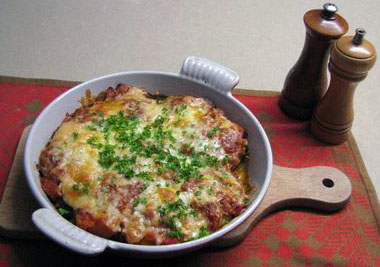
Matthew and I had the Ploughman’s lunch with a glass of apple cider.  Catherine more sensibly chose a hot dish, described as a beef and eggplant pie with red wine and polenta and a glass of apple juice.  She said the pie was delicious – a variation on a shepherd’s pie.  I decided to make something similar using mushrooms instead of eggplants and the result made a tasty family meal.

Beef and Polenta Pies

Beef filling:
1 Tbs olive oil
1 large onion, chopped
2 cloves garlic, crushed
250g mushrooms
500g lean minced beef
1 Tbs tomato paste
1 tsp sugar
1/4 cup sherry or red wine
1 beef stock cube
2 tsp dried mixed herbs or oregano
1 tsp ground cumin
1 cup water
Extra half cup of water mixed with 3 tsp cornflour
salt and freshly ground pepper to taste
Polenta topping:
2 cups milk
1 cup water
3/4 tsp salt or garlic salt
1 cup instant polenta
1/4 cup grated Parmesan cheese
2 Tbs butter
1 egg, beaten
1/4 cup grated Parmesan, extra

Heat oil in a large frying pan.  Cook onion and garlic over a moderate heat until softened but not browned.  Wipe mushrooms and cut in halves or chunky slices – you don’t want them to get lost in the filling.  Add to the pan with the mince and keep stirring for about 5 minutes or until the meat has browned a bit.  Add remaining ingredients except cornflour mixture and simmer for 15-20 minutes or until meat is tender.  Add cornflour mixture and stir till thickened.  Adjust seasoning – you may not need any salt if stock cube is salty.  Spray six 1 cup souffle or ramekin dishes with oil and divide filling among them.

Bring milk, water and salt to the boil in a medium saucepan.  Add polenta and stir constantly for 3-5 mins until polenta thickens and pulls away from sides of pan.  Add parmesan, butter and egg and remove from heat.

Preheat oven to 180°C. Place 2-3 Tbs of polenta on top of meat filling – whatever fits – and spread with a knife to cover completely.  You will probably have some polenta left over.  Sprinkle with extra cheese.  Place pies on a baking tray and bake for about 25 mins or until golden brown. Serve immediately with a salad or green vegetable.

Note: Unbaked pies can be stored in the fridge, loosely covered, for a day or so. For larger appetites make in four larger dishes, or if preferred use one large dish.

Serves 4-6

Chicken Parmigiano

Chicken Parmigiano is a dish I developed many years ago and have made again and again.  It’s a great family dish but also perfect for casual entertaining.  Everyone loves it.  You can make it the day before or in the morning, then refrigerate it till you need to stick it in the oven.  I usually make double the sauce and freeze half so next time it’s super quick to make.  A large mixed salad, preferably including avocado, is the perfect accompaniment, but if you have teenage sons with hollow legs, then garlic bread goes well.  If the chicken breasts are very large you can cut them in two.

4-6 single chicken breasts
About half a cup of plain flour, seasoned with salt and pepper
1 egg beaten with 1 Tbs water
dry packaged breadcrumbs
60g butter
3 Tbs oil
250g cheddar cheese, grated
60g Parmesan cheese, grated

Sauce:
1 Tbs oil
1 large onion, finely chopped
2 sticks celery, finely chopped
1 red capsicum, finely chopped
1 clove garlic, crushed
400g can tomatoes, whizzed in processor
1 Tbs finely chopped parsley
1 Tbs finely chopped fresh basil (or 1 tsp dried)
2 tsp sugar
1 Tbs tomato puree
1½ cups water and ½ chicken stock cube

Use a meat mallet to flatten out the chicken breasts a little and remove any fat.  If very large  you might like to cut into two portions. Toss in seasoned flour, dip in egg mixture then coat in breadcrumbs, patting them on firmly.  If you have time refrigerate, covered in one layer for half an hour or up to several hours. Heat oil in large frying pan. Gently cook onion, garlic, celery and pepper, all together, until soft but not coloured. Add tomatoes, sugar, tomato puree, water and herbs. Simmer 30-40 mins until thickened, but not too thick as it will cook more in the oven. Heat oil and butter in another large frying pan and cook chicken on both sides until golden brown.  Place in a buttered shallow ovenproof dish in one layer. Cover with the sauce and sprinkle with the two cheeses mixed together. Bake uncovered for 25-30 mins at 180°C or until golden. Serve with a mixed salad.

Serves 4-6