Chocolate-Espresso Self-Saucing Pudding

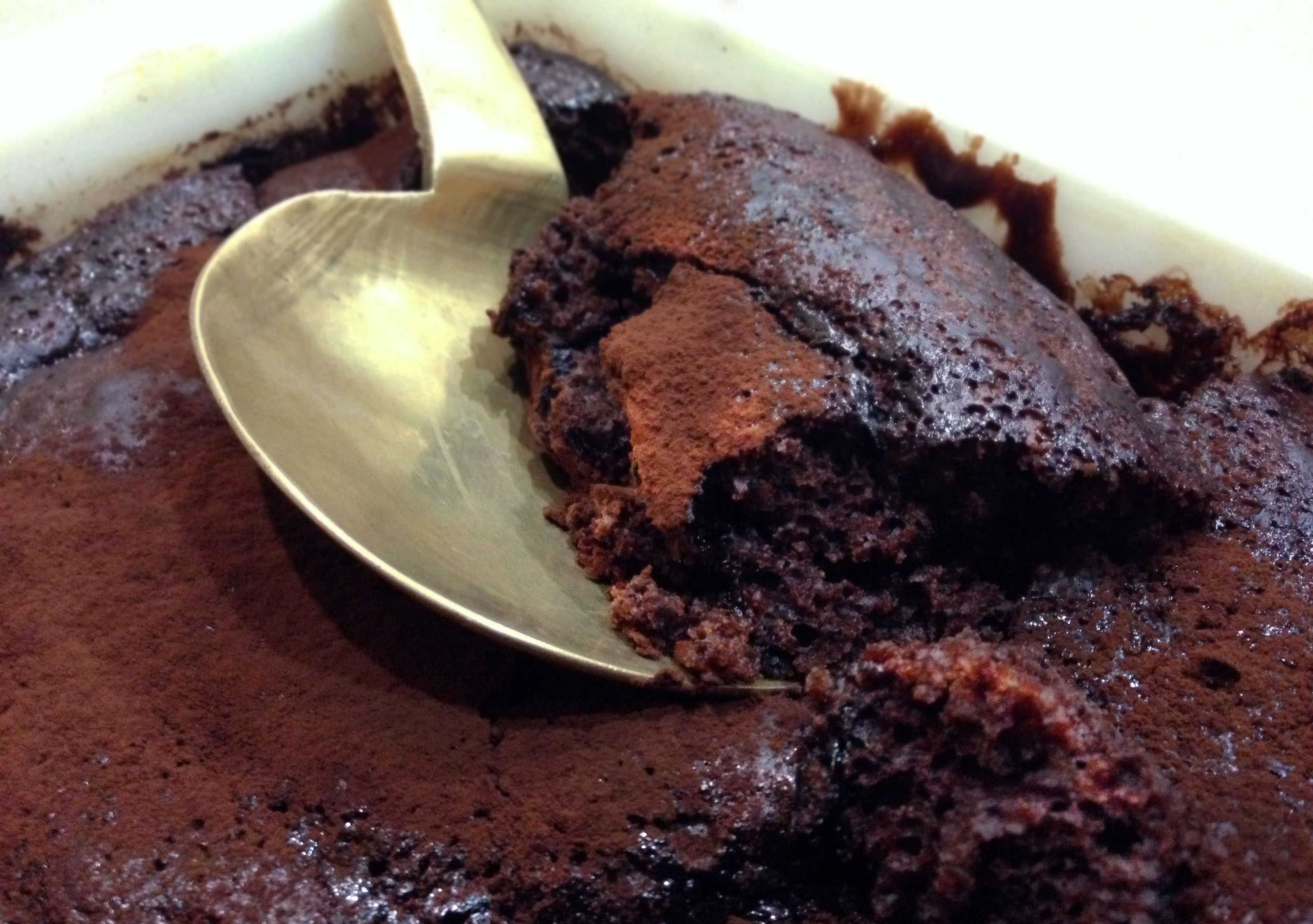
Every grandma worth her salt has a chocolate self-saucing pudding in her repertoire. They’re a cinch to make and because of the unique way the ingredients are assembled a delicious sauce forms under the pudding as it cooks.

Adding a couple of shots of espresso turns this into a more sophisticated dessert for coffee lovers. Adjust the amount of coffee to suit your taste or leave it out altogether and just use 2 cups (500ml) of boiling water. Kids will prefer it without the coffee.

Chocolate Espresso Self-Saucing Pudding

1 cup self-raising flour
½ cup caster sugar
¼ cup cocoa powder
60g unsalted butter, melted
½ cup milk
½ tsp vanilla essence
1 egg
Topping:
½ cup caster sugar
¼ cup cocoa powder
1 cup boiling water and 1 cup hot coffee (2 shots)
To serve:
Cocoa for dusting
Thick cream or vanilla ice cream

Preheat oven to 180ºC and butter a 1.5L capacity ovenproof dish such as a lasagne dish. Sift flour, sugar and cocoa into a bowl and mix. Mix melted butter with milk and vanilla and beat in the egg with a fork. Mix thoroughly into flour mixture then tip into pudding dish and spread evenly. Mix sugar and cocoa for topping and sprinkle evenly over the pudding. Mix boiling water and coffee and carefully pour evenly over the top. Bake for 30 mins or until the top is firm.

Use a sieve to lightly dust the top of the pudding with cocoa powder. Serve with cream or vanilla ice cream.

Serves 6-8

Variations: use brown sugar instead of caster sugar. Add some chocolate chips and/or chopped walnuts.

Spanish Omelette

When I was sixteen I sailed from Southampton to Bilbao to spend the Easter school holidays with a Spanish family. I had been studying Spanish several times a week for six months, but most of it was stuck somewhere at the back of my head.

The Zubia family of five lived in an apartment in Bilbao. Nobody spoke a word of English, so I had to speak Spanish to survive. Needless to say, when I returned to the UK three weeks later I had made enormous progress and have never looked back. A month of language immersion in your teens is worth a year when you’re of a more mature age.

I was intrigued by a household which bought olive oil in 4 litre cans and used it to cook absolutely everything. My mother kept a very small bottle in the medicine cabinet and used it to treat earache.

Señora Zubia taught me to make several dishes, including Spanish omelette, which I still make according to her recipe below.

Bars in Spain serve a wide selection of tapas, mostly at room temperature and displayed along the top of the bar. When something takes your fancy you just point and the barman brings you as many servings as required for your group. On leaving patrons tell the barman what they’ve had and he adds up the bill. It’s all done on honesty.

Spanish omelette is usually served at room temperature, but have it hot if you prefer.

Spanish Omelette
1 large onion
4 large potatoes or 6 medium
6 eggs
Olive oil
Salt and pepper
To serve:
Roasted red capsicums (peppers) and aioli (optional)

Peel and chop onion as finely as possible. Heat a good slug of olive oil in a medium-sized non-stick frying pan, add onion and cook gently until soft. Meanwhile peel potatoes and cut into 2cm dice. Remove onions from the pan, add more oil if necessary (there should be a generous amount), add potatoes and cook gently, turning often, until they are cooked through but not browned. Remove potatoes from the pan and put with the onions in a sieve, so excess oil drains off.

Tip off all but 2-3 Tbs of oil. If there’s not enough oil left in the pan add some that has drained from the potatoes and onion.  Place eggs in a bowl and beat with a fork. Season with salt and pepper, then mix in the potatoes and onions. Tip mixture into frying pan and spread out evenly. Cook for 8-10 minutes over moderate heat, or until set and underneath is golden. Check by lifting slightly with a spatula. Run spatula around the edge to make sure the omelette hasn’t stuck to the pan.

Place a large dinner plate over the frying pan and quickly invert so you end up with the omelette on the plate, cooked side up. Carefully slide back into the frying pan and cook the other side, which will take about 5 minutes. Serve at room temperature with roasted red peppers and aioli – for which there are plenty of recipes online, or just add some crushed garlic to mayonnaise, for a quick version. Cut into 3-4 cm squares Spanish Omelette makes great finger food, or tapas, to use the Spanish word.

Serves 4-6


Mazurek

Our Polish friend Peter was coming for dinner so I decided to make something for dessert which would remind him of his homeland. After searching online I came across Mazurek, a nutty cake, not quite as dense as shortbread, covered with chocolate icing and nuts.

There are as many recipes for Mazurek as I’ve had hot dinners, so having found a version for which I had the ingredients – essential when you don’t want to go shopping – I adjusted it slightly and came up with this.

Peter explained that Mazurek is traditionally served at Easter so my timing was perfect. He hadn’t tasted one for many years and was delighted to take home the leftovers.

Serve for afternoon tea or as dessert, with a dollop of cream. Scrumptious.

250g butter at room temperature
½ cup sugarDSCF0579
1 egg
1½ cups almond meal (see note below)
1 cup plain flour
pinch salt
¼ tsp almond essence
¼ cup cream or sour cream
Chocolate Icing:
½ cup dark chocolate chips or chocolate squares
1 Tbs corn (glucose) syrup
2 Tbs cream
2 Tbs butter
To decorate:
¼ cup flaked or slivered blanched almonds

Preheat oven to 200ºC. Grease a 9″ (22cm) square cake pan and line with non-stick baking paper. In a food processor or with electric beaters mix butter and sugar until light and fluffy. Add egg, salt and almond essence and mix well. Add flour and almond meal and mix well. Scrape into cake pan and spread out evenly. Bake for 20 mins or until light golden – don’t overcook or cake will be dry. Cool completely in tin.

Remove cake and place on a flat serving plate. Place chocolate, corn/glucose syrup, cream and butter in a small bowl over simmering water and when melted stir till smooth. Cool a little then spread icing over cake and decorate with almonds.

Serves about 16

Note: make your own almond meal by blitzing blanched or unblanched almonds in food processor until fine.

Variations: use hazelnuts, walnuts or pecans instead of almonds.


Sticky Pork Ribs with Plums

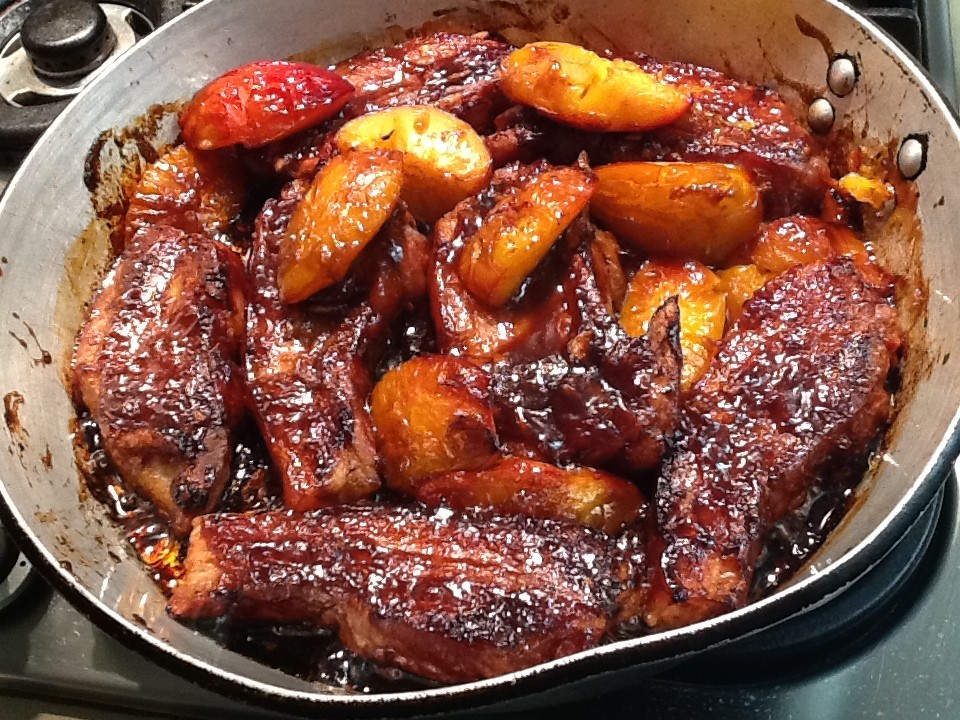
What the supermarkets here call pork spareribs are actually pork belly rashers, as they have no bones. I bought a packet and was planning to cook them with a sticky sauce. Then my Thai friend Pom gave me some plums, so I decided to throw them in towards the end of the cooking time. The result was delicious with the fruit providing just the right contrast to the richness of the meat.

Sticky Pork Ribs with Plums

8-10 pork belly rashers or spare ribs
salt and freshly ground black pepper
2 Tbs BBQ sauce, or HP sauce or Tomato Ketchup
2 Tbs oyster sauce or Sweet Chilli Sauce
1 Tbs Worcestershire sauce
1 Tbs honey or brown sugar or maple syrup
1 crushed clove garlic
2-3 tsp grated fresh ginger
About 8 plums

Preheat oven to 180°C. If liked remove rind from the pork. Leaving it on results in chewier pork, but I like it that way. Place pork in a baking pan and season on both sides. Bake for an hour to an hour and a half or until tender, turning them over about halfway through the cooking. Tip off the fat. Mix the three sauces with the honey/brown sugar or maple syrup, garlic and ginger and spread some over the pork. Add the plums, stoned and cut into quarters. Return pan to the oven for about 15 minutes then remove, turn the pork over and spread with remaining sauce. Continue to cook for a further 15 minutes or until nicely glazed and plums are cooked. Serve with steamed rice and steamed bok choy.

Serves 3-4

Variations: leave out the plums altogether if preferred, or substitute peaches or nectarines.

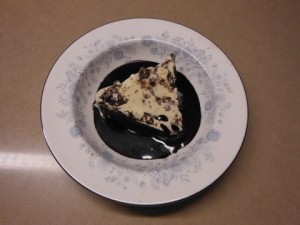
Toblerone Ice Cream Parfait with Chocolate Sauce

Woolworths was selling 400g Toblerones for half price so I bought a couple and put them in the pantry (trying to forget they were there) until I came up with inspiration for a new dessert.

By using good quality bought vanilla ice cream you can make this parfait in a jiffy. If you have time to make your own ice cream so much the better. While you could make this in an ordinary loaf shape, using a triangular tin looks snazzier, especially as Toblerones are that shape. You can buy them online.

If preferred, leave out the chocolate coating. This chocolate sauce recipe is an old family favourite. Great to have in the fridge to serve with ice cream or waffles, though one batch doesn’t last long if you have kids around, or even grown up kids!

Toblerone Ice Cream Parfait with Chocolate Sauce

2 litres good quality vanilla ice cream
1 x 400g Toblerone chocolate bar
Chocolate Coating:
200g dark or milk chocolate
2 Tbs vegetable oil
Chocolate Sauce:
½ cup sugar
½ cup water
4 Tbs cocoa
2 Tbs golden syrup
Large knob of butter
1 tsp vanilla essence

Remove ice cream from freezer and spoon into a large bowl. Leave to stand for a few minutes while you chop the Toblerone into small chunks. Not too long as you don’t want the ice cream to melt. Thoroughly mix Toblerone into ice cream. Line loaf tin (triangular or rectangular) with plastic wrap, leaving the excess hanging over the sides. Fill with ice cream mixture, pushing down and smoothing the top. Cover with the plastic wrap then freeze several hours or overnight.

Chocolate Coating: Remove parfait from freezer, tip out (you may need to hold a hot towel over the base to loosen it), peel off the plastic wrap and place on serving dish. Meanwhile melt chocolate in a bowl over simmering water and mix in the oil. Working quickly cover the parfait with melted chocolate. Put back in the freezer to set.

Chocolate Sauce: Choose a large pan because this sauce has a tendency to boil over. Place all ingredients, except butter and vanilla essence, in pan. Mix with a whisk to remove lumps, then boil for 5 minutes without stirring. Cool for 10 minutes. Stir in butter and vanilla.  Reheat before serving and serve warm not hot.

To serve: Remove parfait from freezer for about 10 minutes before serving. Slice with a large sharp knife dipped into very hot water. Serve with the chocolate sauce.

Serves 12

Note: if you can’t buy golden syrup substitute corn/glucose syrup or honey.

Sticky Chilli Chicken

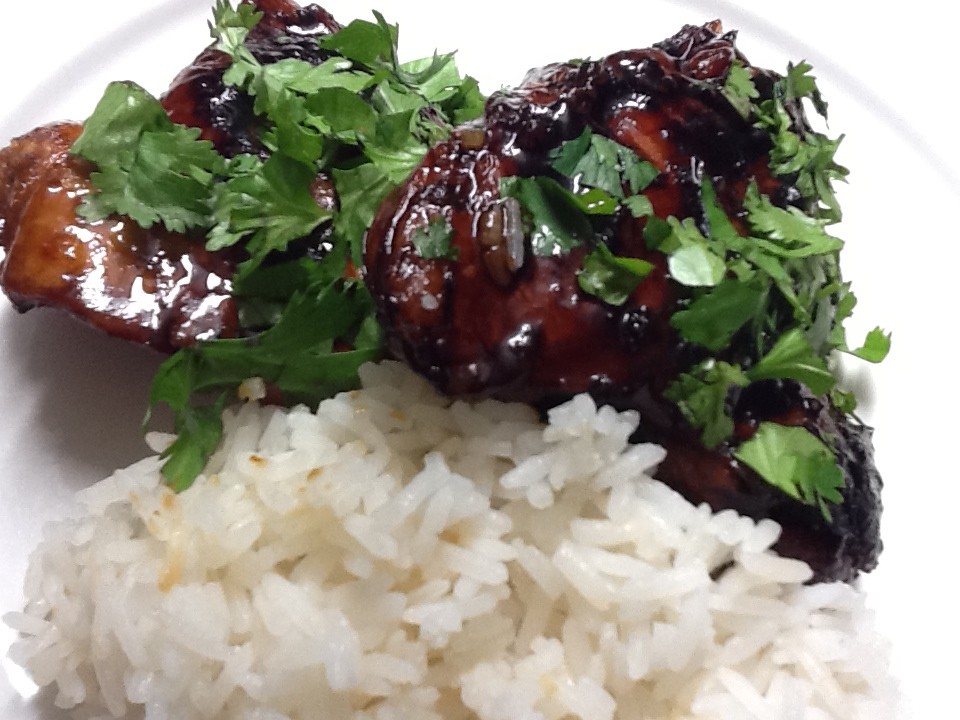
You may have noticed that Café Cat has been quiet for the past 3 weeks while I was on a business trip to Chile. This involved catching up with lots of friends – rather too many lunches, dinners and pisco sours – the Chilean national tipple. But life’s too short to avoid occasional periods of over-indulgence!

For some reason jet-lag is always better coming back from Chile to Australia than it is going. Even so, in the first few days after returning from somewhere which is 14 hours behind AEST, I am not at my most creative. So we’ve been eating quick and easy, tried and tested dishes such as this one for Sticky Chilli Chicken. The original recipe came from Donna Hay – I’ve just cut down a bit on the sugar and the soy sauce. It may sound like a lot of chillies, but the end result is not very hot. Any leftovers are nice cold.

Sticky Chilli Chicken1.5kg chicken pieces (I use thighs)
Chilli Sauce:
3 red chillies, seeded and finely chopped
1 Tbs grated ginger
2 cups water
1/3 cup soy sauce
1/3 cup sugar
½ cup vinegar
½ cup chopped coriander

Place all ingredients for sauce except the coriander in a deep frying pan which has a lid and simmer for 3 minutes. I use an old-fashioned electric frypan. Trim chicken pieces and remove skin if liked. Add chicken to pan, cover and cook for half an hour, turning from time to time. Remove lid and continue to cook for 20-25 minutes, turning chicken from time to time until the sauce has become sticky and the chicken is well coated. Watch carefully towards the end as you don’t want the sauce to completely dry up and burn. Add coriander and serve with steamed rice.

Serves 4

Pom’s Crunchy Biscuits

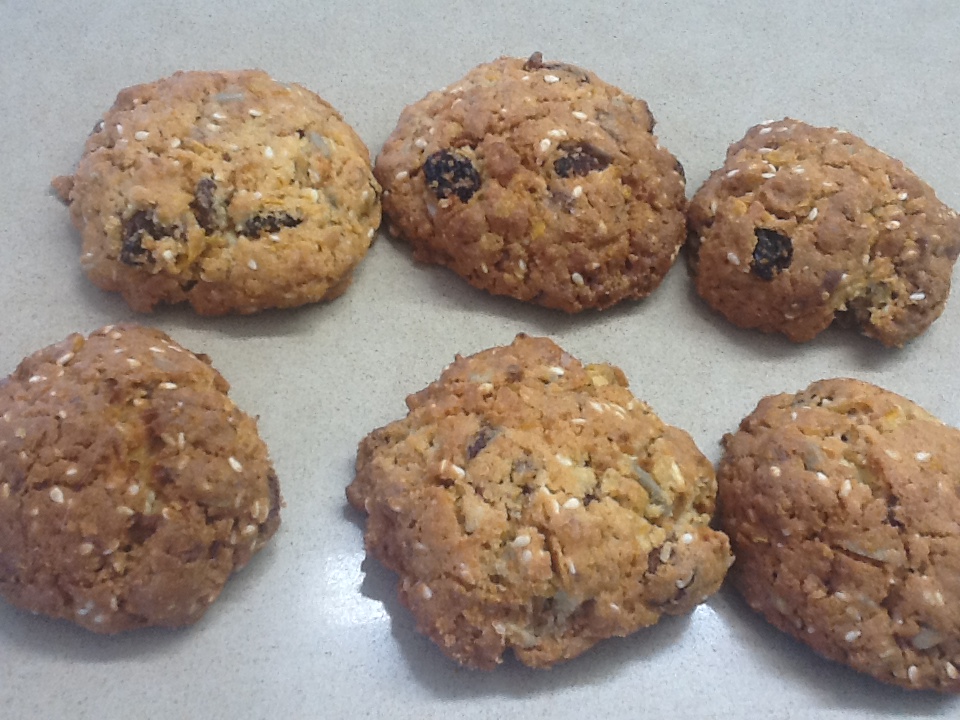
My Thai friend Pom makes these delicious crunchy biscuits. She gave me some as a gift recently, but they were so good I ate them all as I was driving home, so Matthew didn’t get any. I asked her for the recipe and decided to double the quantities because I knew that 16 biscuits wouldn’t last long.

They’re like muesli in a biscuit – healthy, satisfying, good for lunch boxes or to go with a cuppa. An Australian cup measure is 250ml or a quarter of a litre.

Pom's Crunch Biscuits4 cups cornflakes
2/3 cup sugar or honey
250g butter at room temp
2 eggs
1 tsp vanilla essence
1 cup sultanas
2 cups SR flour
½ cup sesame seeds (white or black or a mixture)
½ cup shredded or dessicated coconut
½ cup sunflower or pumpkin kernels
1 cup chocolate chips or chopped chocolate

Preheat oven to 180ºC. Place cornflakes in food processor and process briefly to break them up a bit, but not much. If you need to chop the chocolate do it now and add it to the cornflakes. Place sugar or honey and butter in food processor and mix until smooth and creamy. Add eggs and mix well, then flour and vanilla. When smooth, scrape into the bowl with the cornflakes, add remaining ingredients and mix well. Line two or three baking trays with baking paper. Form mixture into 3cm balls and arrange on trays with spaces in between. Bake for 12-15 minutes or until golden – don’t overcook or they will be dry. Cool then store in a tin with a lid.

Makes about 32

Note: the recipe is easy to halve and you can vary the ingredients to suit you taste. Add more coconut and less sultanas, use chopped nuts instead of the kernels, or leave out the chocolate and substitute something else

How to Cook Flank Steak

I recently attended the Fine Food Fair at the Sydney Convention Centre. As I was wandering round I saw a cooking demonstration about to start, grabbed a chair and sat down. The subject of the demo was how to cook cheap cuts of meat quickly, rather than by one of the slow methods we usually use with less tender cuts.

The chef was a Pom like me, so he called the cut of beef he was using skirt. Here in Australia it’s known as flank. He said there were five rules for the successful quick-cooking of flank steak:

  • use a piece of lean flank steak about 2.5cm thick
  • marinate for about 30 minutes in a mixture which includes lemon or lime juice
  • cook over high heat for 3-4 minutes each side, turning once, to achieve medium-rare
  • rest meat loosely-covered for the same amount of time as you cooked it
  • slice thinly downwards, across the grain

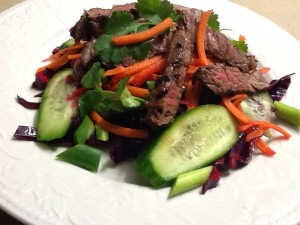
Samples were passed around and the results were impressive. The meat was tasty and surprisingly tender so I decided try it at home. At the demo they served it in bread rolls which they called Vietnamese Steak Sandwiches. We had ours on top of the salad.

You can use any combination of crunchy vegetables for the salad. I used one carrot instead of two and added one coarsely grated raw beetroot and some finely shredded red cabbage.

The marinade can also be varied with any herbs, spices or sauces that take your fancy.

1 piece of flank steak weighing 600-750g and about 2.5cm thick
Marinade:
Juice of ½ lemon or 1 lime
2 Tbs soy sauce or Worcestershire Sauce
2 Tbs fresh grated ginger or 2 cloves garlic, crushed, or bothphoto
Salt and freshly ground black pepper
Salad:
2 spring onions, finely sliced on the diagonal
½ cup fresh coriander leaves
1 cucumber, thinly sliced
2 carrots, coarsely grated
Salad Dressing:
1 clove garlic, crushed
1 tsp sugar
Pinch chilli powder (optional)
1 Tbs rice wine vinegar
1 Tbs water
Salt and pepper to taste

Combine marinade ingredients except salt and pepper, add meat, turn to cover and leave for 30 minutes, turning occasionally. At the demo they marinated it in a sealed plastic bag, but I just used a dish. Mix salad ingredients in a bowl and dressing ingredients in a jar with a lid and shake.

Preheat BBQ or griddle to very hot. Drain steak and pat dry with paper towels. Season with salt and pepper on both sides. Cook steak for 3-4 minutes each side, turning once, until medium-rare. Remove from  heat, cover loosely with a piece of foil or a saucepan lid and leave to rest for 6-8 minutes. Slice thinly downwards, across the grain. If serving in rolls, split and lightly toast them. Mix salad with dressing.

Serve beef and salad in rolls or arrange on individual plates.

Serves 4

Note: if preferred just use your regular salad dressing instead.

Deconstructed Ice Cream Sundae with Popcorn & Salted Caramel Sauce

The idea for serving an ice cream sundae with a crunchy cone stuck on top, like a hat, came from the fairly new and very popular Canberra bistro called Eightysix. The idea for making a 2 litre container of bought vanilla ice cream more exciting, by adding halva and other ingredients came from Maggie Beer. I put these two ideas together for a quick and delicious dessert. Matthew said he wasn’t very hungry and would “share” mine. But after a few mouthfuls I knew I wouldn’t be able to leave half, so I told him to get his own.

If you can’t find halva – a Middle Eastern sweet made from nuts and sugar which tastes a bit like nougat – you could chop up a couple of Crunchie bars. The fresh mint really makes a difference, helping to cut through all that sweetness. If preferred you can leave the salt out of the caramel sauce. For an even quicker version of this dessert, just use plain vanilla ice cream.

Deconstructed Ice Cream Sundae with Popcorn & Salted Caramel Sauce

Ice Cream:
2 litres bought vanilla ice cream
125g halva, chopped
2-3 Tbs finely chopped fresh mint
½ cup lightly toasted nuts (pistachios, slivered almonds or pecans)
Salted Caramel Sauce:
½ cup sugar
½ cup cream
60g butter
½ tsp salt
To serve:
1 pkt waffle ice cream cones
1 pkt caramel popcorn

Remove ice cream from the freezer and after 15 minutes scrape it into a large bowl. Add remaining ingredients and mix through. The ice cream needs to thaw just enough to allow you to mix them in but don’t let it soften too much. Put back into container and into the freezer. For the sauce, melt the sugar in a small heavy-based pan until melted and dark caramel colour. Add cream and butter and mix until smooth. Put aside and warm slightly to serve.

To serve, fill ice cream cones generously with ice cream then place upside down in serving dishes. Sprinkle a few popcorn around and drizzle with the warm caramel sauce.

Serves 6 or more

Healthy Oven-Baked KFC

Served with oven chips and coleslaw or a mixed salad this healthy version of Kentucky Fried Chicken – baked in the oven, rather than deep fried – is popular with kids. It’s not haute cuisine as you can see from the photo, just a very basic, economical family meal. It featured regularly in our house when the kids were growing up.

A salsa made from diced fresh mango or peach, red onion, fresh ginger, Thai sweet chilli sauce and chopped coriander is a nice addition for the adults. A diced avocado is an optional addition.

Healthy Oven-Baked KFC1 packet corn chips (see note below)
1 packet breadcrumbs (preferably Japanese Panko crumbs)
1 kg chicken pieces with skin
½ cup plain flour
1-2 tsp powdered chicken stock or salt or celery salt
Freshly ground black pepper to taste
3 tsp of dried herbs and spices of your choice (paprika, oregano etc)
1 egg plus 2 Tbs milk, beaten
Spray oil (olive, canola, whatever you use)

Preheat oven to 180°C. Place some of the corn chips in a food processor and process to make crumbs. Mix with the packaged breadcrumbs in a proportion of about two to one. Place about 2 cups in a shallow bowl and keep the rest in a sealed container for another time.

Mix flour with salt, pepper, herbs and spices in another shallow bowl. Be generous with the chicken stock powder or salt – it needs it. Mix the beaten egg and milk in a third bowl. Coat chicken pieces with seasoned flour, then with beaten egg and lastly with the crumb mixture, patting it on well. Place chicken on a baking try lined with non-stick baking paper – not necessary but saves on washing up. Spray chicken lightly with oil. Bake for about about 45 mins, turning once and spraying the other side with oil about halfway through. The chicken is ready when it’s golden brown and cooked through – test with a sharp knife.

Serves 4-6

Note: if you don’t have corn chips substitute cornflakes.

Oven Chips: cut potatoes into thick chunky chips and cook in boiling salted water for 8-10 minutes or until half-cooked. Drain and pat dry with paper towels. Place in a bowl with a small slug of olive oil, mix to coat, then add a shake of plain flour and turn again to coat. Arrange chips in a single layer on a tray lined with baking paper, sprinkle with coarse salt and bake for 45 minutes on the shelf above the chicken, or until golden brown. The flour is optional but gives the chips a nice crunchy coating.