Mango Cheesecake

Looking for a dessert to serve on New Year’s Eve or New Year’s Day that can be made ahead, doesn’t involve turning on the oven and uses seasonal fruit? This recipe meets all the criteria.

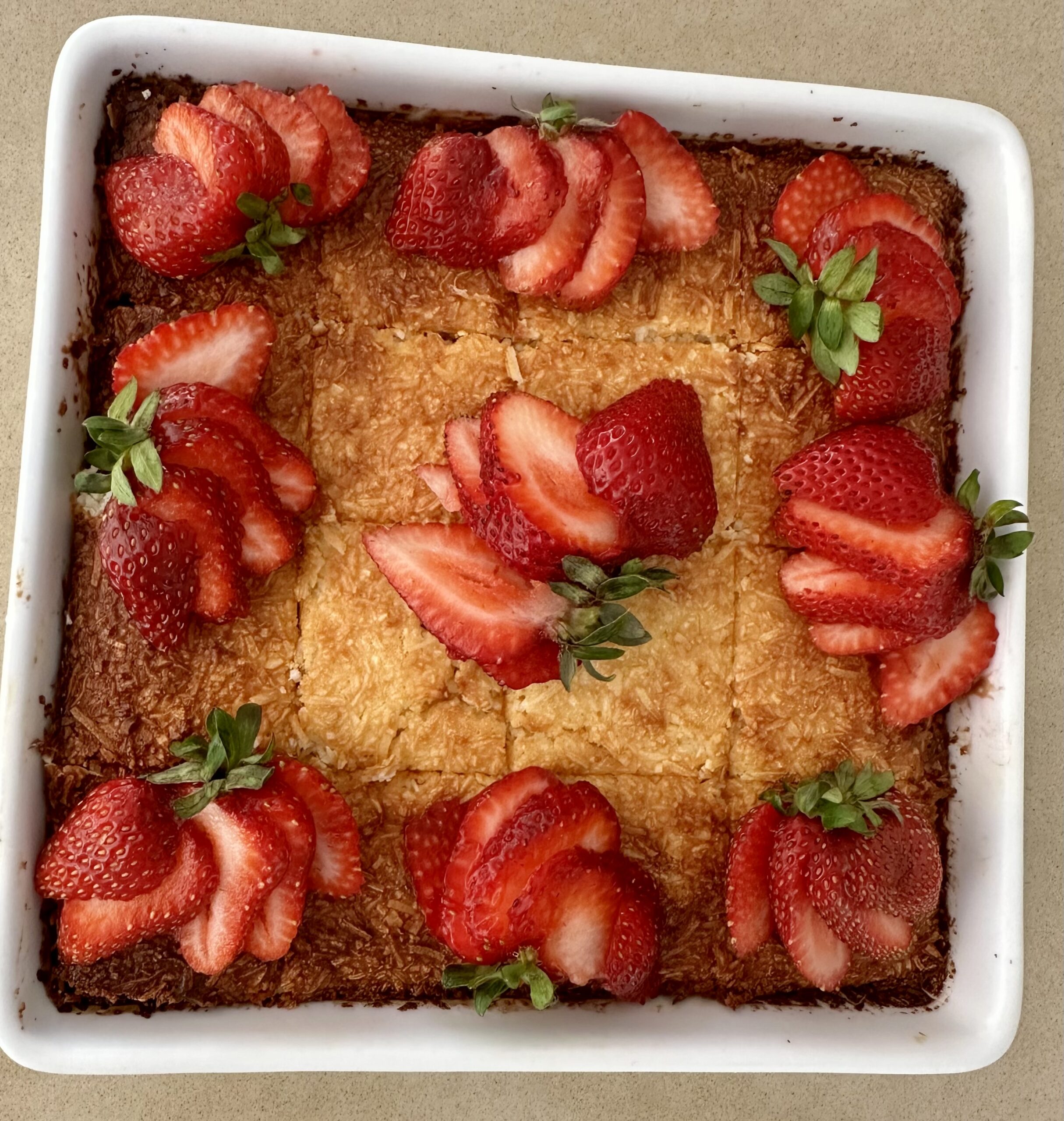
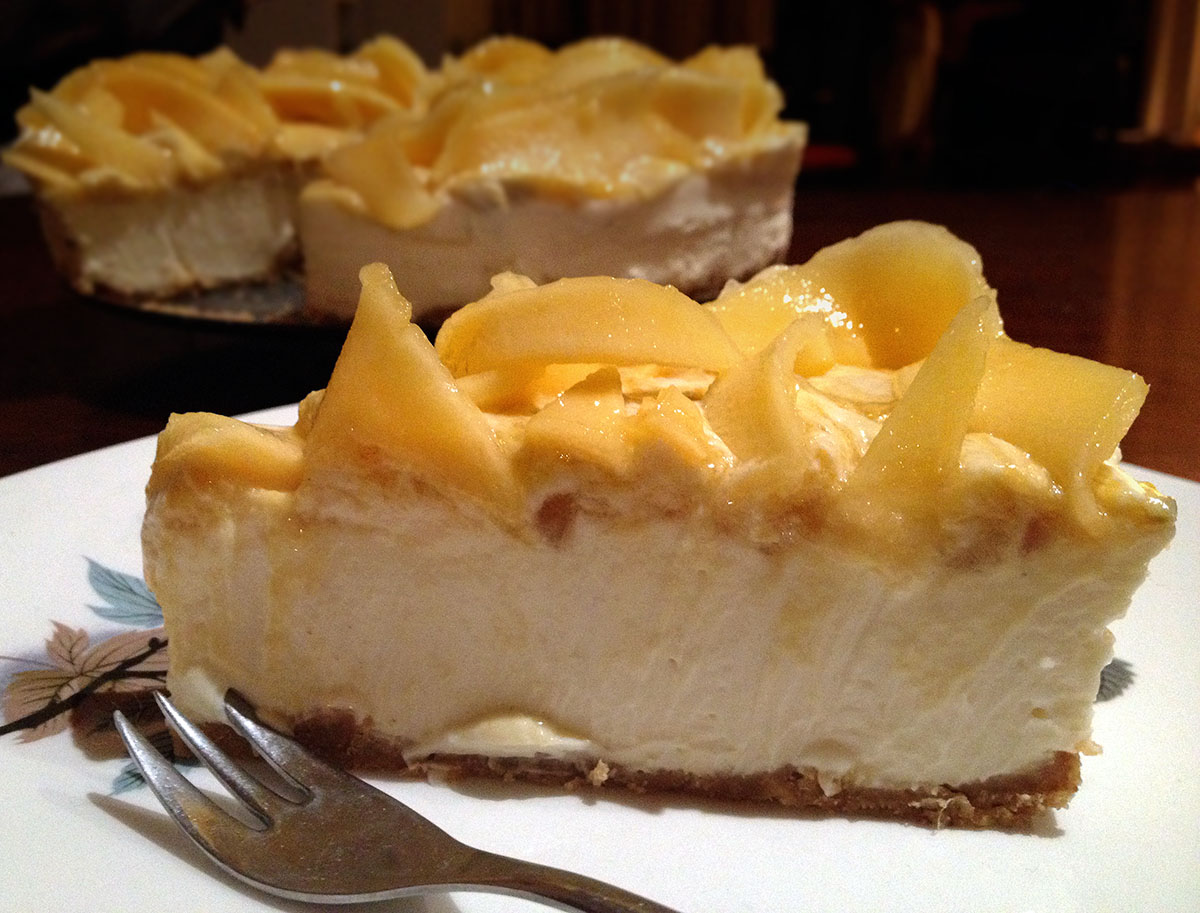
Mangoes are at their cheapest and best in Australia at this time of year. Choose ones which are not over-ripe as they’re easier to slice thinly and curve for the decoration. If you’re in the northern hemisphere the recipe can be adapted to use strawberries or perhaps tinned peaches instead of mangoes.

To enhance the flavour of the mango and provide colour contrast, serve each slice with some fresh passionfruit pulp spooned over (not shown in photo). Or maybe instead of passionfruit serve the cheesecake with some raspberry coulis spooned over.

Mango Cheesecake

200g fresh mango flesh, puréed in food processor
¼ cup glucose syrup (also known as Corn Syrup)
1¼ cups plain sweet biscuits made into crumbs in food processor
75g butter, melted
500g cream cheese at room temperature
¾ cup sugar
1 Tbs grated lemon rind
2 tsp gelatine dissolved in
¼ cup boiling water, cooled
220g white chocolate, melted and cooled
1 cup cream, softly whipped
To serve:
2 mangoes extra, thinly sliced

Pulp from 2 passionfruit (optional)
Thick cream to serve

Place mango purée in a saucepan with glucose syrup. Cook, stirring over a medium heat for 15 minutes or until thickened and reduced by half. Set aside to cool.

Combine biscuit crumbs and butter and press evenly over the base of a 20-22 cm springform pan. In food processor or by hand beat cream cheese, sugar and lemon rind until smooth. Mix in gelatine mixture and melted chocolate, then fold in the whipped cream. Pour filling over biscuit base. Spoon over mango mixture and swirl through the white mixture using the tip of a knife, smoothing the top. Refrigerate 3 hours or overnight.

Serve decorated with fresh mango slices and, if liked, some passionfruit pulp. Serve thick pouring cream separately.

Serves 12

Variations: use peaches, apricots or berries instead of the mangoes. Pulp in the filling and sliced fruit or whole berries to decorate. For a Ginger Mango Cheesecake use ginger nut biscuits for the crust and mix 2-3 Tbs finely chopped crystallised ginger into the filling.

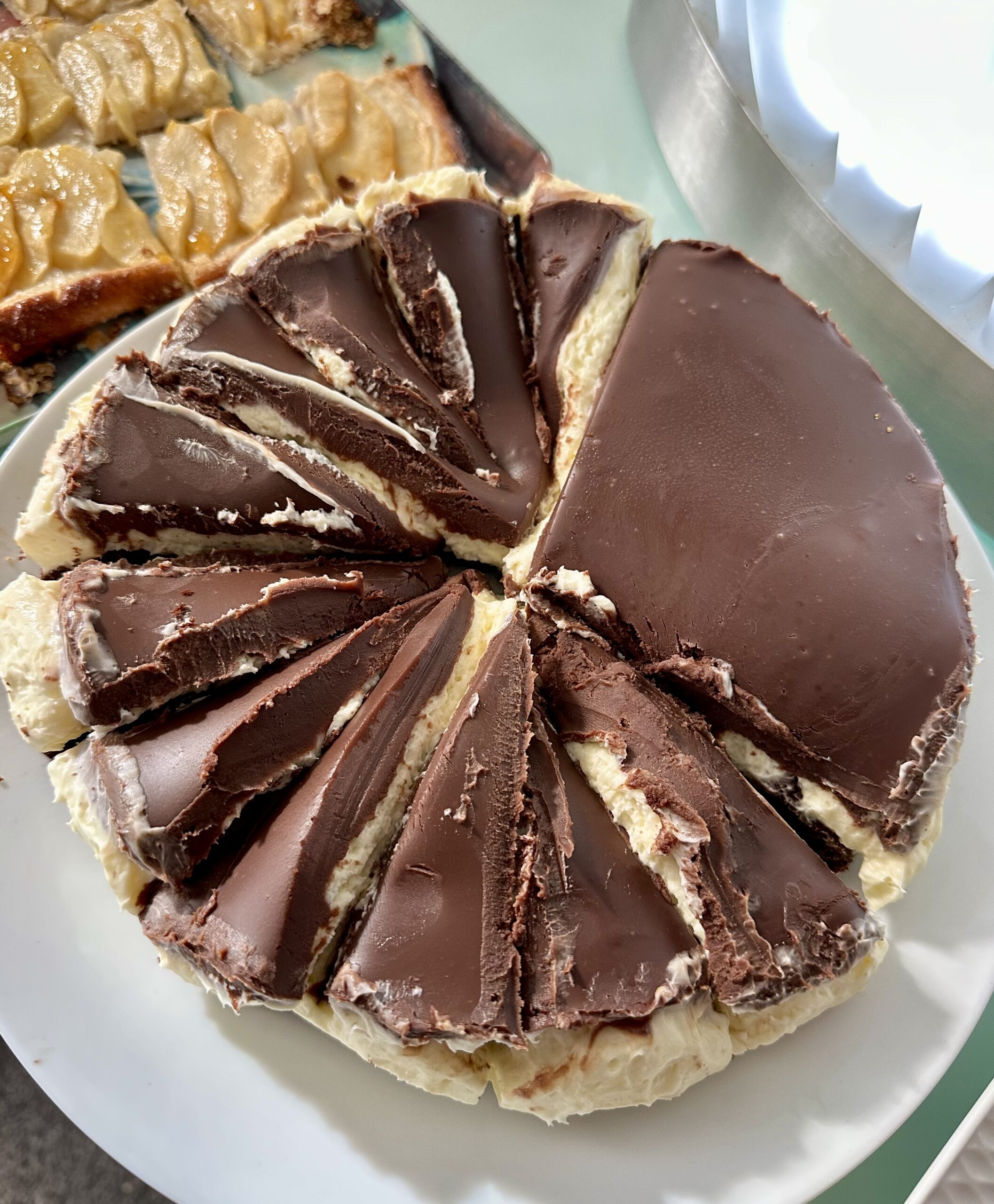
Big Mary’s Mexican Bombe

This recipe was given to me by one of my father’s first cousins from the Hutchinson family who live near Barnard Castle in the north of England. Big Mary was nicknamed to distinguish her from Little Mary, wife of one of her brothers, who was much shorter.

This dessert is one I serve for special occasions when I  need a wow factor. It’s always a winner. If you make it over the holiday season please comment and post a photo.

The longer you leave the Bombe in the fridge after assembling it, the more the meringues will soften into a cake-like consistency.  The recipe does have a lot of sugar in it, but a thin slice with a few unsweetened berries on the side really hits the spot.

4 large egg whites
250g brown sugar
2 tsp instant coffee, dissolved in 1 tsp water
Filling:
125g caster sugar
2 Tbs water
2 Tbs water, extra
125g dark chocolate
600 ml (one pint) thick cream
To finish:
300 ml (half a pint) thick cream, extra
Fresh berries to serve

Line 3 baking sheets with foil or non-stick baking paper and draw a 20 cm diameter circle on each.  Set oven to 120°C.  Whip egg whites until stiff.  Gradually beat in brown sugar and continue beating until sugar has dissolved and meringue is stiff and shiny, then fold in the coffee mixture.

Divide meringue evenly amongst the three baking sheets, spreading it evenly into three 20cm discs of even thickness.  Bake for 1 to 1½ hours or until crisp.  If your oven heats unevenly, swap the tins around halfway through cooking time.  A fan-forced oven helps avoid this.  Turn oven off and leave until cold.

Filling: melt chocolate and cool.  Whip cream until thick and divide in two. Heat sugar and water gently until dissolved. Increase heat and cook, without stirring, swirling pan from time to time, until you have a rich caramel.  Add extra cold water, being careful to protect your arm from the steam.  Swirl the pan to dissolve the caramel, then cool.

Gradually beat the cooled caramel into half the whipped cream. Fold the cooled melted chocolate into the other half.  Peel the paper or foil off the meringues.  Place one on a large flat plate, flat side down, with a couple of blobs of whipped cream on the plate to stop it from sliding around.  Spread evenly with chocolate cream.  Place another meringue on top and spread with caramel cream.  Place remaining meringue on top and gently press down.  Refrigerate for several hours.

An hour or two before guests arrive, whip extra cream and spread around the sides of the bombe, filling in the holes to create a smooth surface and spread the rest on top. Or, as in the photo, just spread cream on top. Decorate with berries. Refrigerate until serving time.  Serve the bombe in thin slices.

Note: instead of making the caramel you can use instead one can or jar or cup of dulce de leche (also known as manjar) or Nestle Caramel Top ‘n Fill and fold that into half the whipped cream for the caramel layer.

Serves 12-16

Rich Chocolate Mousse

This recipe was given to me by my friend Jenny. It doesn’t contain any cream and is very chocolatey.
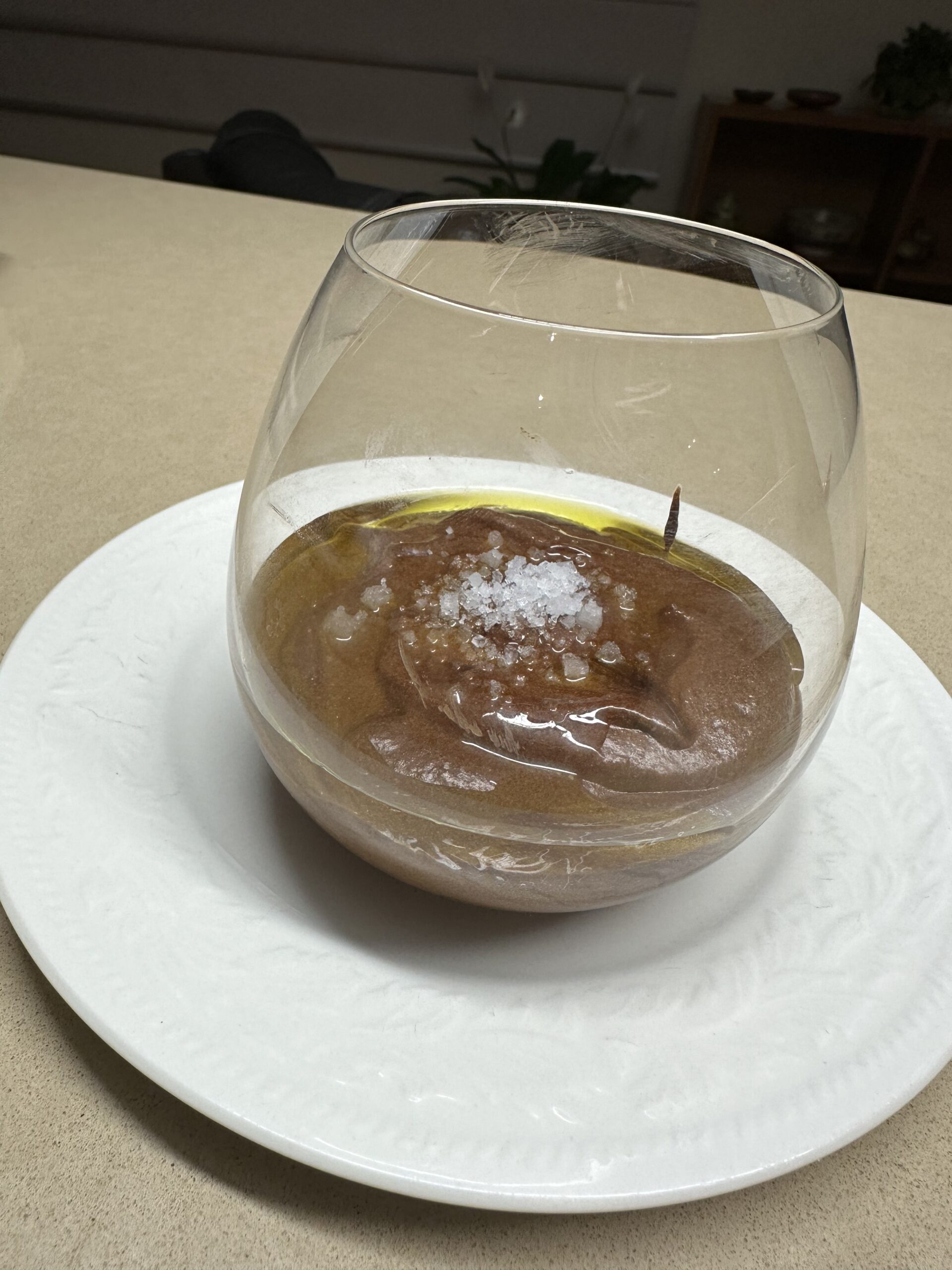
While travelling in Portugal recently we enjoyed a similar rich chocolate mousse which was garnished with extra virgin olive oil and sea salt flakes. It was delicious if you like that sort of sweet and salty combo. If not, serve the mousse with berries and thick cream.
250g dark chocolate
4 large eggs separated
2 Tbs butter
2 Tbs brandy or rum
To serve:
Thick cream and berries
or, Maldon sea salt
Extra virgin olive oil
Melt chocolate and butter in a large bowl over simmering water. Remove from heat. Mix in  the egg yolks one by one, then the brandy or rum.
Whip egg whites till stiff then fold carefully into chocolate half at a time. Scrape into a nice glass serving bowl, or individual bowls.  Chill.
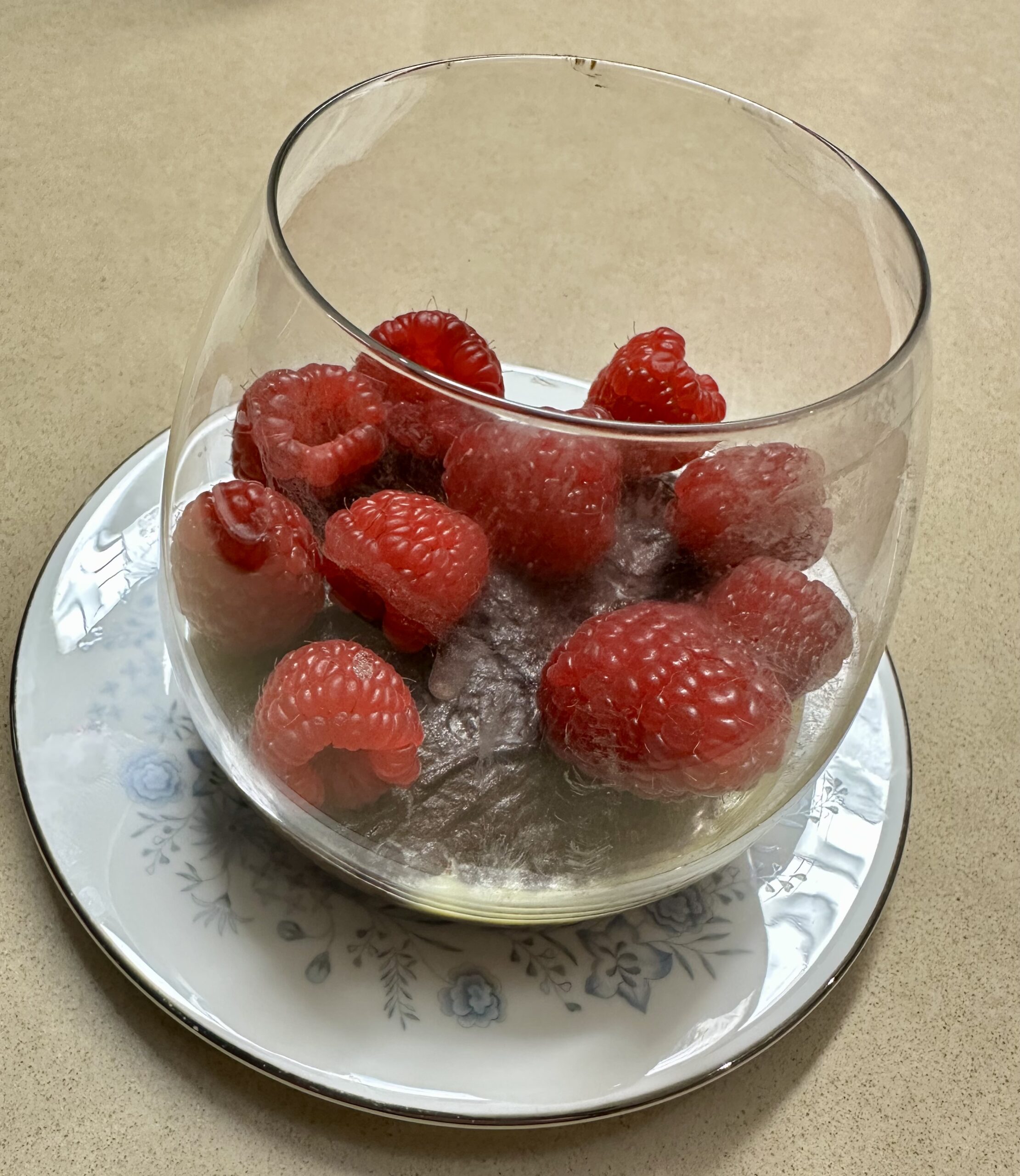
Serve the mousse topped with a few flakes of salt and a drizzle of oil. Or with berries and thick cream.
Serves 6

Sago Plum Pudding

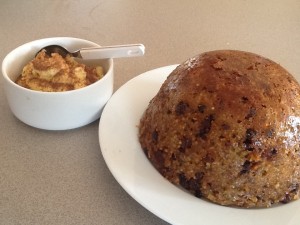
Sago Plum Pudding, an old-fashioned dessert made from simple ingredients, is one of my all-time favourites. I think its origins must be Antipodean as I never came across it when I was growing up in England. Some in our family see it as an excuse to eat Brandy Butter when it’s not Christmas. I’ve never been a big fan of Brandy Butter and prefer it with thick, unsweetened cream.

If you like, make individual half cup puddings rather than one large one – see Note below.

This recipe came from my mother-in-law.photo

¾ cup sago
2 cups milk
180g butter
½ cup sugar
2 cups sultanas or mixed dried fruit
2 cups breadcrumbs (made in food processor from day old bread)
2 eggs, beaten
2 tsp bicarbonate of soda
Pinch of salt
2 tsp mixed spice
To serve:
Brandy Butter, thick cream or custard

Soak sago in milk overnight. Place butter in a mixing bowl and zap in the microwave to melt. Mix in remaining ingredients then scrape into a one litre pudding bowl, lightly buttered. Cover with a piece of buttered foil, buttered side down and place in a large saucepan on something to lift the bowl slightly. A metal trivet, old saucer or a small brick will do. Add boiling water to come halfway up bowl. Cover with the saucepan lid, bring to the boil and steam steadily for 3-3½ hours, adding more water as necessary. The top of the pudding will have an even dark brown colour when ready – lift foil from time to time to check. Stand for 5 minutes then turn out, cut into slices and serve with thick cream, Brandy Butter or custard.

Serves 8-10

Note: make individual puddings in 8-10 half cup ramekins, dariole moulds or Chinese teacups, lightly buttered, as shown in the second photo. Fill almost to the top as they don’t rise much. Place in a shallow ovenproof dish and add boiling water to come halfway up the cups. Cover the whole dish with a sheet of foil, buttered side down. Bake at 160°C for an hour to an hour and a half, or until evenly rich brown on top. Tip out and serve immediately or store covered in the fridge and reheat for about a minute in the microwave, covered in plastic wrap, then tip out.

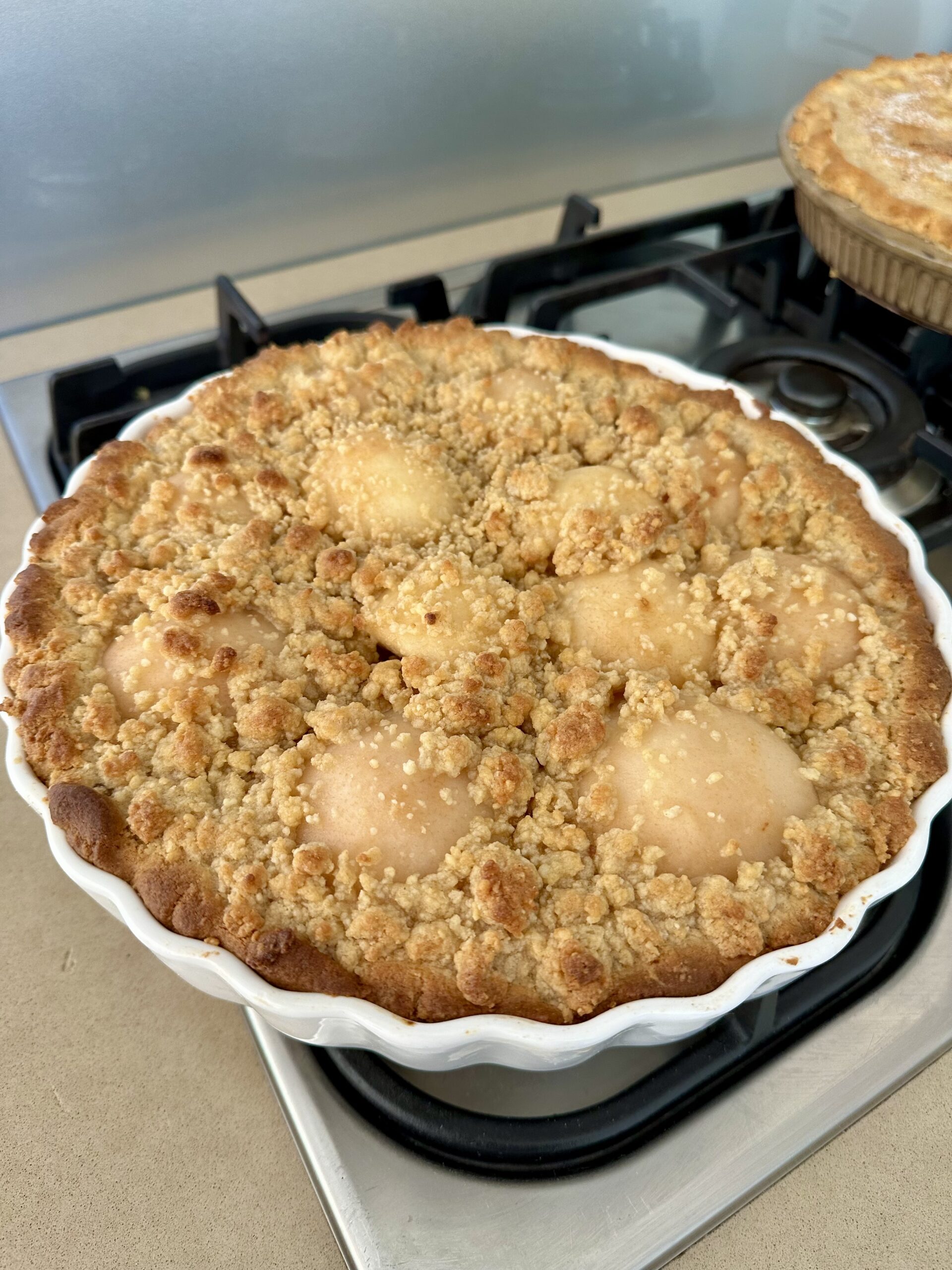
Rhubarb and Apple Spice Cake

This recipe was given to me by my friend Fiona.

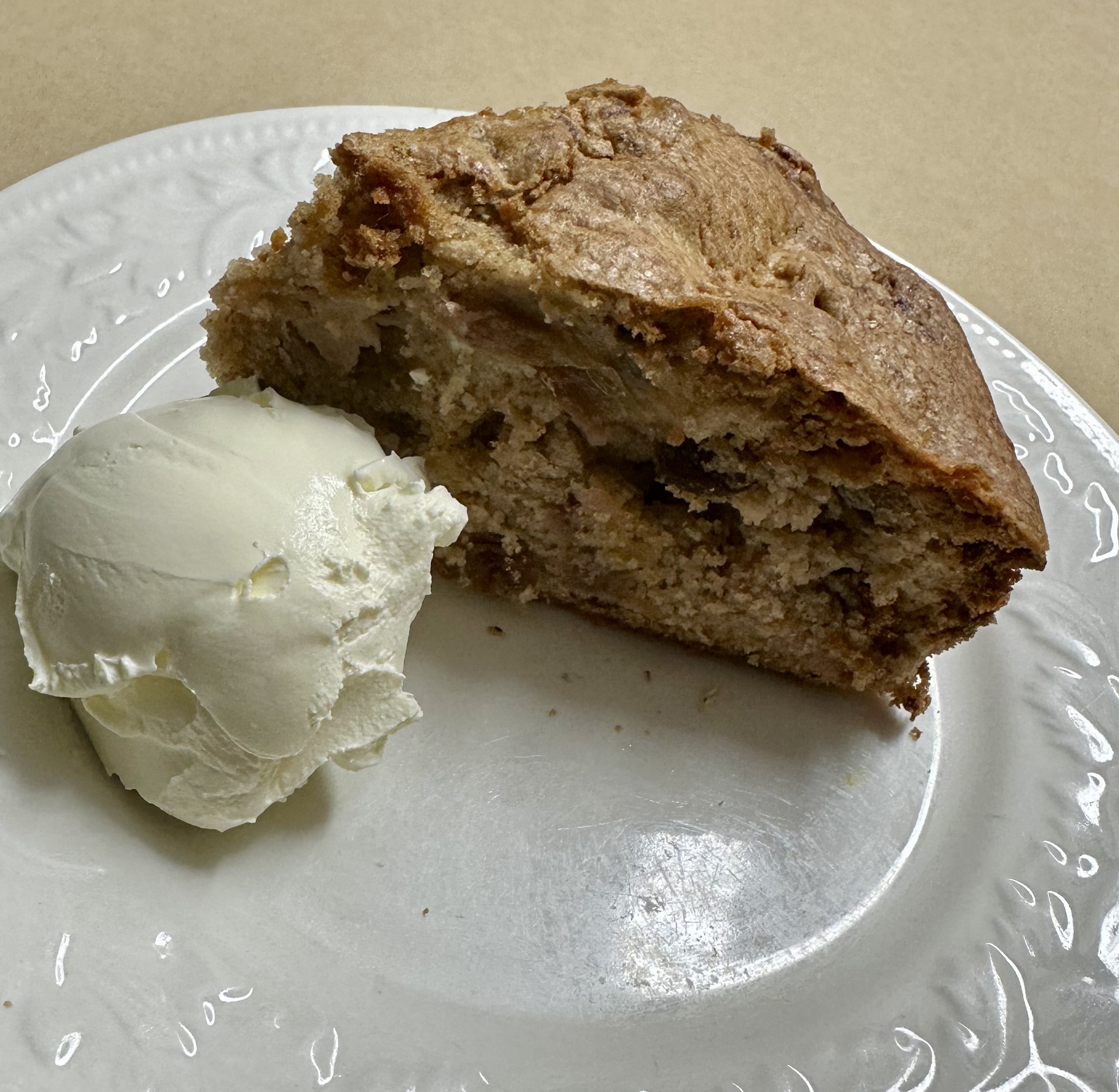
She has made it many times and had success with several variations, such as using pears poached in red wine – drained and cut into chunks – instead of the apples. When she made it for our French group lunch she used poached quinces instead of apples and it was delicious. So as I had some poached quinces in the freezer which needed using up that’s what I did. Feel free to try other combinations.

1 tea bag (English breakfast or similar)
3 Tbs boiling water
A generous half cup of raisins or sultanas
2 cups caster sugar
3 eggs
1 cup vegetable oil
2 tsp vanilla essence
300g plain flour (2 and 2/3 cups)
1½ tsp baking powder
½ tsp salt
1 tsp cinnamon
¼ tsp each cloves, nutmeg and mace
4-5 stalks of fresh rhubarb, cut into 2cm lengths
2 large apples, peeled, cored and sliced
1 cup walnuts or pecans, coarsely chopped
To serve:
Rhubarb compote (optional)
Whipped cream, thick pouring cream or sour cream (shown in photo)

In a small bowl, pour boiling water over tea bag, press to release the flavour, then remove the tea bag. Add the raisins, mix to cover, then leave for half an hour. Drain raisins, discarding the liquid.

Meanwhile preheat oven to 160°C. Grease a 25cm springform pan and line with baking paper. Place eggs and sugar in an electric mixer and whisk until thick and pale. Add the oil and vanilla essence and mix well for a minute or two. Place a sieve over the bowl then measure the flour, salt and spices and add them to the mixture through the sieve. Fold in the rhubarb, apple and nuts. Make sure there are no pockets of flour. The mixture will be quite stiff.

Bake for an hour and 3/4 or until golden brown and firm on top. Ovens vary so start checking after an hour and a half. Cool in the tin for half an hour then remove. Store in an airtight tin when cold.

The cake should have a crunchy top and a chewy centre and improves after a day or two of storage.

Serve with rhubarb compote and cream as a dessert.

Serves 12

Variations: I didn’t have any mace so I added more cinnamon. Use poached pears or quinces in red wine instead of the apples.

Upside-down Mandarin Cake

This week’s recipe for a gluten-free, dairy-free cake using mandarin oranges which are now in season makes a sumptuous crowd-pleasing dessert.

The upside-down mandarin idea came from a recipe on a website I subscribe to called Delicious. However, the cake mixture in that recipe included flour and I needed to make a gluten-free, dairy-free dessert to take to a dinner party.

So I used a different recipe for an orange cake which uses almond meal instead of flour, used mandarins instead of oranges and combined the two recipes into one. Best served on the day it’s made, this cake is delicious.

Topping:
8 mandarin oranges
2 Tbs runny honey
Cake:
3 mandarin oranges
6 large eggs at room temp
1¼ cups sugar
1½ tsp baking powder
4 cups almond meal (bought or made in a food processor)
To serve:
2 Tbs sugar
250ml mascarpone
½ cup thick cream

Topping: Grease and line a 22cm (9 inch) cake pan with baking paper. Drizzle the honey evenly over the bottom. Finely grate the peel from 4-5 of the mandarin oranges and keep for the cake. Peel the 8 mandarin oranges, discard the peel and arrange the segments in circles in one layer over the base of the cake tin.

Cake: Preheat oven to 160° C. Place the 4 mandarins in a saucepan, cover with water then bring to the boil and simmer for 20 minutes. Drain and cool.

Make almond meal in a food processor by processing shelled almonds until very fine. They can be blanched almonds or not. Measure 4 cups and keep any excess for another use. Place the cooled mandarins in food processor (no need to wash it after processing the almonds) and process for a minute or two. Add remaining ingredients, including the almond meal and the grated rind you reserved earlier.

Scrape into the cake pan. Bake for 60 minutes or until well-risen, golden brown, firm to the touch and a skewer inserted in the middle comes out clean. Cool thoroughly in the tin.

To serve: Carefully tip cake out of pan and remove paper. If liked, sprinkle 2 tablespoons of sugar over the mandarin segments which are now on the top of the cake and use a blowtorch to brown the top. Not essential but looks nice.

Mix mascarpone with cream and serve with the cake.

Serves 12-16

Chia Puddings

You may have seen chia seeds in the supermarket and wondered what to do with them. When mixed with liquid and left for a few hours or overnight, they set into a sort of pudding or chunky jelly.

Our son James says that for him chia puddings are in the same category as tapioca pudding and bubble tea, a popular drink filled with chewy tapioca balls. He is not a fan, whereas I love them.

Chia puddings are very easy to make and involve no cooking. To make one serving you just need half a cup of any kind of milk and 2 tablespoons of chia seeds. Mix thoroughly and leave in the fridge overnight, then top with fresh or frozen berries, sliced banana, muesli, yoghurt, or a combination and you’ve got a healthy breakfast or dessert, loaded with fibre and protein. A hundred grams of chia seeds contains 17g of protein.

2 Tbs chia seeds
½ cup any kind of milk (cow’s, oat, soya, almond, coconut)
To serve:
Berries or sliced banana, mango, peaches etc
Toasted muesli
Plain yoghurt
Maple syrup or honey

Thoroughly mix the chia seeds with milk and place in an individual bowl or glass, leaving space for toppings. After an hour or so, stir the mixture again to avoid any big lumps forming. Refrigerate overnight.

Serve topped with fruit, muesli and yoghurt.  Drizzle with a little maple syrup or honey. If you’re feeling decadent, drizzle with a little cream.

You can always mix up a larger quantity, allowing 4 Tbs chia seeds for every cup of milk. Tip the mixture into a plastic storage container with a lid. It will keep for a several days in the fridge.

Makes one serving

Cooking for the Holiday Season

With less than a week to go till Christmas everyone is busy shopping and cooking. A week later many of us will be at it again for New Year’s Eve. Here are some links to Café Cat recipes to help you through the holiday season.

If you want to make your own Christmas cake or pudding it’s not too late – just give it a good drizzle of brandy a couple of days before serving and it will be nice and moist. And this cheat’s recipe for Quick Individual Christmas puds, made with crumbled shop-bought cake, is a sure winner for end of year gatherings.

Sausage rolls and mince pies are traditional Christmas finger foods which can be baked ahead until just slightly under-done, then frozen (or refrigerated for a day or two) and reheated for a few minutes on the day.

At this time of year I always make a Glazed Ham and some Gravlax with Sweet Mustard Sauce because they both slice into a lot of servings and last for several meals. Cook the ham a bit longer than the one shown in the photo, so the glaze goes a darker brown. I must have been in a rush that day! Make double the Sweet Mustard Sauce recipe and keep it in a jar in the fridge. You’ll find it goes well with ham as well as Gravlax or Smoked Salmon. Here you can see a platter of sliced Gravlax next to some cooked asparagus surrounded by good old-fashioned devilled eggs, garnished with a small piece of anchovy.

Here are some more ideas for a cold buffet:

And a few cold starters for a sit down meal:

For an impressive dessert you can’t go wrong with one of these:

And if you’re short of time try one of these:

I would like to wish all my readers a very Merry Christmas and a happy, healthy and safe New Year. I look forward to sharing many more recipes with you in 2025.

Chocolate Bread and Butter Pudding

Someone gave my daughter Catherine a Panettone for Christmas.  As they don’t like Panettone very much, she gave it to me.  I have to admit I’m not mad about the Italian answer to Christmas cake either, but my “war mentality” doesn’t allow me to throw good food away.  So I stuck it in the freezer.  Catherine laughed when she saw me do this and admitted she had inherited my “waste not want not” approach to food and if she hadn’t been travelling she would have frozen it too.

This weekend I used just over half the Panettone to make a delicious chocolate bread and butter pudding, adapted from a recipe by Delia Smith.  She uses ordinary white bread with the crusts cut off.  You could use bread, panettone, croissants, brioche – anything which needs using up – which is how this traditional British dessert was first invented – to use up stale bread.

9 slices of day old white bread – or the equivalent in panettone, brioche or croissants
150g dark chocolate (I used more like 175g to make it really chocolatey)
75g butter
425ml cream
4 Tbs dark rum (optional)
pinch ground cinnamon
4 Tbs caster sugar
3 large eggs, lightly beaten
To serve:
Icing sugar
Thick pouring cream

Butter a rectangular lasagne-type dish.  In a large bowl place chocolate, broken into squares, butter, cream, sugar, cinnamon and rum, if using.  Microwave until melted which will take a couple of minutes. Stop every 30 seconds or so to stir the mixture and stop as soon as it’s melted.  Delia does hers the traditional way over simmering water which is safer.  Using the microwave is quicker, but you need to keep an eye on it.  Whisk in the eggs with a hand whisk, until well-combined.

Pour about 2cm of the chocolate cream over the base of the dish, then arrange about half the panettone slices or bread slices, overlapping if necessary to cover the base of the dish.  Panettone slices are large so you need to cut them into about three and use them like a jigsaw puzzle.  Pour in half the remaining chocolate cream and push all over with the back of a fork so the panettone soaks it up.  Arrange the rest of the panettone or bread over the top, pour in the remaining chocolate cream, push with a fork so there are no dry bits left.  Cover the dish with plastic wrap, leave for a couple of hours at room temperature then refrigerate for 24-48 hours.

Remove cling film and bake at 180°C for 35 minutes or until the top is brown and crunchy and the bottom is cooked but still soft.  Remove from the oven, allow to stand for a few minutes then serve dusted with icing sugar.  Pass a jug of thick pouring cream separately.

Serves 6-8

Frozen Chocolate Mousse with Coffee Ice Cream

We were served this dessert in a restaurant in the north of Spain. I can’t remember the name of the restaurant and I didn’t come away with the recipe, just the name and the memory of the delicious flavours and textures.

It’s been in the back of my mind to replicate it, so here is my version. The recipe is easy to halve to serve 6-8.

250g dark chocolate, broken into squares
250g unsalted butter, cut into small pieces
8 eggs, separated
2 Tbs Cointreau or Grand Marnier
Pinch of salt
4 Tbs sugar
1 tub of good quality vanilla ice cream (half a litre)
3 Tbs instant coffee
3 Tbs boiling water
To serve:
A few berries, fresh or frozen
Pouring cream

Melt chocolate and butter in a microwave or in a bowl over boiling water. Cool a bit then mix in the egg yolks and the orange liqueur.

Beat egg whites and salt with electric beaters until soft peaks form. Add the sugar and continue to beat until you have a glossy thick meringue. Add half to the melted chocolate and fold in gently with a rubber spatula. Add the rest and do the same. When thoroughly mixed, pour into small dishes and freeze for several hours or overnight.

Coffee Ice cream: Take the vanilla ice cream out of the freezer for about 15 minutes, so it softens a bit, then scrape it into a bowl. Mix the instant coffee and boiling water until smooth, then mix it into the ice cream. When thoroughly mixed, scrape back into the ice cream container and put it back in the freezer. Recipe can be prepared ahead to this point.

Serve each mousse with a scoop of coffee ice cream and, if liked, a few berries and pouring cream. Mine were frozen home-grown boysenberries, which is why they look frosted in the photo.

Makes 12-16 little mousses, depending on the size of your moulds