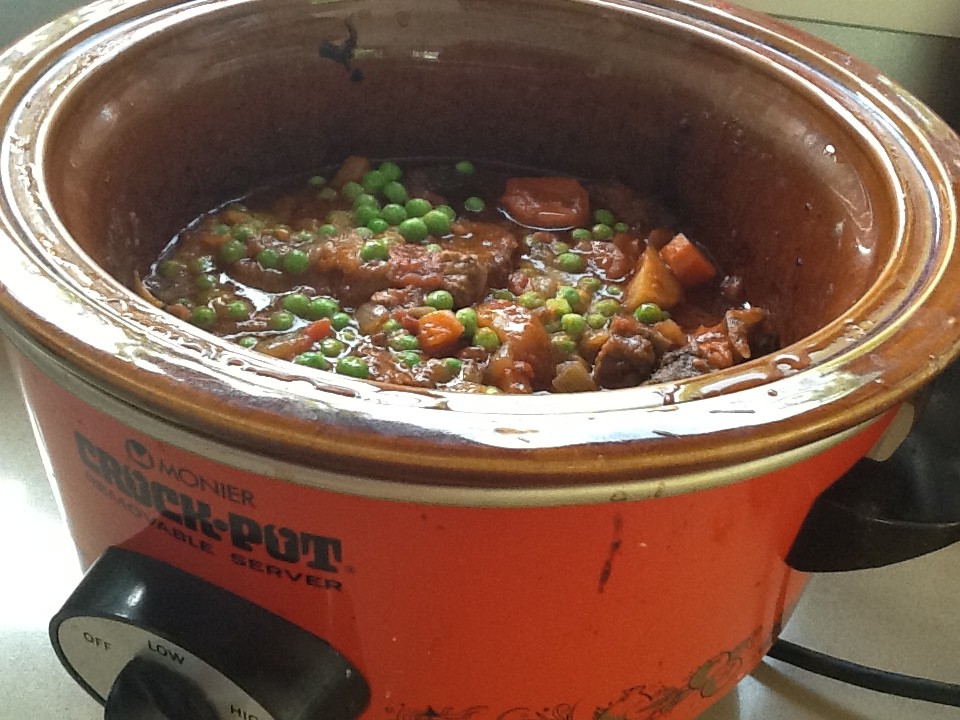
Mum’s Lamb Casserole

When our kids were in their teens we had a dinner roster. I still did most of the cooking, but once or twice a month each of the kids was responsible for the feeding the clan. It didn’t have to be elaborate – just something tasty which I had taught them how to make.

I’m a great believer in this roster approach to dinner time. It gives the Chief Cook and Bottle Washer the occasional night off and means that when the kids leave home – and eventually they do – they won’t starve.

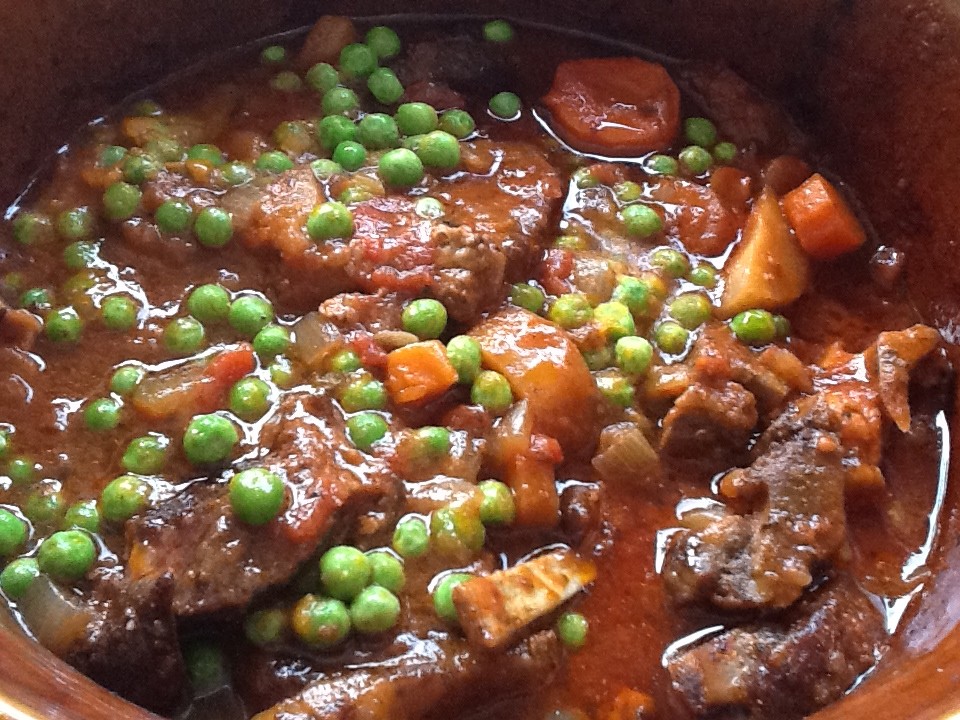
Working on the same principle, my Mum taught me to make this casserole when I was in my early teens. The fact that I still make it is testimony to its success. Served with creamy mashed potatoes and peas it’s still one of my favourite “comfort foods” in winter.

We were given a slow cooker called a Crock Pot as a wedding present and I used it for years. Every busy cook should have one. Somehow in a house move it disappeared and I really missed it, so when I saw one in a garage sale I snapped it up.

Slow cookers are great because you can leave dinner to cook in your absence. Switch it on Low as you leave, then when you get back check how its going. It just needs an occasional stir and you can turn it up to High if it’s not cooking fast enough, or down to Low if it’s cooking too fast.

I used to brown the chops before putting them in this casserole, but one time I was really pressed for time and skipped this stage. Honestly, you couldn’t tell the difference. Just make sure you cut off all visible fat.

It may seem strange to see a recipe which can take anything from 4 to 8 hours to cook. But that’s the whole point of a slow cooker – you can adjust the temperature to suit your timetable.
1.5 kg lamb chops (cheap cuts like neck or forequarter chops) trimmed of all excess fat
1 x 425g tin tomatoes, including the juice, chopped (or 500ml tomato passata)
1 cup water
2-3 carrots, sliced thickly
1 beef stock cube, crumbled (I use the Oxo brand my mother used)
1 large onion, chopped
3 Tbs dry sherry or red wine
1 Tbs tomato paste
2 bay leaves or a sprig of fresh rosemary
1 tsp sugar
S and P to taste
To serve:
Creamy mashed potatoes
Peas

Place chops in slow cooker with remaining ingredients, apart from the potatoes and peas. Cover and cook on high for 4-6 hrs or on low for 6-8 hrs, until meat is very tender. Stir every hour or two if you are around – if not don’t worry, it can look after itself for quite a while. If the meat has fallen off the bones you might like to remove all the bones and just put the meat back before serving. Once ready the casserole will stay that way for a while if you switch it to Low. Serve with creamy mashed potatoes and cooked frozen peas.

Serves 6

Variations: add a tin of drained chickpeas and 1-2 tsp cumin, then serve with couscous instead of potatoes and peas.

Notes: If you don’t have a slow cooker use a large heavy casserole with a lid and cook in the oven. It will take 3-4 hours at 160°C and will need a little more water – check and add as necessary.

Useful tip: Recipes usually call for a tablespoon or two of tomato paste, leaving you with the rest of the jar or tin which goes off in the fridge within a week or so. To avoid this, fill ice cube trays with leftover tomato paste. When frozen tip cubes into a plastic container to use when you need them.
Lancashire Hot Pot

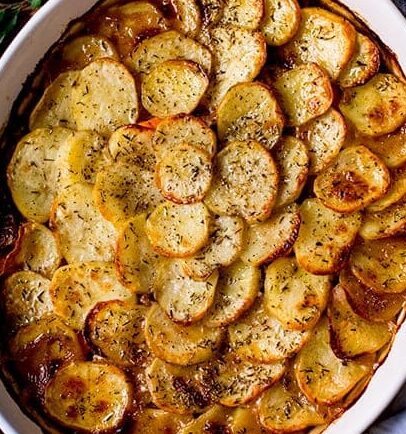
Lancashire Hot Pot originated in the north west of England and was a popular winter dinner throughout the British Isles when I was growing up. My mother, who didn’t have a large culinary repertoire, made it regularly and we loved it.

It’s basically a lamb stew covered with crispy sliced potatoes. In the old days it was made with mutton, something we don’t see in the shops these days because the animals are killed much younger. My mother fried the onions and meat in dripping or lard, but I prefer to use butter or canola oil, or a combination.

2 Tbs butter or oil or 1Tbs of each
1 kg stewing lamb, cut into 2cm cubes
2 Tbs plain flour
Salt and freshly ground pepper to taste
1 large or 2 smaller onions, diced
500g carrots, peeled and cut into slices or chunks
2 cups beef stock (or water and 2 beef stock cubes)
3 Tbs sherry or red wine (optional)
1 Tbs Worcestershire sauce
750g potatoes, peeled and thinly sliced
1 Tbs melted butter or oil, for brushing
1 tsp dried thyme

Preheat oven to 170°C. Mix lamb with the flour, salt and pepper. Heat butter or oil in a large frying pan and cook the meat over high heat, stirring, until browned. Place in a casserole dish. Add onions to the frying pan and cook, stirring from time to time, until softened. Add to the casserole with the carrots, stock, sherry and Worcestershire sauce. Mix well. Cover and cook on the stove top for 30-60 minutes, or until meat is almost tender. Keep it at a steady simmer, not boiling.

Remove lid and cover the meat with the sliced potatoes, starting from the outside and overlapping them slightly. Brush with melted butter or oil, sprinkle with thyme then cover with the lid or a piece of foil. Return to the oven for 45 minutes or until potatoes are tender. Turn oven up to 200°C. Remove lid or foil and cook casserole until potatoes are browned and crisp. Serve with a green vegetable.

Serves 6

Lamb and Fennel Ragu

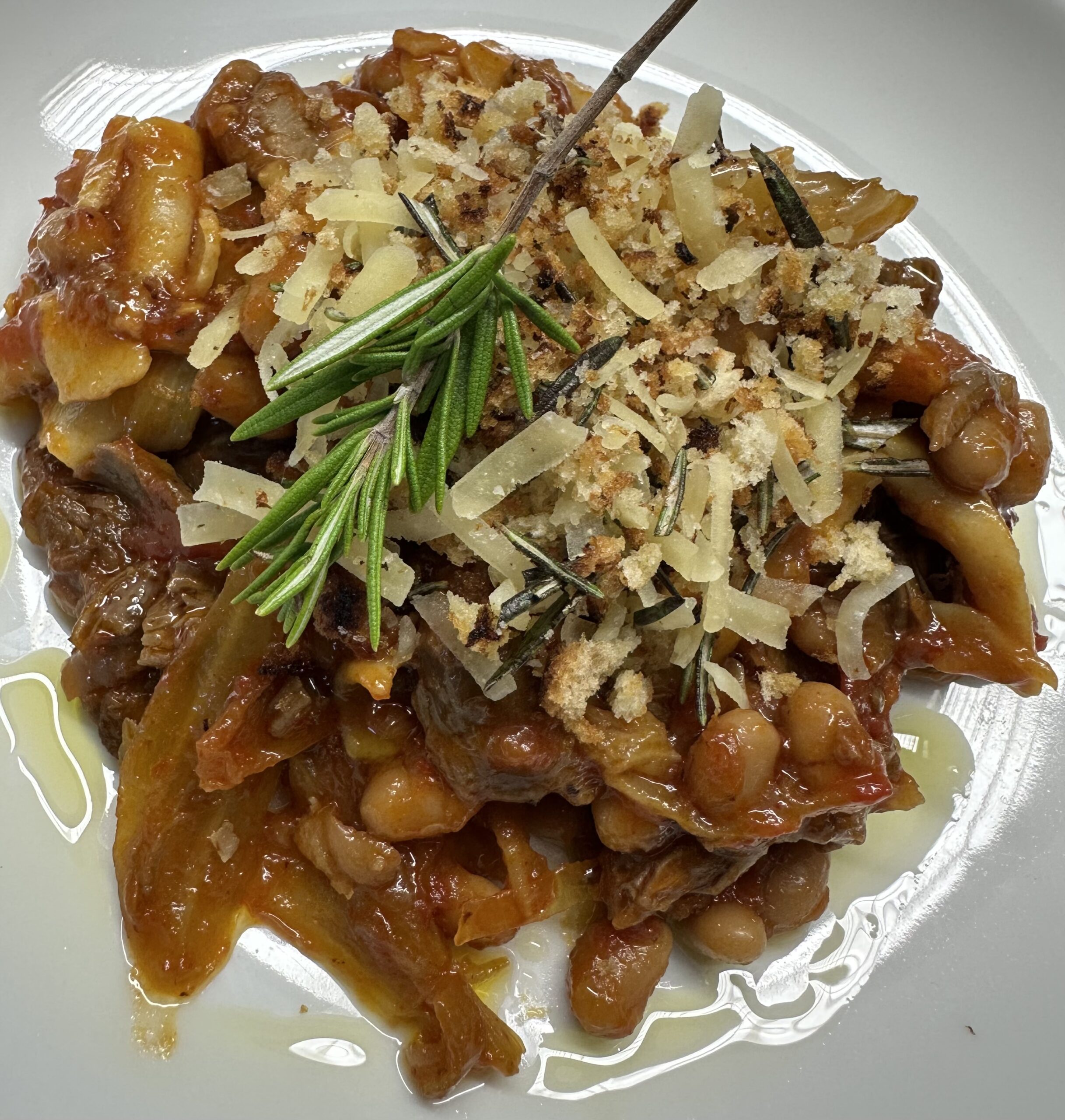
This recipe uses two lamb shanks to make a delicious dinner to feed a family of six. Any leftovers freeze well. The crunchy topping is optional but it adds a lot to the dish.

This is a one-pot dish which doesn’t really need any sides, but you could always serve some steamed green beans or broccoli.

1 brown onion, peeled, halved and sliced
1 bulb fennel, trimmed, halved and sliced
4 cloves garlic, crushed
1x400g can chopped tomatoes, or whole ones and cut them up
¼ cup brown sugar
1½ cups water
1 beef stock cube
2 tsp chilli sauce or paste (optional)
2 bay leaves
2 lamb shanks
1 can baked beans in tomato sauce
2 or 3 sheets of fresh lasagne, torn into 3cm pieces
Topping:
1 slice bread
1 Tbs butter or oil
2 Tbs fresh rosemary leaves, finely chopped
50g Parmesan cheese, grated
Extra virgin olive oil to serve

Preheat oven to 160°C. Place onion, fennel, garlic, tomatoes, brown sugar, water, stock cube, chilli paste and bay leaves in a heavy casserole dish with a lid. Mix then arrange the lamb shanks on top. Cover and cook for 3 hours or until the meat is falling off the bones. Stir from time to time during cooking time.

Remove lamb from the casserole, cut off the meat and put it back. Remove and discard bay leaves. Stir in the baked beans and add a little water if it’s looking too dry.

Cook lasagne in boiling salted water for 4 minutes or until al dente. Drain and mix into the casserole. Can be made to this stage and reheated later at serving time.

For the topping, make breadcrumbs with the bread by blitzing it in a food processor. Fry in the oil or butter in a small frying pan, stirring, until crisp and golden. Cool then mix with the rosemary and parmesan.

Serve casserole topped with the crunchy bread mixture. Drizzle a little EVOO around each serving, if liked.

Serves 6

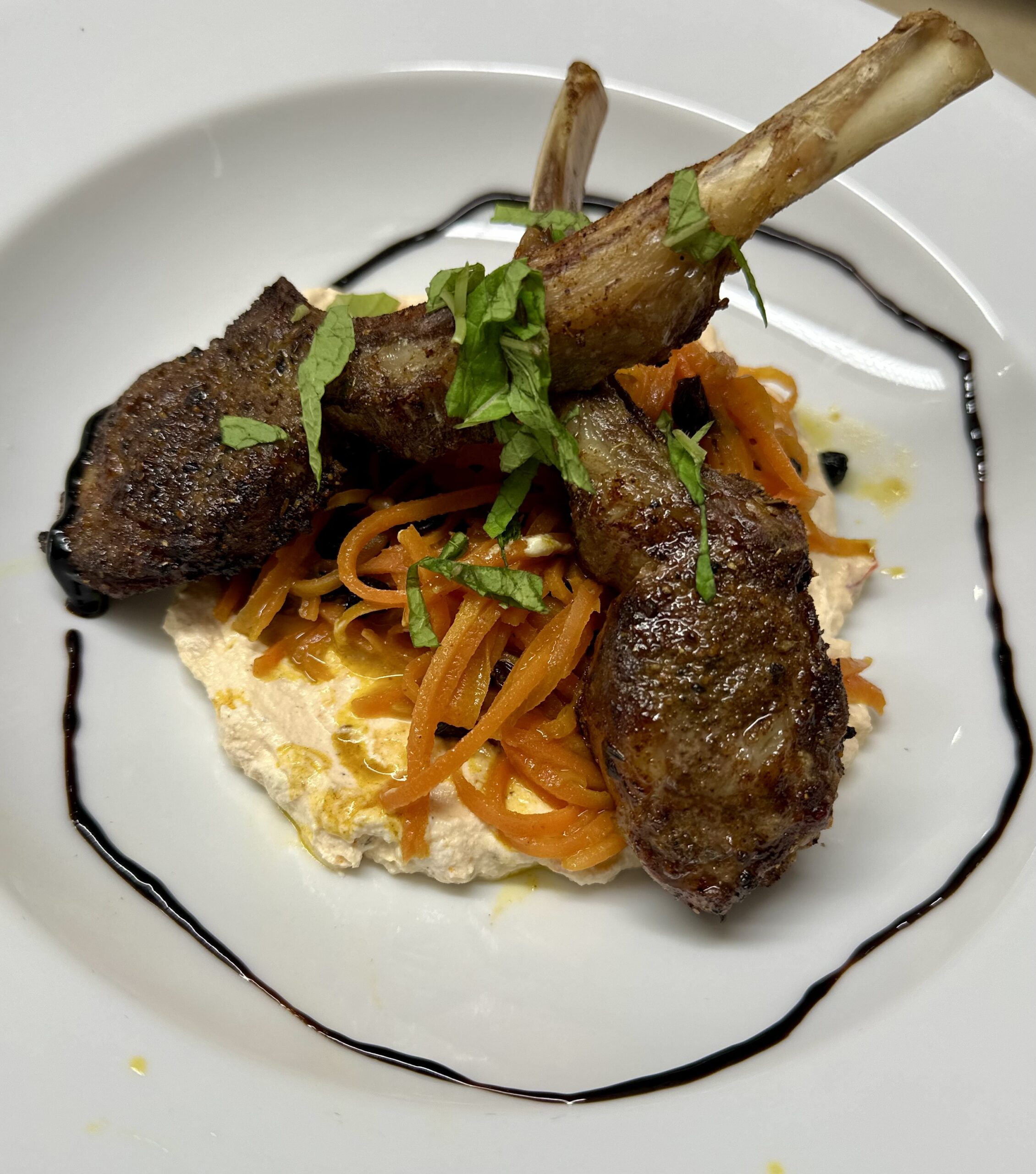
Lamb with Spicy Labneh and Carrot Salad

This recipe was inspired by a dish I was served at the annual lunch of the International Women’s Club which was held at the Marion restaurant in Canberra in late August.

There were 180 women seated at tables for 10 and the food and service were both excellent. The main course was an alternate serve, where half had salmon with baked Jerusalem artichokes and half had sliced lamb rump on a bed of spicy labneh, with a shredded carrot salad.

This is my interpretation, but I have used lamb cutlets instead of rump. The carrot salad is delicious on it’s own or as a filler for sandwiches or wraps, or as part of a buffet.

2 cups thick Greek-style plain yoghurt
2 tsp harissa paste (or to taste)
8 lamb cutlets, trimmed
Salt and freshly ground black pepper, to taste
Paprika
Carrot Salad:
500g carrots, cut into thin julienne or very coarsely grated
1/3 cup dried currants
1/3 cup toasted pine nuts
Juice of half a lemon
1 tsp Dijon mustard
1/2 tsp each cinnamon, cumin and paprika
2 tsp honey (or more to taste)
1/4 cup olive oil
Salt and freshly ground black pepper, to taste
To garnish:
Chopped parsley or another green herb
Balsamic Glaze (optional)

To make Labneh, strain yoghurt for a few hours or overnight in a sieve lined with muslin or a man’s handkerchief, in the fridge. Discard the liquid and mix in the harissa.

Place currants in a small bowl and add just enough warm water to cover. Leave to plump up for half an hour.

Place all ingredients for the carrot salad in a frying pan, including the currants and water, and stir fry for 2-3 minutes or until the dressing has thickened a bit. The carrots should remain fairly crunchy. Meanwhile season the cutlets with salt, pepper and paprika and cook them on a hot griddle, barbecue or in an air fryer, until they are cooked the way you like them – about 3-4 minutes each side.

Divide the labneh between 4 serving places and spread into a circle. Top with some carrot salad (you will probably have leftovers) and two cutlets per person. Garnish with chopped parsley and, if liked, a drizzle of balsamic glaze around the edge of the plate.

Serves 4

Variations: if you don’t have harissa paste, any chilli paste will do.

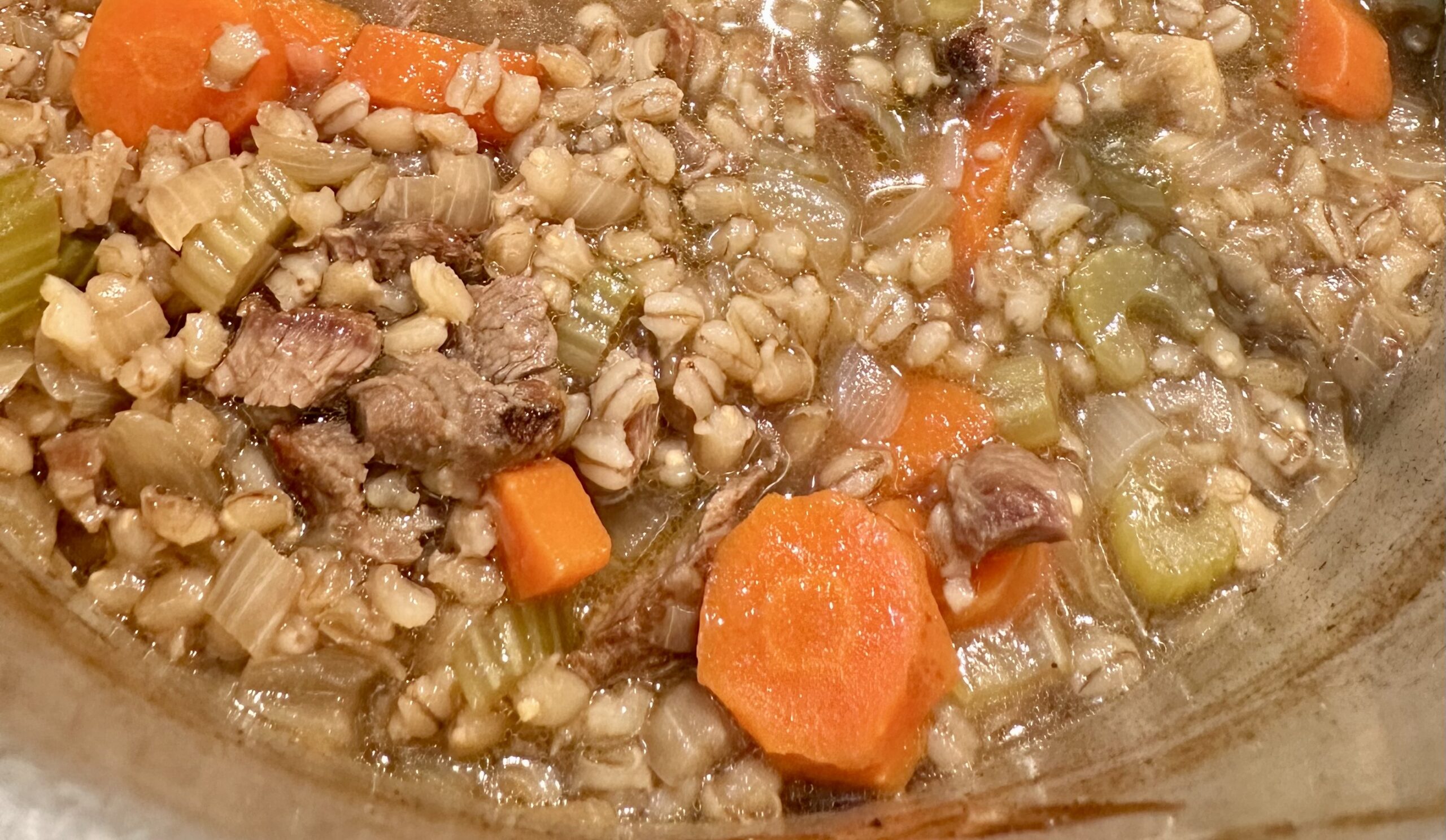
Old Fashioned Lamb & Barley Soup

My mother always served a roast for Sunday lunch, on a four week rotation. Beef, then pork, then lamb, then chicken, then back to beef again.

Roast beef was accompanied by Yorkshire puddings and horseradish sauce. Roast pork by home-made bread stuffing (bread, onion, mixed herbs, an egg and salt and pepper) and apple sauce. Roast chicken was stuffed with the same bread stuffing and roast lamb was always served with mint sauce. In addition to these traditional accompaniments, the Sunday roast also came with gravy, roast potatoes, carrots and one or two green vegetables.

On Mondays dinner would consist of leftover meat from the Sunday roast, usually cold with hot veggies. On Tuesdays my mother made a chunky soup with the bones. Sometimes, if there was enough meat left over, she would get another meal out of the Sunday roast by making shepherds pie, chicken curry or rissoles – a kind of meatball which was popular back then. On Thursdays we might have sausages with gravy and creamy mashed potatoes or Spaghetti Bolognese, a recipe my mother learnt to make while living in Malta during WWII. Friday dinners were invariably from the fish and chip shop, or occasionally from the Chinese takeaway. Or we might have Mum’s Kedgeree. Saturdays we had ham and salad, before watching the latest episode of Dr Who. Then we were back to Sunday again. There wasn’t much variety, but the food was always tasty. We didn’t eat a lot of meat, but filled up on vegetables, which we now know is a healthy approach to life.

You may remember your mother making this hearty soup with the bone from a roast leg of lamb. It comes from a postwar era when nothing was wasted. It’s very economical, making an inexpensive meal to serve at least four people. It’s simple, comfort food.

I didn’t have a meaty lamb bone so I bought four lamb forequarter chops, used two to make this soup and froze the other two to make it again in a couple of weeks. We still have another few more weeks of cold weather in Canberra, before Spring arrives.

1 cup pearl barley
1 meaty bone from a leg of lamb or two lamb chops
3-4 celery sticks
2 medium onions
1 large clove of garlic, crushed
3 or 4 carrots
2 or 3 potatoes (optional)
2 stock cubes (vegetable, chicken or beef)
2 L of water
Salt and freshly ground black pepper
1 tsp sugar
Chopped parsley to serve

Cover the barley with cold water and leave it to soak overnight. If you’re using lamb chops place them in a large heavy bottomed saucepan with a little olive oil so they don’t stick and cook them on both sides until they’re brown. If you’re using the bone from a leg of lamb you don’t need to do this, just put it in the pan. Peel and chop all the vegetables and add them to the pan with the water, stock cubes, drained barley and sugar. Simmer for an hour or until the barley is tender. Add salt and pepper to taste.

Remove the chops, cut up the meat and put it back into the soup. With a lamb bone remove any meat and put it back, discarding the bone.

Serve sprinkled with parsley

Serves 4

Slow-roasted lamb with Black Garlic and Herb Pesto

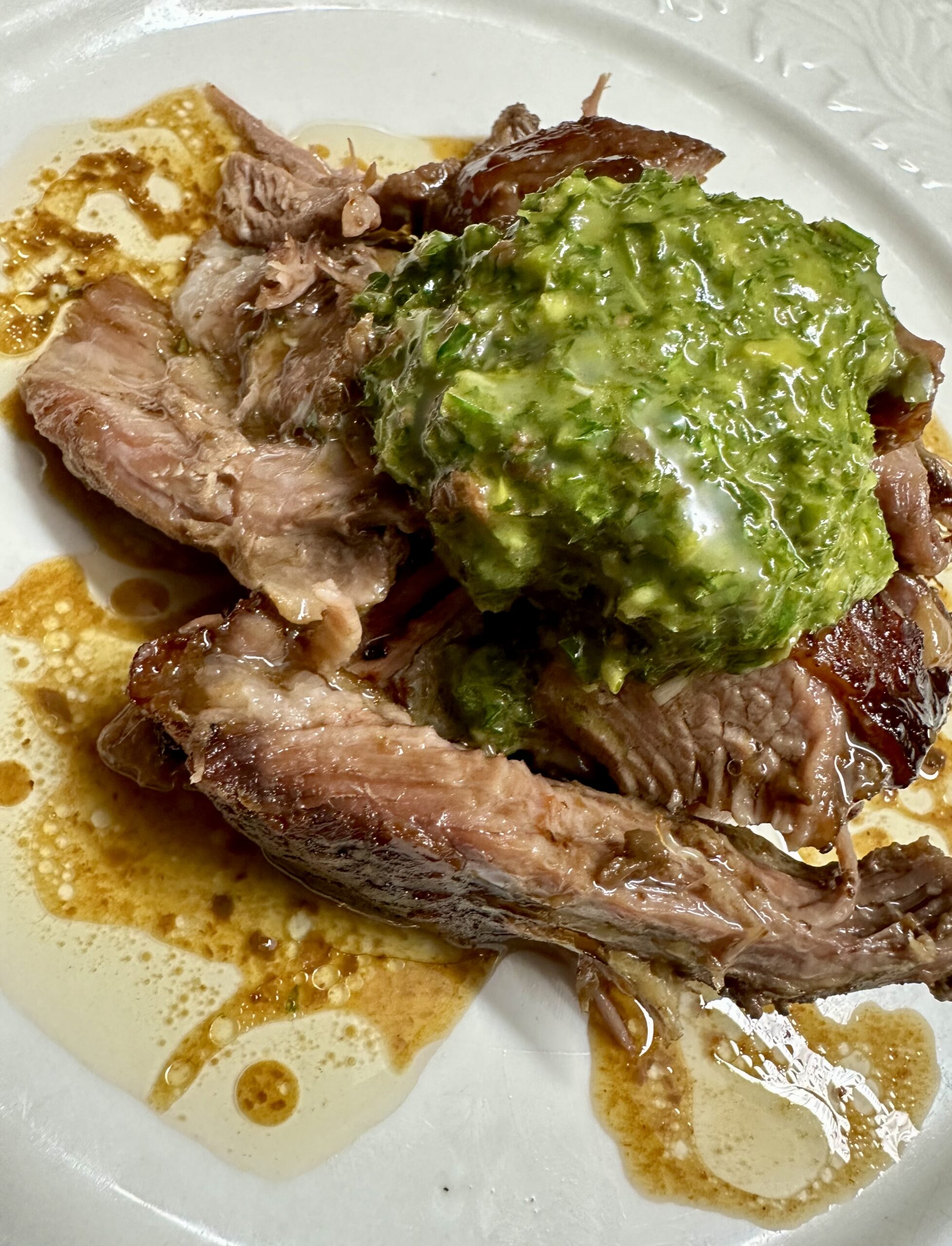
This recipe is adapted from one I found on the Australian Gourmet Traveller website. We have a special gadget to make black garlic which we keep in the garage. We keep it there for two reasons. Firstly it’s about the size of a rice cooker and we don’t have room for it in the kitchen and secondly we don’t want the whole house to smell of garlic. It takes several several days on a very low heat to turn a dozen bulbs of garlic into black garlic. It makes a very welcome gift to friends and family who like to cook. When buying the fresh garlic you need to choose big ones with large cloves. If you can’t be bothered to make your own, black garlic can be bought at specialty food stores and farmers’ markets.

It’s not easy to describe, but I think it tastes like a cross between black truffles and an aged balsamic vinegar. Quite sweet and not particularly garlicky. A delicious addition to canapés, sauces and marinades, it can also be mashed with butter to serve on top of grilled steaks or blended into mayonnaise to make black garlic aioli.

1 boned leg or shoulder of lamb
1 head of black garlic
2 Tbs olive oil
1 tsp salt
1 cup beef stock
Herb Pesto:
1 cup each loosely packed parsley and mint
½ cup chives or 1 spring onion
4 cloves garlic
2-3 pieces lemon rind removed with a veg peeler
¼ cup lemon juice
4 anchovy fillets
1 Tbs capers
½ cup olive oil

Preheat oven to 140°C. Place lamb in a Dutch oven or large casserole with a lid. Squeeze the black garlic cloves to remove the papery skins and place them in a food processor with the olive oil and salt and blend until smooth. Scrape the mixture out onto the lamb, then use your hands to coat the meat, rubbing it in to every crevice. Place in casserole, add stock and cover with the lid. Can be prepared ahead to this stage.

Roast for 4 hours, basting from time to time. Remove lid for the last 30 minutes of cooking and turn the temperature up to 200°C.

For the pesto, place all the ingredients in a food processor and process, stopping to scrape down the sides, until you have a chunky pesto-like sauce. Keeps for a day or so in the fridge.

When the meat is ready it will be very tender. Remove from the oven and allow to rest for 15 minutes. Slice and serve with the pesto and a drizzle of the pan juices. I served it with a whole roasted cauliflower and some baby potatoes.

Serves 6

Variations: if you are missing one of the fresh herbs you can replace it with rocket.

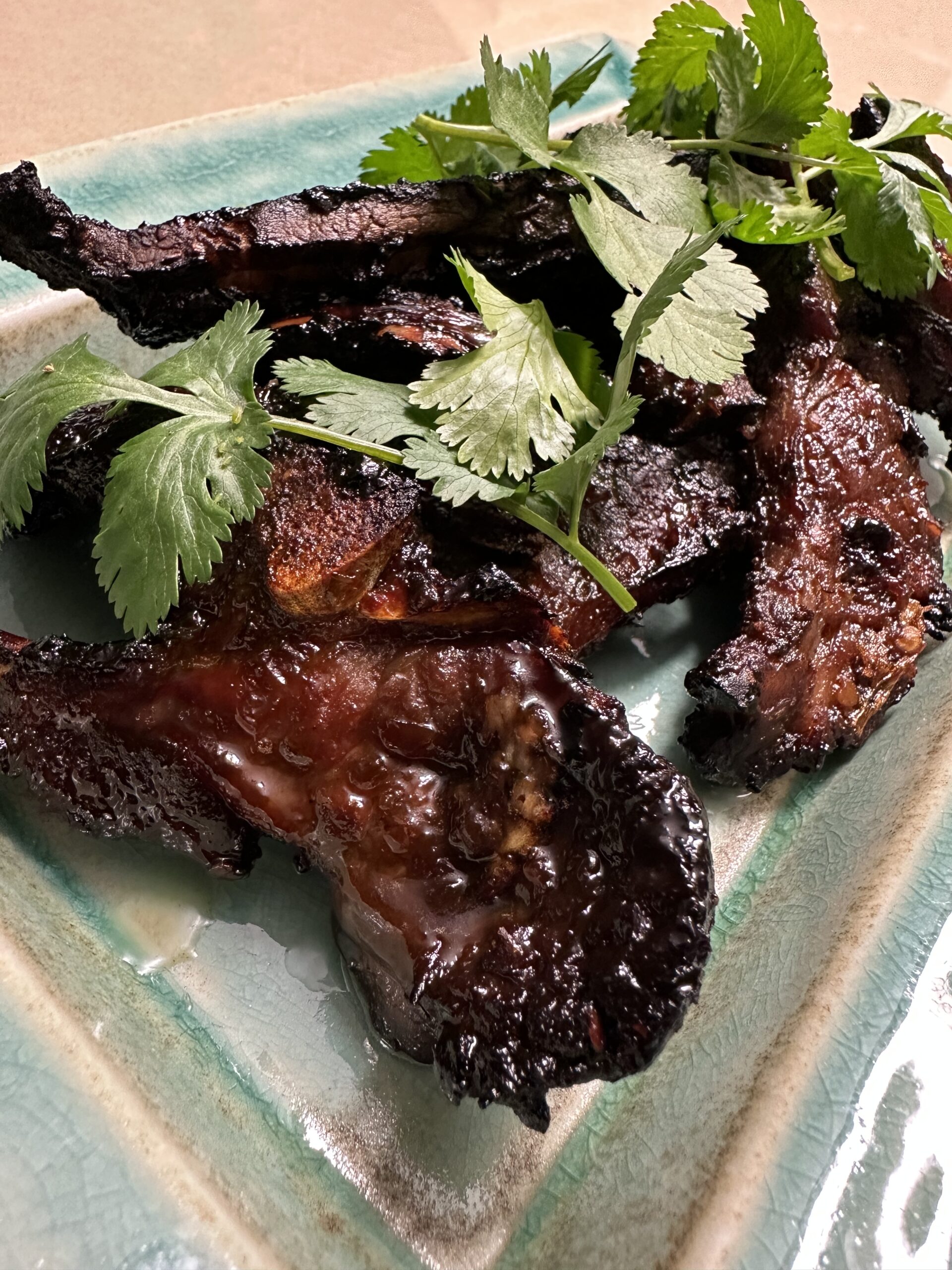
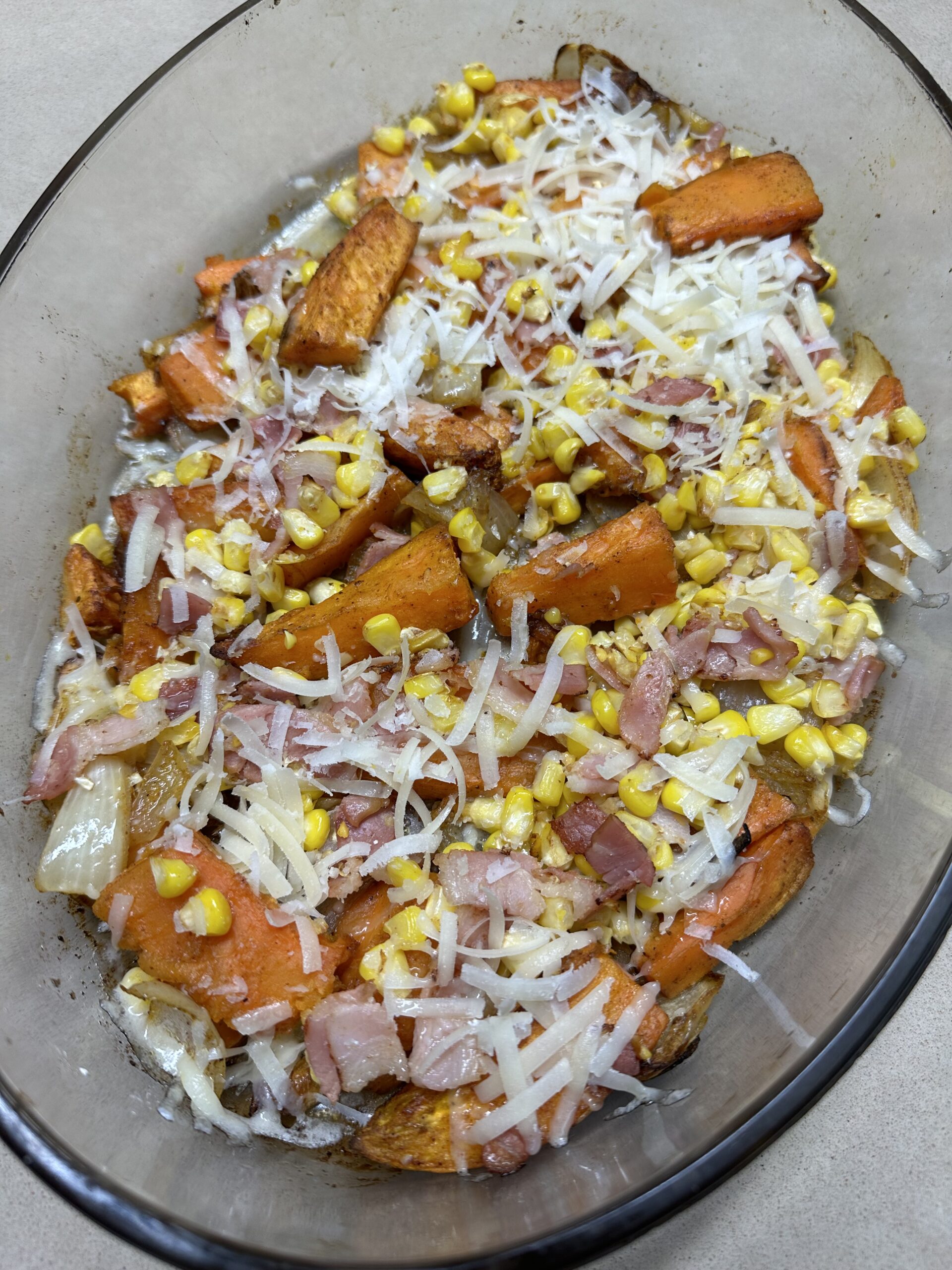
Sticky Lamb with Loaded Sweet Potatoes

Lamb forequarter chops are about half the price of lamb cutlets. If you’re on a budget with a large family, you might want to try this recipe. Forequarter chops contain more fat than cutlets, but in this recipe it mostly dissolves during the cooking.

The sweet potatoes go well with the lamb. If preferred leave out the bacon. You think this recipe is going to serve more people, but the lamb is so tasty everyone comes back for a second helping! A green salad goes well with this family meal.

1 kg or up to 1.5kg lamb forequarter chops
Sticky Glaze:
2 Tbs honey
4 Tbs soy sauce
2 cloves garlic, crushed
1-2 Tbs chilli paste
2 Tbs brown sugar
2 Tbs rice wine vinegar
Fresh coriander to garnish
Sweet Potatoes:
1 large or 2 medium sweet potatoes
1 onion cut into 8ths
3 Tbs olive oil
3 tsp smoked paprika
Salt and pepper to taste
2 rashers bacon, diced
1 cob fresh corn
½ cup grated Parmesan cheese (optional)

Cut the chops into 2 or 3 smaller chops by cutting lengthwise and avoiding the bones. Mix the glaze and use it to marinate the chops. Put aside.

Peel sweet potatoes and cut into chunky chips. Place in a bowl with the onion, olive oil, paprika, salt and pepper and mix well. Tip into a large oven-proof baking dish and spread evenly. Put aside.

Dinner can be prepared ahead to this stage.

Preheat oven to 170°C. Arrange the drained lamb in a single layer on a baking tray and cook for an hour or until well-cooked and sticky as shown in the photo. Keep the glaze. Depending on your oven they might take a bit longer. Halfway through cooking time, turn them over, brush with remaining glaze.

Put the sweet potatoes in the oven at the same time as the lamb and cook for about an hour or until cooked through. Meanwhile cook the bacon for a few minutes in a frying pan. Add the corn kernels removed from the cob and continue to cook, stirring for a couple of minutes. About 10 minutes before the sweet potatoes are ready, top with the bacon and corn mixture, sprinkle with Parmesan (if using) and put back in the oven for the remaining 10 minutes or so.

Serves 4

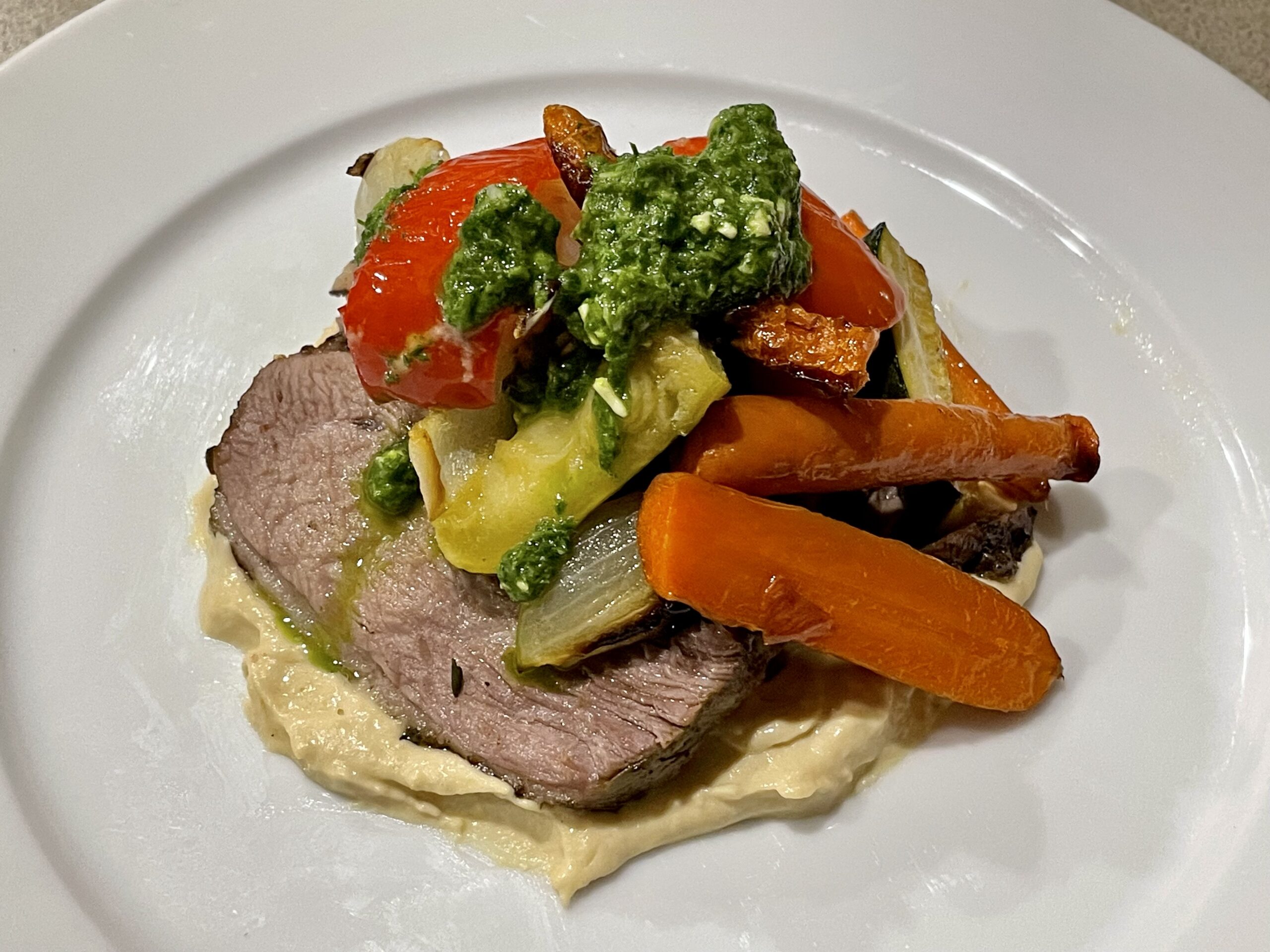
Lamb with Hummus, Roasted Veggies & Mint Pesto

This is a delicious way to serve roast lamb.

1 leg or shoulder of lamb, boned or not
½ cup balsamic vinegar
½ cup water
2-3 tsp Za’atar spice mix (or spice mix of your choice)
Salt and freshly ground black pepper to taste
2 cups hummus (home-made or bought)
1 batch oven roasted veggies
Mint Pesto:
1 cup mint leaves, firmly packed
½ cup pistachios or pine nuts, lightly toasted
1 Tbs lemon juice
1 tsp honey
Olive oil
Salt to taste
To serve:
Toasted pine nuts

Pre-heat oven to 150°C. Place lamb in a large heavy casserole with a lid. Season with the Za’atar, salt and pepper. Add the balsamic vinegar and water and cover. Cook for 2- 3 hours, turning the meat over halfway through. If when you turn the meat the liquid has all dried up add a bit more water – half a cup or so. If the meat is boned it will take less time. Cook to preferred doneness.

Prepare the roast veggies.

For the mint pesto, place all ingredients except the oil in a food processor. Process until chunky then add the oil through the feed chute with the motor running until you have a thick sauce. Scrape down the sides halfway through. Scrape out into a bowl.

To serve, spread the hummus on one large plate or divide between individual plates. Top with sliced lamb, then the roasted vegetables. Top with some mint pesto and sprinkle with a few toasted pine nuts – which as you can see from the photo, I forgot! If liked drizzle some of the cooking liquid from the lamb over the top and around the edge of the plate.

Serves 6-8

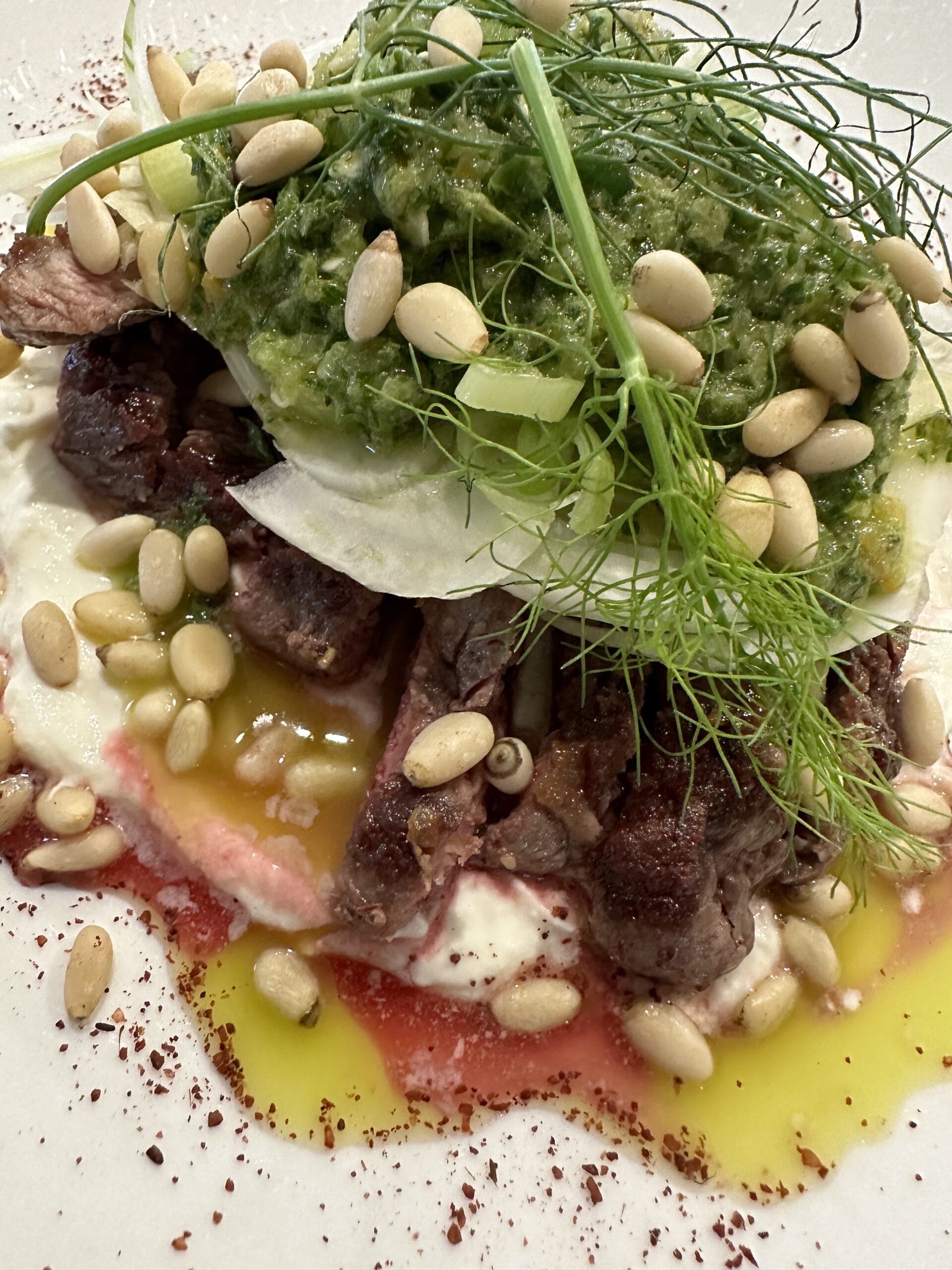
Lamb with Fennel and Salsa Verde

This delicious and quick recipe is adapted from one which appeared in a recent Australian Gourmet Traveller.

My supermarket didn’t have any lamb backstraps or fillets last week, so I bought boneless leg steaks. I didn’t have any pistachio nuts, so I used pine nuts instead. If you don’t have any preserved lemons, just add more herbs, some grated lemon rind and maybe a few pine nuts to the salsa.

The recipe serves 4 but it’s easily halved.

2 lamb backstraps or fillets (or 4 lamb leg steaks trimmed of any fat)
1 Tbs olive oil
Salt and freshly ground pepper, to taste
1 small to medium bulb of fennel
2 spring onions
1 cup Greek yoghurt
¼ cup pistachio nuts or pine nuts
1 tsp sumac (optional)
Salsa Verde:
¼ cup each firmly packed fresh mint and parsley leaves
1 clove garlic, peeled
2 long green chillies, cut into 3 or 4 pieces
1 Tbs cider or white wine vinegar
½ a preserved lemon, pith and seeds discarded
¼ cup Extra Virgin Olive Oil (approximately)
Salt and freshly ground black pepper, to taste

Season the lamb on both sides then cook in a frying pan in the 1 Tbs of oil for 4 minutes each side, over moderate heat, or until cooked to your taste. Leave to rest while you prepare the other ingredients, then slice thinly downwards.

While meat is cooking, thinly slice the fennel with a mandoline, reserving a few fronds to garnish. Thinly slice the spring onions on the diagonal – all the white and a bit of the green part.

Place all ingredients for salsa in food processor except the oil and seasoning. Process, scraping down the sides, until chopped evenly, then add the oil through the chute with the motor running. When you have a thick salsa, season to taste then scrape into a small dish. Lightly toast the nuts in a dry pan over moderate heat.

To serve, divide the yoghurt between 4 serving plates and spread out into a circle. Arrange the fennel and spring onions on top, then the meat. Drizzle with some of the salsa verde, sprinkle a few nuts on top and garnish with a fennel frond. Sprinkle a little sumac (if using) around the edge of the plate.

Serves 4

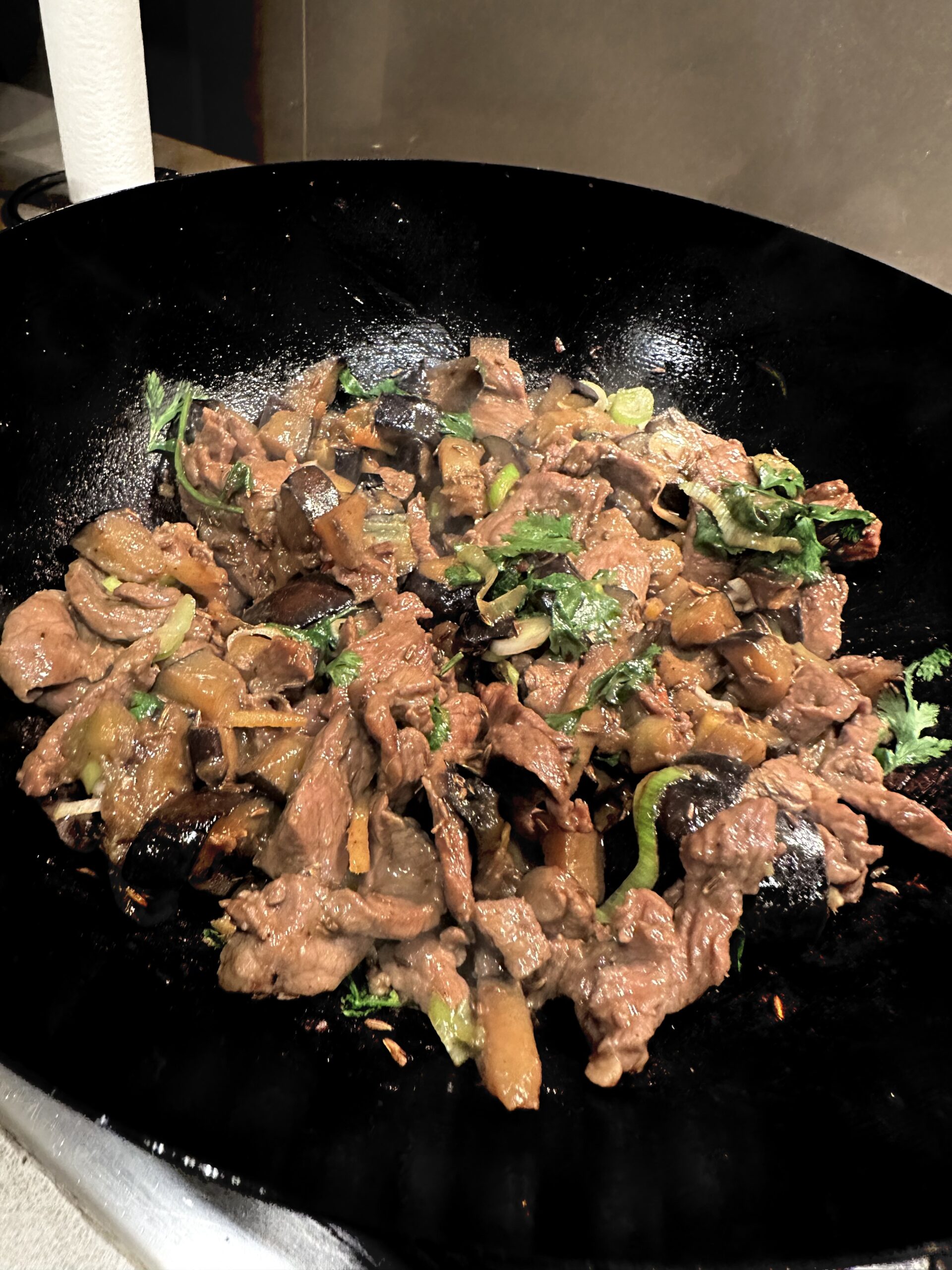
Lamb with Eggplant and Ginger

Lamb has become relatively expensive in Australia over the past year or two. A couple of years ago you could buy a leg of lamb for between ten and twenty dollars. You’re now looking at $40 to $50 from a supermarket and more from a butcher’s shop. For many familes lamb has gone from being an everyday staple to a special treat.

This tasty stir-fry recipe can be made using lamb fillets or any lean lamb, cut from the leg or shoulder. Adjust the amount of chilli to suit your taste and serve it with rice to make it go further.

350g boneless lamb cut into thin stir-fry strips
1 tsp cornflour
3 tsp ground cumin
3 Tbs soy sauce
2 Tbs rice wine or sherry
2 tsp sugar
2 eggplants, sliced then cut into strips about 1.5cm wide
¼ tsp salt
2 Tbs vegetable oil
1 Tbs finely chopped or grated fresh ginger
1 Tbs cumin seeds
1-2 small red chillies, finely chopped
2 spring onions finely sliced on the diagonal
Fresh coriander to garnish

Heat the cumin seeds in a small dry frying pan and allow them to lightly toast, being careful not to burn them then put them aside.

Pat the lamb dry then place in a bowl with the cornflour, half the cumin, half the soy sauce, the rice wine or sherry and the sugar. Mix well and put aside for 30 minutes and up to an hour.

Toss the eggplant with the remaining cumin and the salt. Heat half the oil in a wok or large frying pan and cook the eggplant, stirring occasionally for 5 minutes, until it’s starting to brown.

Add the ginger, remaining soy sauce and continue to stir fry until the eggplant is dark golden brown. Remove from the wok. Add remaining oil to the wok and when it’s hot add the lamb and stir fry for a minute or so, to make sure it’s not sticking together, then leave it undisturbed for 2 minutes. Stir fry for another 2 minutes or until golden brown all over. Return the eggplant to the pan with the chillies, spring onions and toasted cumin seeds.

Serve with steamed rice, garnished with the coriander.

Serves 3-4