Roast Pumpkin with Miso & Ginger

Miso is a traditional Japanese seasoning.

Miso paste is produced by mixing fermented soybeans with salt and a fungus called Koji. Sometimes rice, parsley, seaweed or other ingredients are added. It can be used in sauces, dips, soups and other dishes to produce a rich “umami” intensity of flavour.

Miso paste is usually salty, but its flavour and aroma depend on the ingredients and fermentation process. It comes in either white or red, with the latter having a slightly stronger flavour. Use whichever one you have or can find in your local supermarket or Asian grocery store. Once opened it keeps for ages in the fridge.

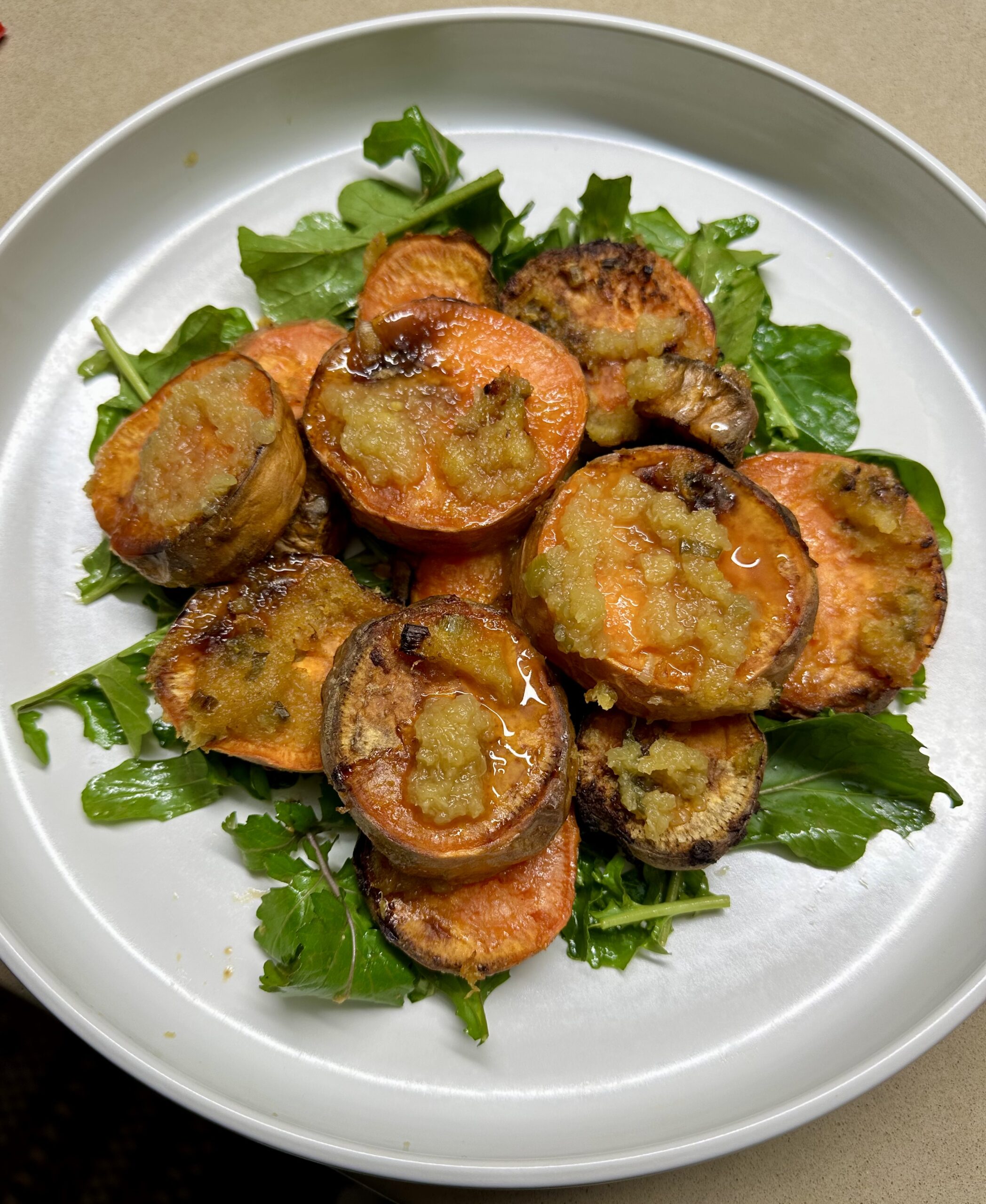
Today’s recipe was inspired by a dish we were served at Raku restaurant in Canberra.

1 kg pumpkin
2 Tbs olive oil
Miso sauce:
¼ cup Miso paste
1 Tbs grated ginger
1 Tbs sesame oil
1 Tbs runny honey
1 Tbs water
2 tsp rice vinegar (or any other vinegar)
1 tsp chilli paste or sauce
To garnish:
1 Tbs sesame seeds, lightly toasted
Fresh coriander leaves

Preheat oven to 180°C. Leave skin on the pumpkin, remove seeds and cut into wedges about 2cm thick. Place on a baking tray lined with baking paper, in a single layer. Brush pumpkin with the olive oil. Bake for 15 minutes then remove from the oven, turn pumpkin wedges over and brush them with the remaining olive oil. Return to the oven for 10 minutes.

Meanwhile mix all ingredients for the Miso sauce in a food processor. Spoon over the pumpkin. Return to the oven for 10 minutes, or until starting to brown. It might need 15 mins. Turn the wedges over and coat them with remaining Miso sauce. Cook for a further 10-15 minutes or until nicely glazed as in the photo.

Garnish with sesame seeds and coriander. Serve hot or at room temperature either alone or with steamed rice, or as a side dish with salmon, chicken or beef.

Serves 4-6


Shakshuka

Shakshuka originated in north Africa and is now popular all over the Middle East.

Serve with toasted sourdough or Turkish bread for brunch, lunch or Sunday evening supper. You probably have all the ingredients in the pantry. We had to nip out to buy one red capsicum from the corner shop.

2 Tbs olive oil
1 red capsicum (pepper)
1 onion
2 Tbs harissa, or to taste
1 tsp chilli paste, or to taste
1 x 400g can chopped tomatoes
4 eggs
1 tsp sugar
Salt and freshly ground black pepper to taste
To serve:
4 Tbs thick Greek yoghurt
1 Tbs chopped fresh coriander

Thinly slice the capsicum and onion. Heat olive oil in a medium-sized deep non-stick frying pan and cook the capsicum and onion over medium to high heat for 5-10 minutes, or until soft and starting to caramelise. Add harissa and chilli paste to taste and cook, stirring for one minute. Add the tomatoes and sugar and cook over medium heat until the tomatoes are reduced by half, stirring often.

Season to taste, turn heat down to a simmer, then make four indents in the mixture and break an egg into each. Cover with a lid and cook for 5 minutes, or until the eggs are cooked to your liking. Test by pressing with your finger.

Garnish with dollops of yoghurt and the coriander. Serve with toasted sourdough or Turkish bread.

Serves 4 as a snack, 2 as a meal


Japanese Salad with Sushi Flavours

This salad combines all the flavours we love in Japanese sushis and it’s delicious.

Serve it on steamed rice for a quick poke bowl, or on a bed of shredded iceberg lettuce, lightly dressed with Kewpie toasted sesame dressing, which you can find in most Australian supermarkets. Or use the salad as a filling for sandwiches or wraps. Or just eat it as it is for a high protein, low carbs light meal.

2 cooked chicken breasts, cut into strips or chunks (buy a rotisserie chicken from the supermarket for ease) or 300g cooked prawn meat, coarsely chopped
1 large ripe avocado, cubed
2 Tbs lemon or lime juice
1 Tbs Kewpie mayonnaise* (or ordinary mayonnaise)
1 Tbs Thai sweet chilli sauce
2 tsp sesame seeds (preferably black)*
1 tsp soy sauce
1 Tbs pickled ginger, chopped*
1 Tbs Asian crispy shallots*
Salt to taste
2 spring onions, thinly sliced on the diagonal
1 Lebanese cucumber, quartered lengthwise then cut into small cubes
1 clove garlic, crushed
To garnish:
A handful of fresh coriander, roughly chopped
1 sheet nori cut into strips, then into small julienne pieces*

Place all ingredients for salad in a large bowl and mix well.

Serve garnished with the coriander and nori pieces. Serve alone, or on steamed rice or in wraps or sandwiches.

Serves 4 on rice or in wraps or 2 on its own

*if you can’t find black sesame seeds, Asian crispy shallots, pickled ginger, Kewpie mayonnaise and nori seaweed sheets in the Asian section of your supermarket, go to an Asian grocery store

Chocolate Pear Cake

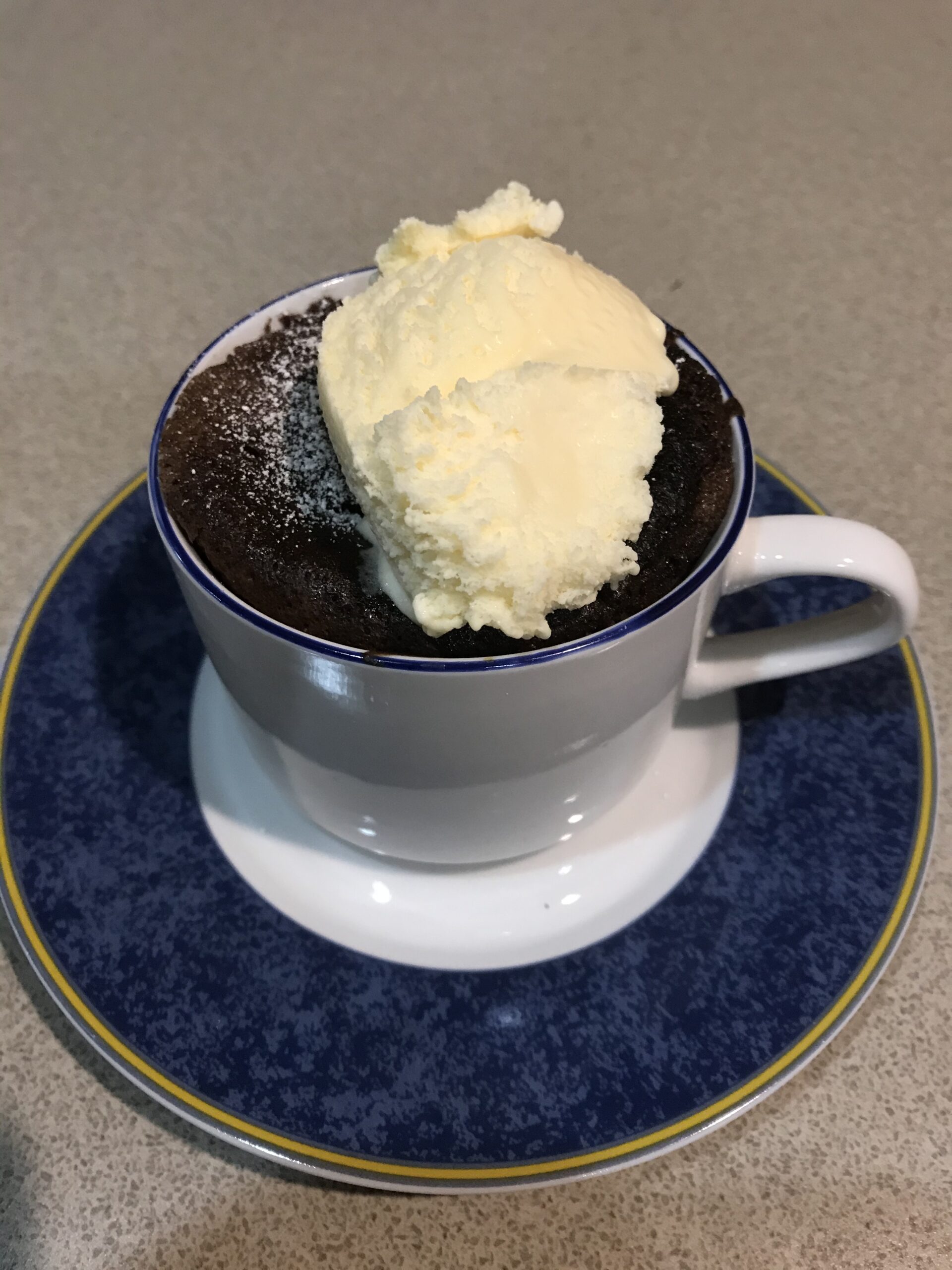
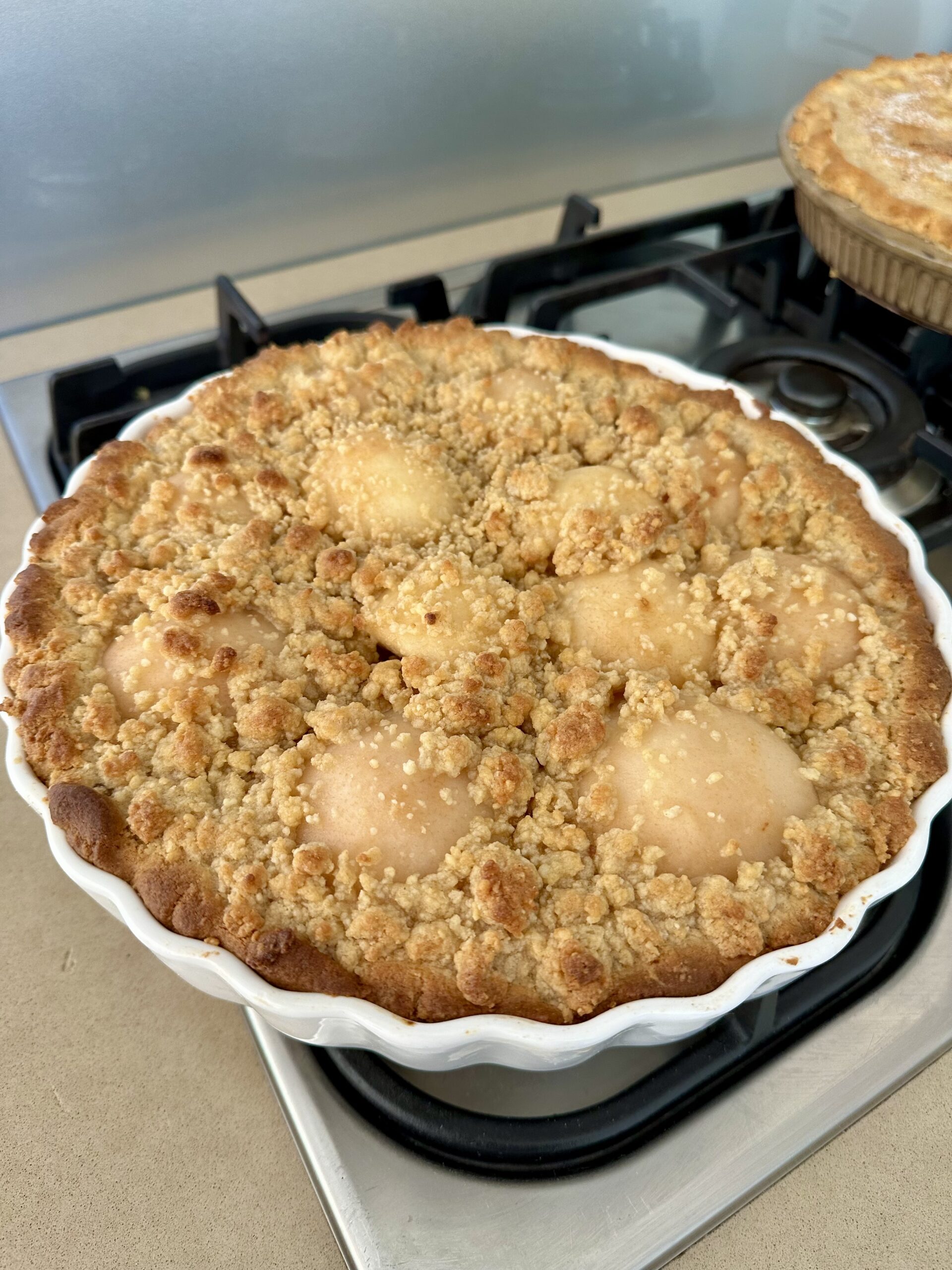
This egg-free, dairy-free recipe caught my eye as I’ve always liked the combination of pears and chocolate. I didn’t have any fresh pears, but a tin of pears in the pantry from goodness knows when worked well.

If you’re not dairy intolerant you can of course use ordinary milk and yoghurt.

Served with a blob of cream (I prefer sour cream shown in the photo below the recipe) with a cup of coffee or as a dessert, this recipe is definitely a keeper. You could leave out the pears and add a few more nuts. Maybe try blueberries instead of pears? Let me know if you try something different.

Cake:
1½ cups plain flour, sifted
¾ cup raw sugar (see substitutes)
1 tsp baking powder
1 tsp bicarbonate of soda
½ cup cocoa powder
½ cup almond or oat milk (see substitutes)
½ cup coconut yoghurt (see substitues)
½ cup warm strong coffee
¼ cup vegetable oil (I used canola)
2 tsp vanilla essence
Topping:
2 firm pears, peeled, cored and sliced into thick wedges (or one can pears, drained)
2 Tbs plain flour
1 Tbs raw sugar
100g dark chocolate, coarsely chopped
100g walnuts or pecans, coarsely chopped

Preheat oven to 180°C. Grease a 22cm round cake pan and line the bottom with baking paper. Place all ingredients for cake in food processor and mix well, stopping to scrape down the sides. Scrape into the cake pan and smooth the top.

Dry the pear slices on paper towel then mix with the 2 Tbs of flour and 1 Tbs sugar. Arrange over the top of the cake, discarding any flour mixture left in the bowl. Sprinkle the chocolate and nuts over the top.

Bake for 45-55 minutes or until well-risen and a toothpick inserted into the middle of the cake mixture comes out clean. Cool for an hour then run a knife around the edges and remove from the tin. If liked top with a little icing sugar through a sieve.

Serve with sour cream, whipped cream or pouring cream.

Serves 12-16

Substitutes: you can use any kind of milk, any kind of plain thick yoghurt and any kind of sugar in this recipe.


Roasted Pumpkin & Spiced Apple Soup with Cashew Nut Cream

On the way from Canberra to Sydney we stopped at Eling Forest Winery, in the Southern Highlands, for lunch.

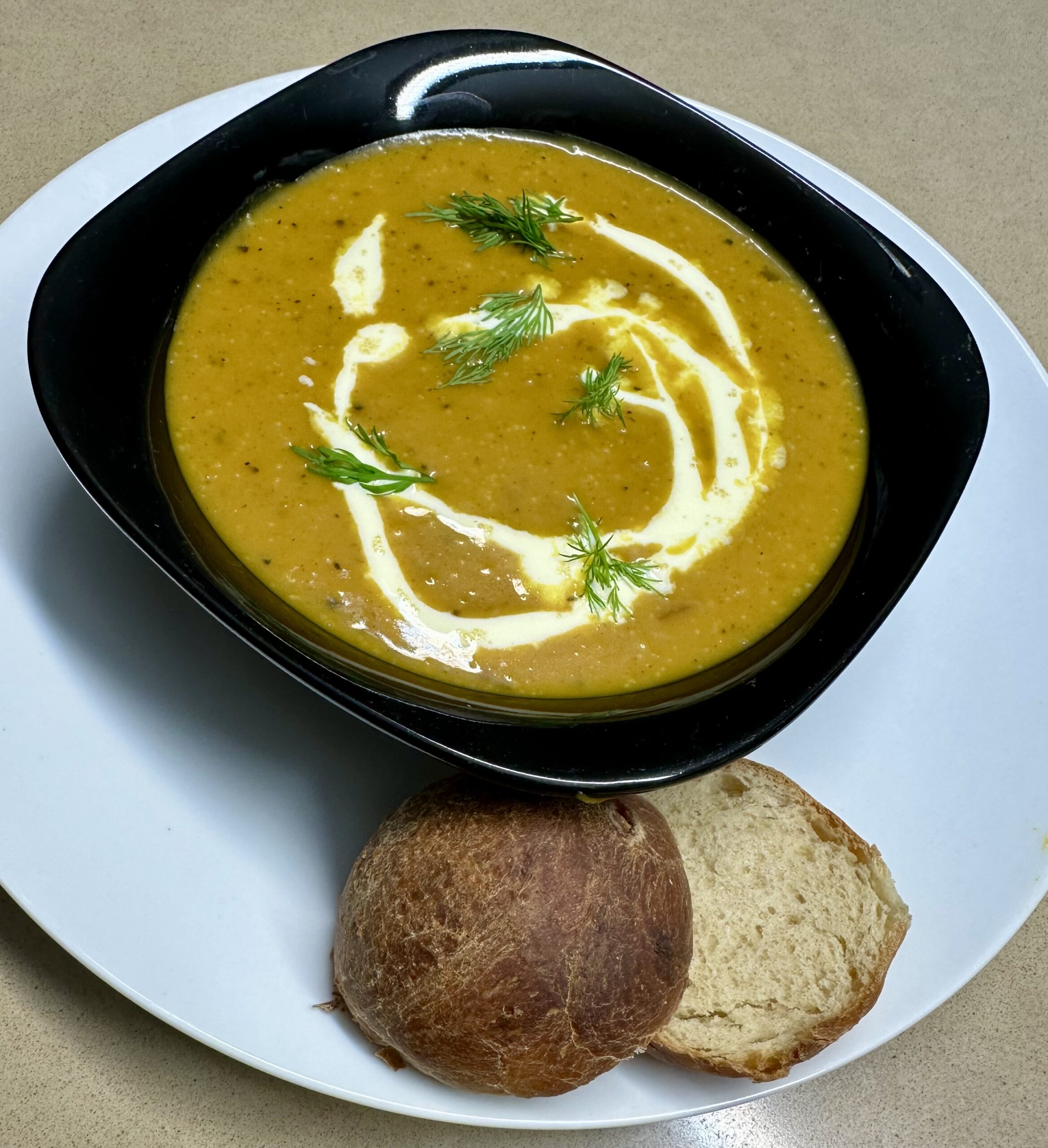
Roasted Pumpkin and Spiced Apple Soup was on the “specials of the day” menu and we both had the same. The combination of sweet, smoky pumpkin and spiced apples was divine and I couldn’t wait to make my own version.

Topped with Cashew Nut Cream and crunchy Spiced Pumpkin Seeds, this soup, which is suitable for Vegans, is a real winner. Perfect for lunch or supper on a cold day in the Southern Highlands of New South Wales, or anywhere else when it’s a bit nippy.

If you’re not following a Vegan diet you can thin down the soup with cow’s milk.

Soup:
About 500g pumpkin, peeled
4 Tbs olive oil
1 large onion, chopped
2-3 apples, peeled, cored and cut into chunks
4 cloves garlic, finely chopped
½ tsp salt
½ tsp each of ground cinnamon and nutmeg
A pinch of ground cloves
A pinch of ground cayenne
1 litre vegetable stock
Milk as required (cow’s, oat, almond etc)
Crunchy Pepitas:

1 Tbs olive oil
1 cup pepitas (pumpkin seeds)
¼ tsp salt, or to taste
1 tsp sugar, honey or maple syrup (optional)
¼ tsp each ground cumin, cinnamon and paprika
Cashew Nut Cream:
1 cup raw cashew nuts + enough water to cover
2 tsp cider vinegar
2-3 tsp nutritional yeast (optional)
Salt to taste
To serve:
Toasted sourdough or Turkish bread

Cashew Nut Cream: Cover cashew nuts with water and leave to soak overnight. Place in food processor or blender with the water and vinegar and process until smooth, stopping halfway to scrape down the sides. Add the nutritional yeast, if using, then taste and add a little salt if needed. It will keep for a few days in the fridge. Thin down if necessary with a little water.

Soup: Preheat oven to 200° C. Cut the peeled pumpkin into large chunks, mix with 2 Tbs of the olive oil, spread out on a baking tray and roast for about half an hour or until tender and starting to brown. Meanwhile heat remaining 2 Tbs oil in a large heavy-based saucepan and add the onions, apples and garlic. Cook, stirring often, until soft. Add the spices and cook, stirring for a minute or two. Add the roasted pumpkin and the stock. Simmer for 25 minutes then turn off the heat. When cool enough to handle, puree the soup in a blender or food processor. It will be very thick. Can be made ahead to this stage and kept in the fridge for up to 4 days.

Crunchy Pepitas: place pumpkin seeds in a medium-sized non-stick frying pan with the oil and stir over moderate heat for 2 minutes. Add salt, sweetener (if using) and spices. Continue to cook, stirring all the time, until the seeds are starting to change colour. Tip out onto a large dinner plate and leave to cool. Keep in a jar in the fridge and use about a tablespoonful for each serving of soup.

To serve, reheat the soup adding water or milk to thin it down to the required consistency. Taste and add salt if required.

Serve with toasted sourdough or Turkish bread, topped with a swirl of cashew nut cream and a few crunchy pepitas.

Serves 8


Eggplant and Chickpea Curry

This winter has been particularly cold so I’ve been trying different recipes for eggplant curries. Eggplant is one of the “meatiest” of vegetables, resulting in a very filling and satisfying meal. This curry has become one of our favourites.

For a less rich sauce, use water instead of the can of coconut milk.

2 medium to large eggplants cut into 2cm cubes, skin left on
4 Tbs olive oil
1 large onion , chopped
1 red capsicum, seeded and cut into cubes
3 cloves garlic, finely chopped or crushed
1 Tbs fresh ginger, grated or finely chopped
2 tsp each ground coriander, smoked paprika and turmeric
1 Tbs curry paste (whatever you have on hand)
1 can diced tomatoes
1 can coconut milk (or 1 cup water)
1 can chickpeas, drained
Salt to taste
Fresh coriander, chopped

Preheat oven to 180°C. Place eggplant in a bowl, add 2 Tbs of the olive oil and a little salt. Mix well, then spread out on a large shallow oven tray lined with baking paper. Bake for 25-30 minutes or until tender and starting to brown.

Meanwhile in a large frying pan cook the onion, red capsicum and garlic in the remaining 2 Tbs of oil for 5 minutes, stirring often, or until soft. Add the ginger, spices and curry paste and cook, stirring, over moderate heat for 1-2 minutes.

Add the tomatoes, coconut milk and chickpeas, plus a dash of water if it seems a bit too thick. Simmer for 15 minutes. Add the roasted eggplant to the sauce with salt to taste. Garnish with coriander (I didn’t have any for the photo) and serve with steamed rice and a fruit chutney.

Serves 4

Dumplings with Satay Sauce

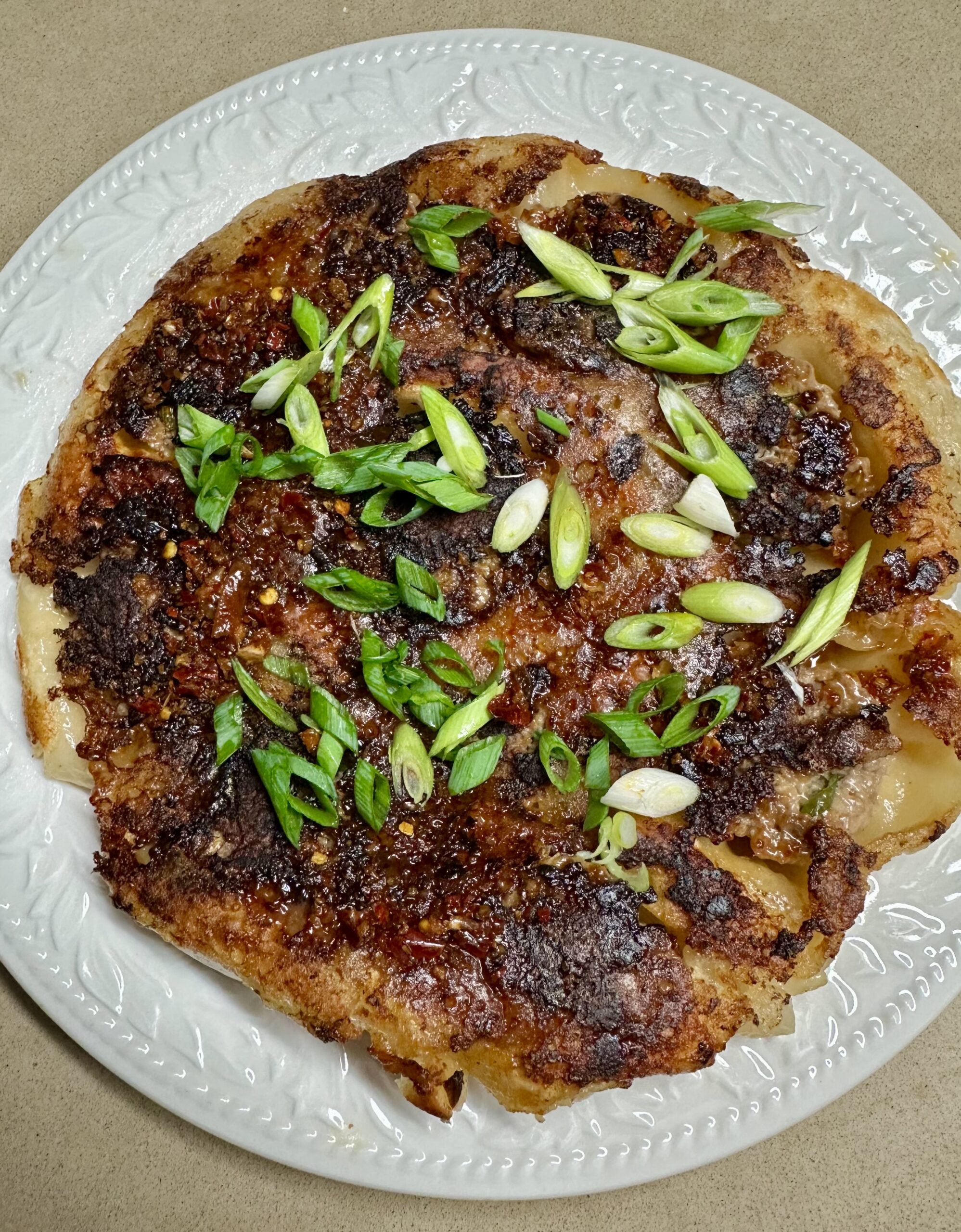
This is an easy recipe you can whip up in no time to feed the family or a crowd. Similar in method to this recipe for Baked Gnocchi with Tomatoes, Basil and Cheese which I posted some time ago and which uses a bought packet of gnocchi, today’s recipe uses a bought packet of frozen dumplings. It’s one of those throw everything in and bake dishes.

To make this dish go further, serve it with steamed rice.

1 packet frozen dumplings (about 500g, prawn, chicken or pork)
Sauce:
1/3 cup smooth peanut butter
1 Tbs chilli paste/sauce (Sriracha, gochujang, harissa paste or curry paste)
1 Tbs sweet chilli sauce
1 Tbs soy sauce
2 tsp fish sauce
2 cloves garlic, crushed
1 Tbs grated ginger
2 tsp sesame oil
1 (400ml) can coconut milk
Additions:
½ cup frozen edamame beans (not the ones in the pods) (see variations)
2 heads bok choy, chopped (see variations)
Toppings:
1 Tbs sesame seeds
2 spring onions, thinly sliced
½ cup chopped coriander leaves
1 Tbs chopped peanuts
1 Tbs crispy fried shallots (sold in Asian shops and some supermarkets)
1 lime, cut into wedges (optional)

Preheat oven to 200°C and lightly oil a lasagne-type dish about 20-22cm long. Place all ingredients for the sauce in the dish. Rinse out the coconut milk can with ¼ cup water and tip that in too. Whisk with a hand whisk to combine. Scatter the edamame and bok choy over the dish and push them to submerge. Arrange frozen dumplings over the whole dish and push them in a bit. You will need 20-25 dumplings – I used about two thirds of a 750g packet.

Bake for 30-40 minutes or until the sauce is bubbling and the dumplings are starting to brown on top. Meanwhile prepare the toppings.

Sprinkle toppings over the dish and serve immediately.

Serves 4

Variations: instead of edamame use frozen peas or corn. Instead of bok choy use pak choy, baby spinach leaves, sugar snap peas, baby corn or julienne carrots.


Apple, Carrot & Beetroot Cake

This is a variation on a carrot cake which uses a mixture of grated apple, carrot and beetroot. I didn’t have any beetroot so I used a couple of turnips! One apple, one carrot and two turnips. Sounds weird but it was delicious.

A coarse grating blade on a food processor makes easy work of the grating. Don’t be tempted to add any liquid to the mixture as the vegetables will provide enough moisture as they cook.

About 3 cups grated veg (apple, carrot, beetroot, turnip) firmly packed
3 eggs
2/3 cup vegetable oil
1 tsp vanilla essence
2¼ cups plain flour, sifted
1 tsp bicarbonate of soda
2 tsp baking powder
½ tsp salt
1 cup sugar
1 tsp cinnamon
1 tsp mixed spice
½ tsp grated nutmeg
1 cup nuts (see note below)
Icing:
250g cream cheese at room temperature
1 cup icing sugar, sifted
To decorate:
Extra nuts

Preheat oven to 180°C.

Grate vegetables and place in a large mixing bowl. I use the Magimix for grating vegetables which makes short work of it. Place eggs and remaining ingredients except nuts in food processor and mix well, stopping to scrape down the sides. Add the nuts and mix to incorporate and chop them a bit. Scrape into the bowl with the grated vegetables and mix well.

Grease and line a 22cm (9″) square cake pan and line the bottom with baking paper. You can use a round cake tin if preferred or make muffins. Bake for 35-45 minutes or until evenly browned and a toothpick inserted in the middle comes out clean. Muffins will take less time.

Cool then remove from cake tin and spread with the icing. Decorate with extra nuts. Keep in the fridge.

Icing: in a bowl with a wooden spoon, mix the cream cheese until smooth then gradually mix in the icing sugar.

Note: you can use walnuts, pecans or pine nuts. I bought a pack of what was described as Granulated Nuts from Woolworths and they worked perfectly in the cake mixture, then I used walnut halves to decorate.

Serves 16


Chicken Lady Chicken

While living in Paris for four years I noticed several differences in the shopping, eating and cooking habits of the French, compared with ours.

They generally don’t stock up on food in big supermarkets. Living in an apartment, as almost everyone does in big cities like Paris, makes getting groceries from the supermarket into your home a real challenge. With limited parking and, for some Parisians, no elevator, it’s much easier to shop at the local markets every few days. Buy what you need, eat it fresh, then go and buy more. Little trolleys on wheels are perfect for shopping this way. An added deterrent to buying up big is that most Paris apartments have tiny kitchens with limited cupboard and freezer space.

I reckon one of the reasons most French women stay slim is that they don’t eat a big meal every evening. Several svelte French friends told me that during the week their husbands went out for a three course lunch and were quite happy with something very light in the evening. Women who work do the same. So as I was heading home to cook our main meal of the day, they were going home to have “un petit yaourt” or “une tartine” – a slice of toast with something on it.

I also noticed that the French don’t get stuck into baguettes and French cheeses quite the way we do. I’ve watched lithesome French friends make one slice of bread last through several courses, used as required to push food onto their fork. The cheese course is always served before the dessert and my svelte French friends take only a small sliver of each. French cheeses are marvellous, but they are also high in calories and cholesterol.

The French also tend to be more abstemious when it comes to wine consumption, as we noted when we cleared up the empties after a dinner party for mainly French guests and compared it with the week before when we had hosted mainly Aussies.

While they regularly eat out, our French friends like to entertain family and close friends. With the limitations of a small kitchen and an equally small oven, dessert often comes from the local patisserie. With such a wonderful array to choose from, why bother cooking? There are of course exceptions. I have several French friends who make wonderful cakes and desserts, using recipes inherited from their mothers and grandmothers.

Food markets pop up all over Paris in regular spots, once or twice a week. The twice-weekly market in Boulevard de Grenelle was less than five minutes walk from where we lived. Every Wednesday and Sunday from seven in the morning until lunch time the market sells fresh fruit and vegetables, cheese, meat, fish and more to a bustling crowd of mostly French customers.

On Sundays the rotisserie chickens and roast potatoes sold at the markets are popular to take home for lunch. Today’s recipe comes from well-known cook and food writer David Lebovitz who has been living in Paris for over 20 years. He managed to persuade the chicken lady at his local market to part with her recipe. Hence the name Chicken Lady Chicken. He uses the marinade for one chicken, but I found it’s enough for two. She uses white wine but red wine or even sherry is a good substitute.

1 or 2  x 1.5kg (3 lb) chickens
Marinade:
3 cloves garlic, crushed
1½ tsp salt
2 Tbs olive oil
2 Tbs lemon juice
2 Tbs wine or sherry
1 Tbs soy sauce
2½ tsp harissa, Sriracha or other chilli paste
2 tsp Dijon or other mustard
2 tsp honey

Remove backbone from the chicken(s) by cutting along each side with a pair of poultry shears. Place chicken breast side down on cutting board and press hard with the heel of your hand to flatten it out as much as possible, then repeat on the other side. Loosen the skin a bit with your finger so the marinade can get in under the skin.

Mix all ingredients for marinade and pour over the chicken(s), rubbing it in and pushing it under the skin. Marinate for 1 to 2 days in the fridge, covered, turning from time to time. Levovitz does this in a plastic bag, but I used a shallow dish.

Preheat the oven to 200°C. Place chickens in a roasting pan breast side down. Cover loosely with aluminum foil then place a heavy weight on top. I used two bricks, one for each chicken. Lebovitz cooks his chicken for a total of 45 mins but I think it needs a bit longer. Roast for half an hour, then remove the brick(s) and foil and turn the chickens over, basting thoroughly. Roast for a further half hour or until chickens are well browned and cooked through.

Carve the chicken(s) and serve with roast potatoes and a salad.

Each chicken serves 4-6

Beef Bourguignon

My friend Katie said she made beef bourguignon the other day and had to throw it out because the meat was still tough despite hours of cooking.

I said I would give her my recipe which I’ve been making for years. I always make it in my slow cooker, but you can cook it in the oven if you prefer.

As you can see from the photo, this is not fancy food. Full of flavour, beef bourguignon makes perfect comfort food for mid-winter dining, especially with the cold snap we’re currently experiencing in Canberra.

1kg to 1.5kg lean beef cut into 2-3cm cubes (I use chuck steak)
3 Tbs flour, seasoned
2 Tbs olive oil
50g butter
100g speck cut into thick slices then chunky little pieces
1 onion, chopped
1 clove garlic, crushed
1 leek sliced
S and P
3 Tbs brandy
bouquet garni or equivalent mix of herbs (see note below)
1 cup red wine
1 Tbs tomato paste
1-2 cups beef stock
Garnish:
12-16 shallots or very small onions, peeled, left whole
12-16 button mushrooms, wiped and trimmed
30g butter, extra
½ tsp sugar
3 tsp lemon juice
2 Tbs chopped parsley
To serve:
Steamed carrots and mashed potatoes

When cutting up the meat it’s ok to leave a bit of fat and tendons as these will cook down in the casserole. Just remove any excess.

Coat meat in seasoned flour, shaking off excess. Cook bacon in a large frying pan without any added oil until browned then place in a large ovenproof casserole or the bowl of a Slow Cooker, leaving the oil in the pan. Add half the olive oil and half the butter to the frying pan and brown the meat in two batches. When the second batch is brown, add the brandy, set alight (turn off the extractor fan first) and when the flames subside add to the casserole with the meat and juices from the frying pan.

Add remaining oil and butter to frying pan and cook, garlic, onion and leek for a few minutes, stirring until softened. Add to casserole with remaining ingredients, using just enough stock to almost cover. You will need less stock if you are using a Slow Cooker rather than the oven, so add a cup now and you can add more later if necessary. In my Slow Cooker I only need 1 cup of stock and don’t need to add more.

Cover and bake in the oven at 150°C for 1.5 to 2 hours or until meat is tender, adding more beef stock if necessary when you check it after an hour or so. It will take longer in a Slow Cooker and time will depend on how tender the meat is and whether you put the cooker on Low or High. In my Slow Cooker it takes 4 hours on High.

Garnish: heat extra butter in a small frying pan and cook the onions gently until soft and browned. Add sugar and continue cooking, stirring frequently, until glazed. Add mushrooms (halved or quartered if large) and continue to cook for a few mins, stirring, then add lemon juice. Just before serving mix onions and mushrooms into casserole. Meanwhile steam the carrots, sliced if large or whole if small. When tender drain and add a knob of butter, S and P. Cook the potatoes and mash with butter and a little milk.

Adjust seasoning in the casserole and remove bouquet garni. Serve the casserole with the carrots and the creamy mashed potatoes on the side. Sprinkle chopped parsley over the beef.

Serves 8

Note: a bouquet garni is a bunch of fresh herbs tied with a piece of string and removed from the dish just before serving. Usually it consists of bay leaves, thyme and parsley. Instead you can add some chopped fresh herbs or dried herbs.