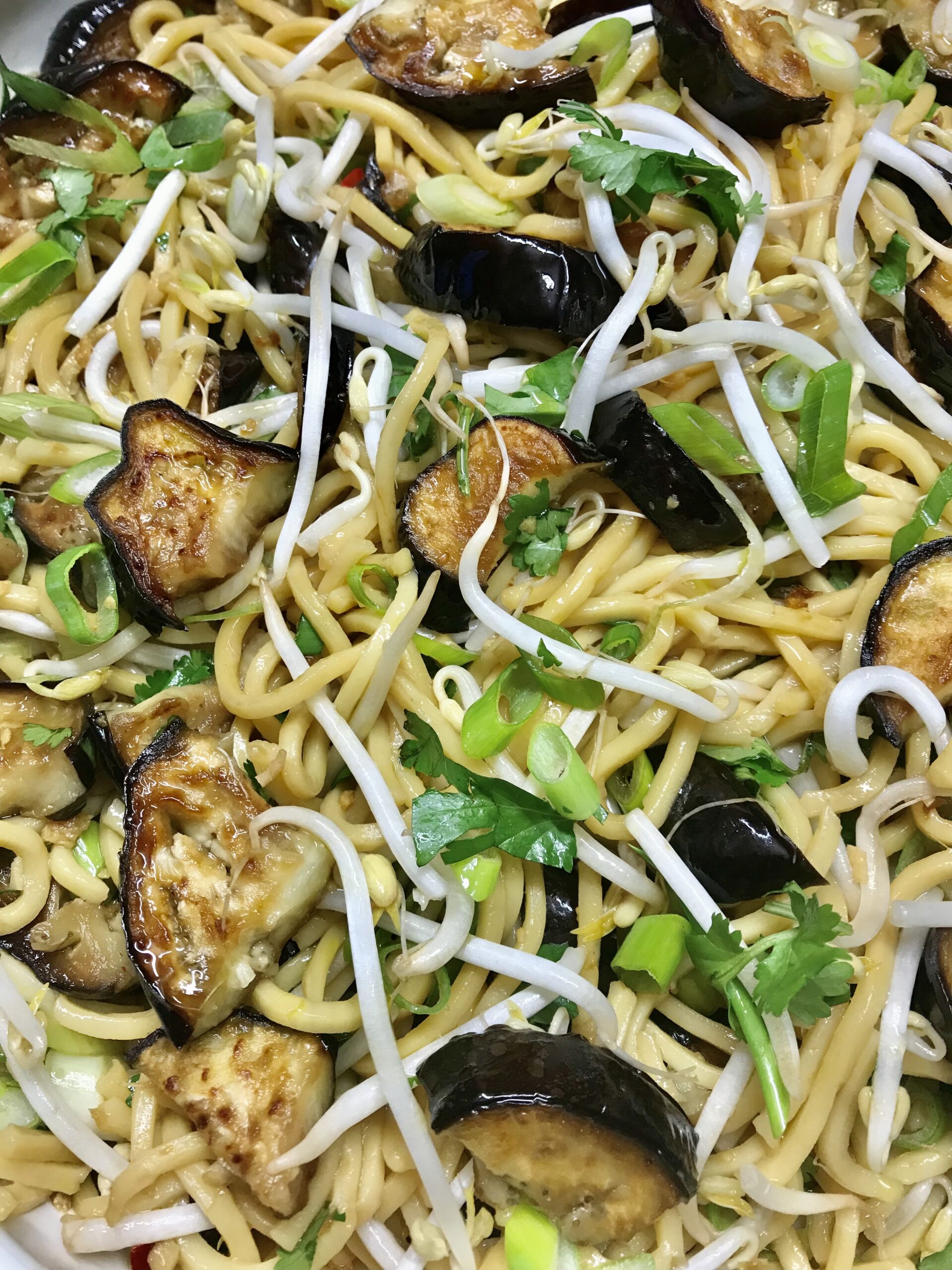
Chinese Sesame Noodles with Eggplant

These Chinese Sesame Noodles with Eggplant always leave me thinking that if I had to be a vegetarian, this is one of the dishes I would make often. Some vegetarian dishes are satisfying and others just don’t hit the spot.

The original version came from Australian cook Belinda Jeffery, cooking presenter on the TV show Better Homes and Gardens for many years. I’ve been making it for over 20 years and yes I’ve tweaked it slightly (I know, I’m incorrigible) and added the optional pine nuts which were suggested by Matthew.

Served at room temperature it’s perfect for a shared buffet or as a light family dinner. Also great for lunch boxes.

This week’s recipe is especially for Moya and John and my brother David.

2 large eggplants, cut into 1cm thick slices
3 spring onions, sliced finely on the diagonal
125g bean sprouts
A good handful chopped fresh coriander
450g fresh noodles (Hokkien or Singapore)
Lightly toasted pine nuts to garnish (optional)
Basting mixture:
2 Tbs sesame oil
2 Tbs olive oil
3 Tbs soy sauce
2 Tbs vinegar
¼ cup sugar
1 small red chilli, finely chopped (with or without seeds, up to you)
2 tsp finely chopped or grated fresh ginger (I tend to use more, like double!)
1 large clove garlic crushed

Cook noodles according to packet directions and drain. Preheat oven to 200°C. Mix basting ingredients. Arrange eggplants on two large shallow baking trays lined with baking paper. Brush both sides with the basting mixture. Bake for 20-25 minutes or until tender, brushing them again about halfway through the cooking time.

When eggplant is cool enough to handle cut into quarters, halves or thick slices and mix with remaining basting mixture. In a large shallow serving dish mix the eggplants with the noodles, bean sprouts, spring onions and coriander, keeping a little for decoration. Taste and add some extra olive oil or soy sauce, if necessary. Garnish with the reserved coriander and a few toasted pine nuts (optional, but they do add a nice bit of crunch) and serve warm or at room temperature.

Serves 4

Baked Gnocchi with Tomatoes, Basil and Cheese

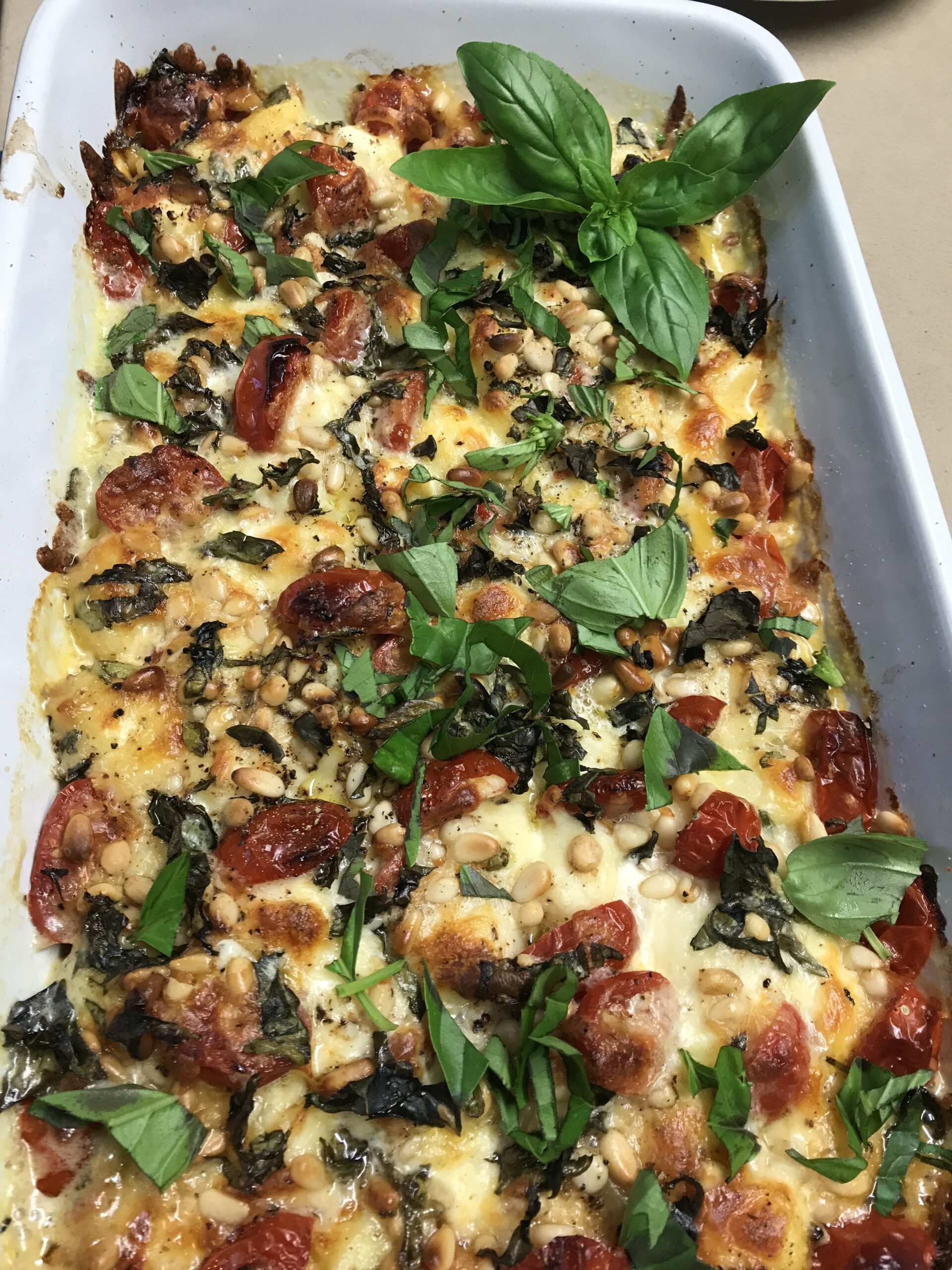
This is a very quick and easy dish to feed your kids or grandkids, using a packet of bought gnocchi.

It can be thrown together in no time at all, but if you feel like making your own gnocchi, by all means do so. I made it with the packet variety when a couple of the grandkids were coming for dinner and it was really quite tasty.

500g packet potato gnocchi
2 Tbs olive oil
250g cherry tomatoes, halved (or larger tomatoes, quartered)
125g fresh mozzarella, cut into chunks, or use small bocconcini balls
1 cup fresh basil leaves
Salt and freshly ground black pepper
1/3 cup pine nuts (optional)
¾ cup cream
1 cup grated cheddar cheese

Preheat oven to 200°C. Place gnocchi in a bowl, cover with boiling water and leave to stand for 2-3 minutes. Drain well. Tip gnocchi into a shallow lasagne-type dish. Add the olive oil and seasoning and mix well. Tuck the tomatoes, mozzarella chunks or bocconcini balls and most of the basil in between the gnocchi. Scatter the pine nuts over, drizzle with the cream and sprinkle with the grated cheddar.

Bake for 20-30 minutes or until golden brown and cooked. Garnish with remaining basil and serve with a green salad.

Serves 4


Spicy Roast Cauliflower with Chickpeas and Spinach

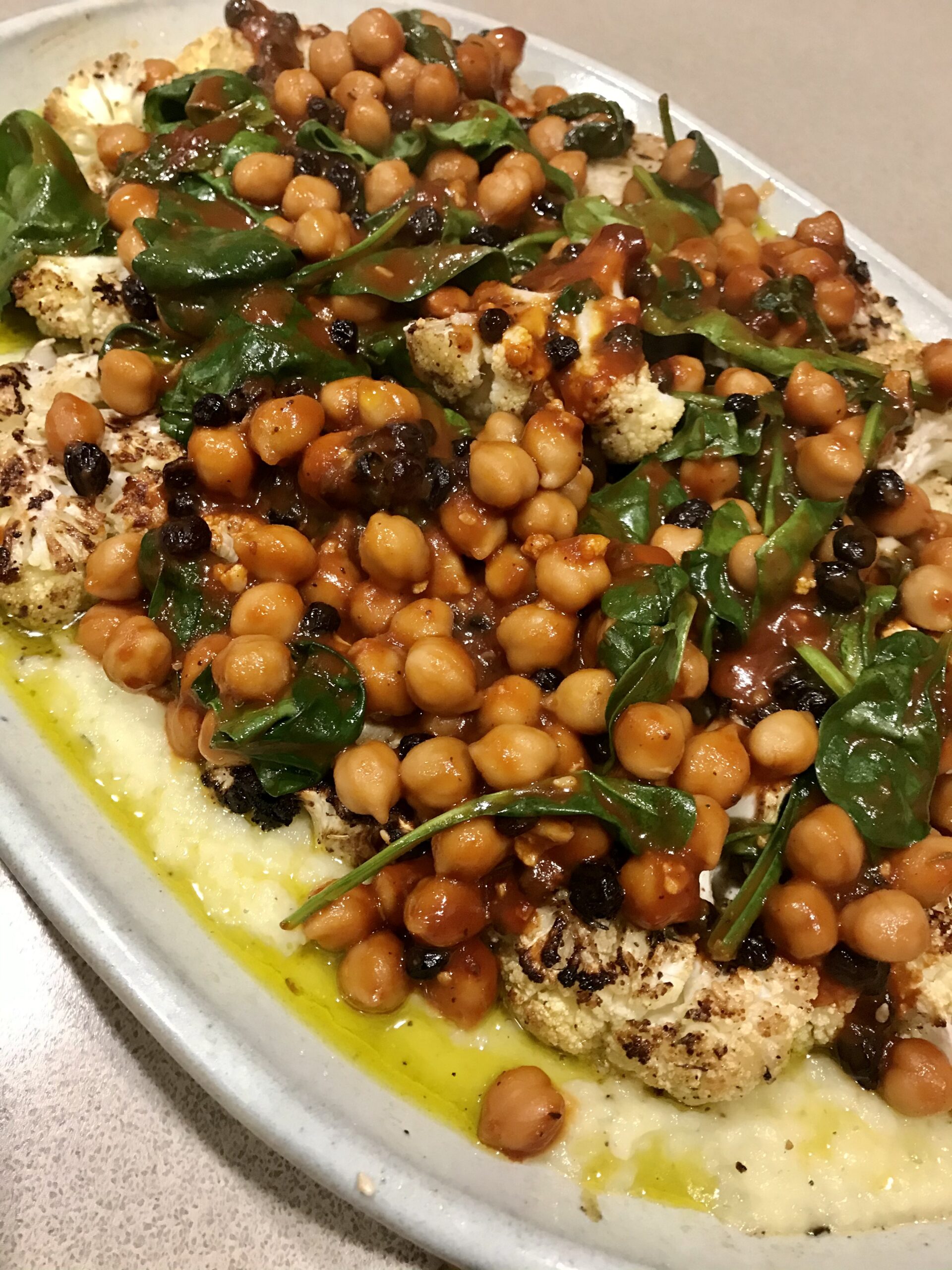
Woolworths supermarkets publish a free recipe magazine every month and I sometimes pick one up when I’m doing my weekly shopping. This recipe appealed to me, so I tore it out.

When I came to make it I couldn’t believe how complicated the method was. Using exactly the same ingredients, but a completely different method, I created this version which was delicious.

1 large cauliflower
Water
1 tsp vegetable or chicken stock powder (or ½ a stock cube)
25g butter
3 Tbs olive oil
2 Tbs Za’atar (spice mix)
2 tsp sumac
2 Tbs tomato paste
¼ cup red wine or cider vinegar
¼ cup currants
1-2 Tbs maple syrup, to taste
1 can chick peas, rinsed and drained
2 cups baby spinach
Salt and freshly ground black pepper

Cut the cauliflower into large florets and place them in a large mixing bowl. These are the cauliflower pieces you are going to roast. Put the remaining stalks, tiny florets, and leaves in a medium saucepan. Add enough water to barely cover and the stock cube.  Bring this to a full
boil, then simmer until tender.  Cool for 10 minutes, and then puree in a food processor or with a stick blender, adding the butter and salt and pepper to taste. If making ahead, scrape the puree back into the saucepan, so you can reheat it at serving time.

Preheat oven to 200°C. To the cauliflower florets add the olive oil, Za’atar, sumac, salt and pepper to taste and mix well. Line a large shallow baking tray with non-stick baking paper and spread cauliflower over in one layer. Bake for 20-30 minutes or until al dente and starting to brown on the edges.

While cauliflower is cooking place tomato paste, vinegar, currants, maple syrup, chickpeas and half a cup of water in a frying pan and cook, stirring often for 5 minutes or until reduced and thickened. Just before serving mix in the spinach and remove from the heat.

To serve, spread cauliflower purée (reheated if necessary) over one large serving plate or several individual plates. Top with the roasted cauliflower, then spoon over the chickpea mixture. If liked drizzle a little extra virgin olive oil around the plate.

Serves 6

Note: if you don’t have any Za’atar or sumac, make your own spice mixture with cumin, coriander and dried thyme or oregano. If you don’t have any currants, use sultanas, raisins or dried cherries.

Flatbreads with Minted Yoghurt and Roast Vegetables

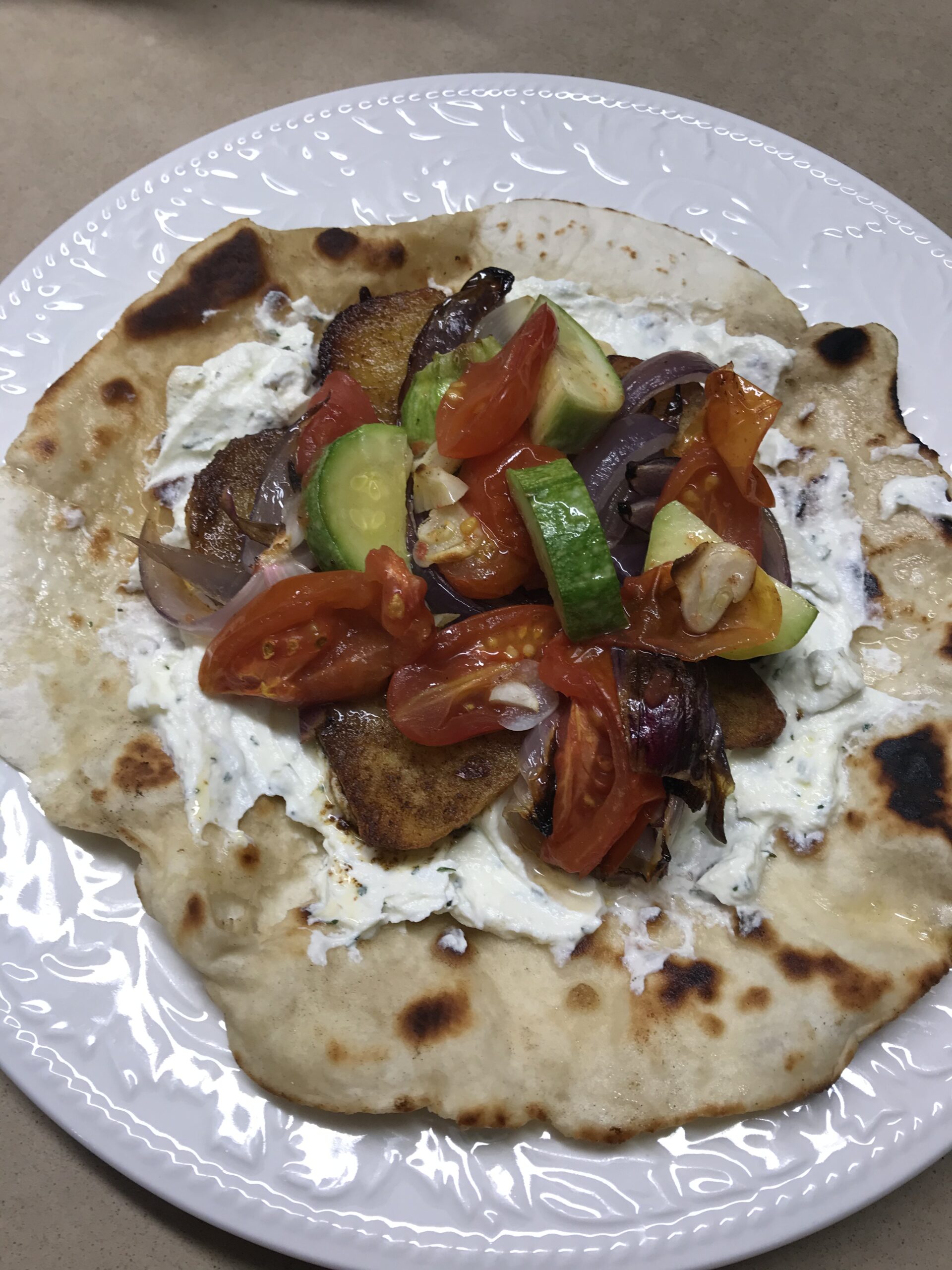
This recipe is adapted from one by Yotam Ottolenghi. The flatbreads are easy to make, but you could buy some Naan bread or wraps and use those instead. Any leftover flatbreads can be frozen. Just thaw and reheat briefly in a frying pan.

Flatbreads:
400g plain flour (see note below)
½ cup plain yoghurt
1 tsp salt
1 tsp dried yeast
180ml warm water
1 tsp sugar
Ghee (or oil and butter) for frying
Oven-Roasted vegetables
1 tsp ground cumin
1 tsp smoked paprika
Mint Yoghurt:
2 cups plain yoghurt
2 Tbs chopped mint
1 tsp lemon juice
1 Tbs olive oil
Good pinch of salt

Place flour and salt in food processor and add yoghurt. In a small bowl, mix yeast with warm water and sugar and leave to stand for 10 minutes until frothy. Add to the food processor and process until mixture forms a ball. If it seems too dry to form a ball add a bit more warm water, a tablespoon at a time with the motor running. Once dough has formed into a smooth ball, tip onto a lightly floured surface and form into a sausage shape. Cut into 8 even-sized pieces, then knead and roll each into a ball and place on a tray. Cover with a tea towel and leave for an hour and a half, or until doubled in size.

Meanwhile prepare the oven-roasted vegetables according to the recipe link, seasoning them before roasting with the cumin and paprika, as well as the oil, salt and pepper. Any mix of vegetables will do. You might like to add some tomatoes as in the photo.

Line a sieve with a piece of muslin or similar cloth (I use a man’s cotton handkerchief I keep for this purpose), scrape in the yoghurt and stand over a bowl so the liquid drains out. Leave for an hour or two or overnight in the fridge. Blitz mint, lemon juice, oil and salt in a mini-blender, spice grinder or use a mortar and pestle. Mix this paste into the strained yoghurt.

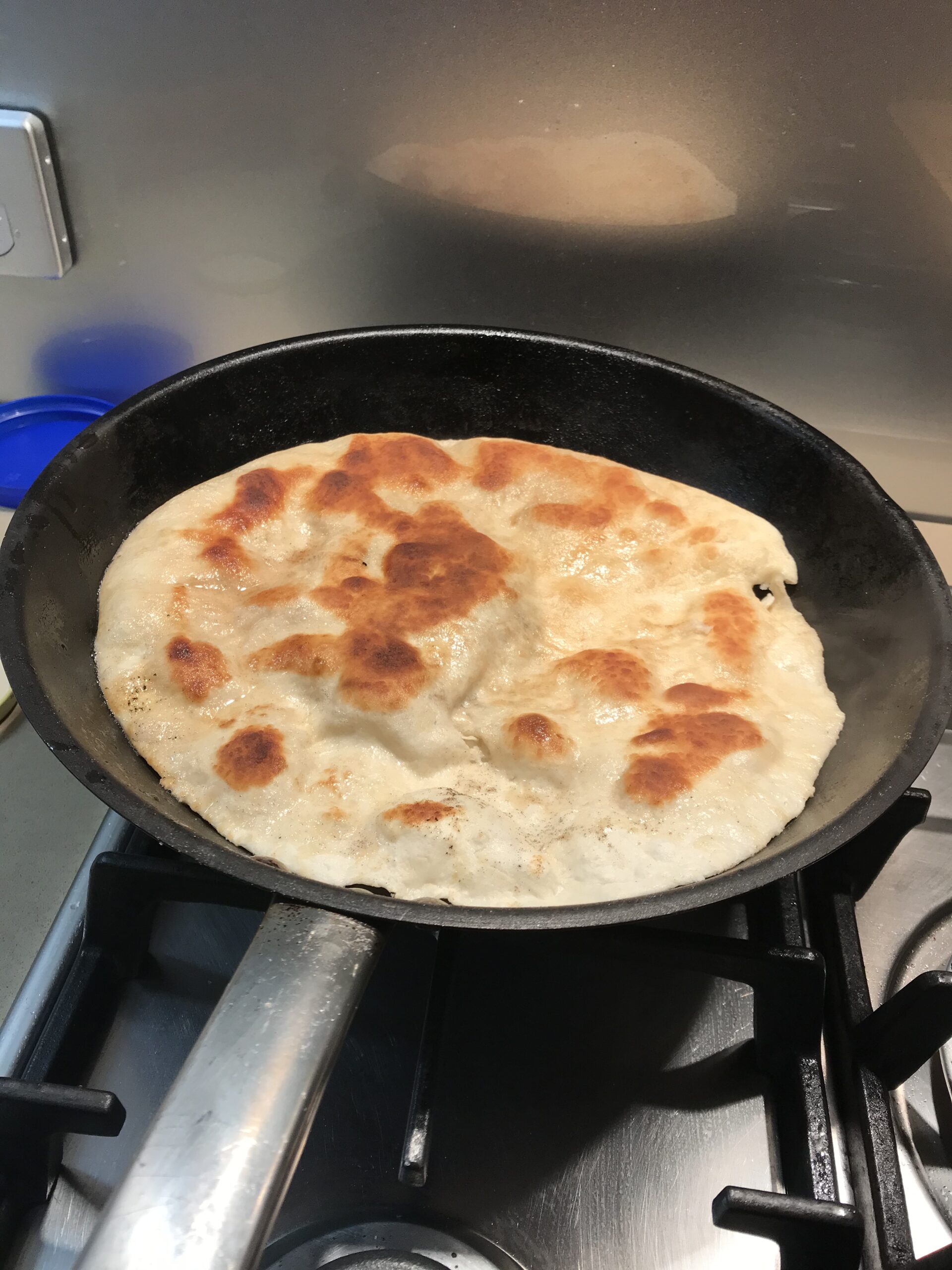
At serving time, on a lightly floured surface, roll out each flatbread ball thinly to form a circle about 25cm in diameter. Heat some ghee (or a drizzle of oil and a small piece of butter) in a large non-stick frying pan and cook flatbread on high for about 2 minutes each side. Keep warm in a low oven covered with a tea towel while you cook the rest, adding a little more ghee or oil and butter as required.

Serve flatbread spread with Mint Yoghurt and topped with warm roasted vegetables.

Makes 8 servings

Note: if available use half plain flour and half strong bread flour

Asparagus Risotto with Prosciutto

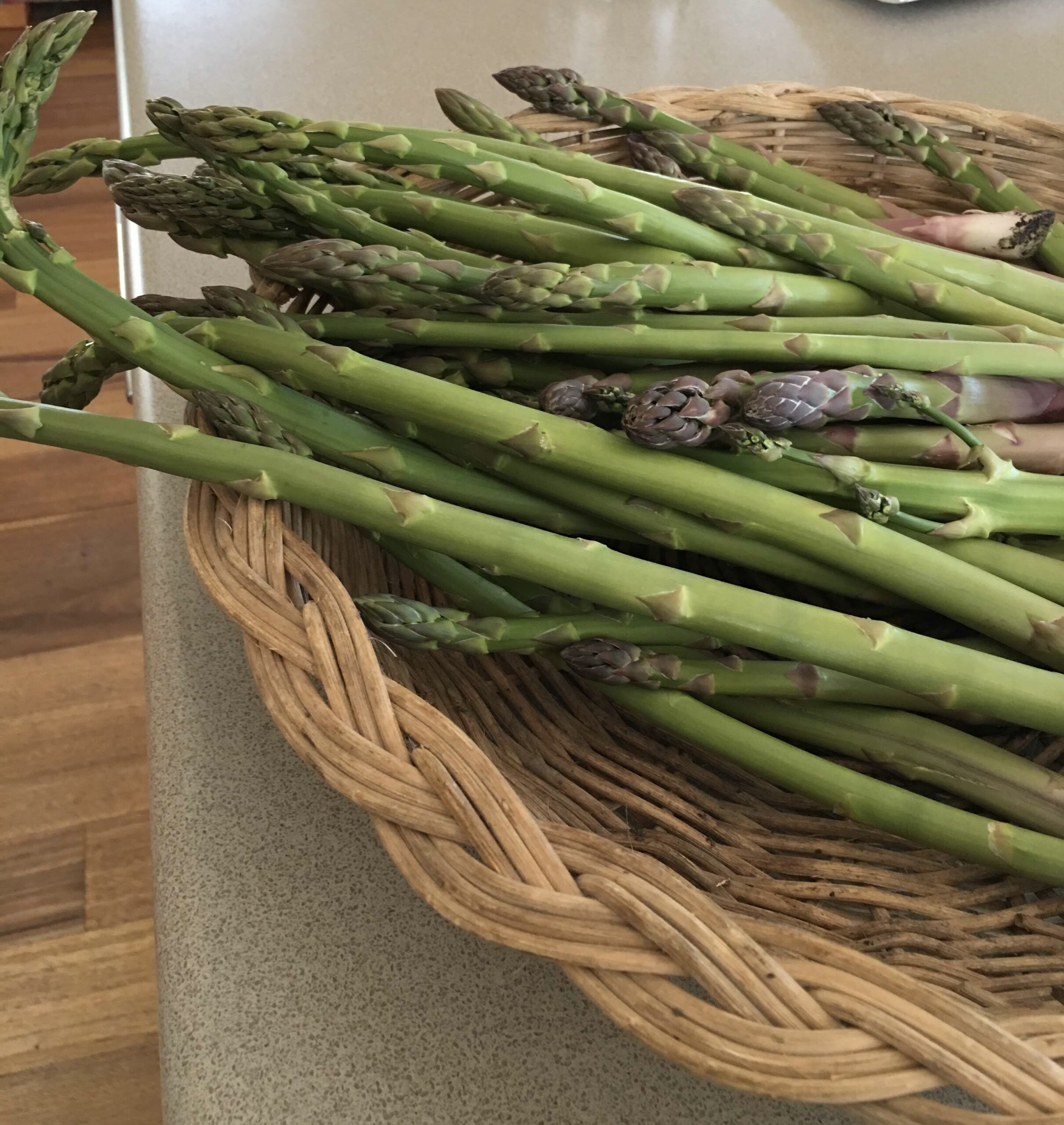
It’s asparagus season again and our dedicated patch is producing a couple of kilos or more a week. It’s like nothing you ever see in the shops. So chunky and flavoursome. We eat most of it steamed, with melted butter, sometimes with fresh herbs mixed through. Or cold with home made mayonnaise.

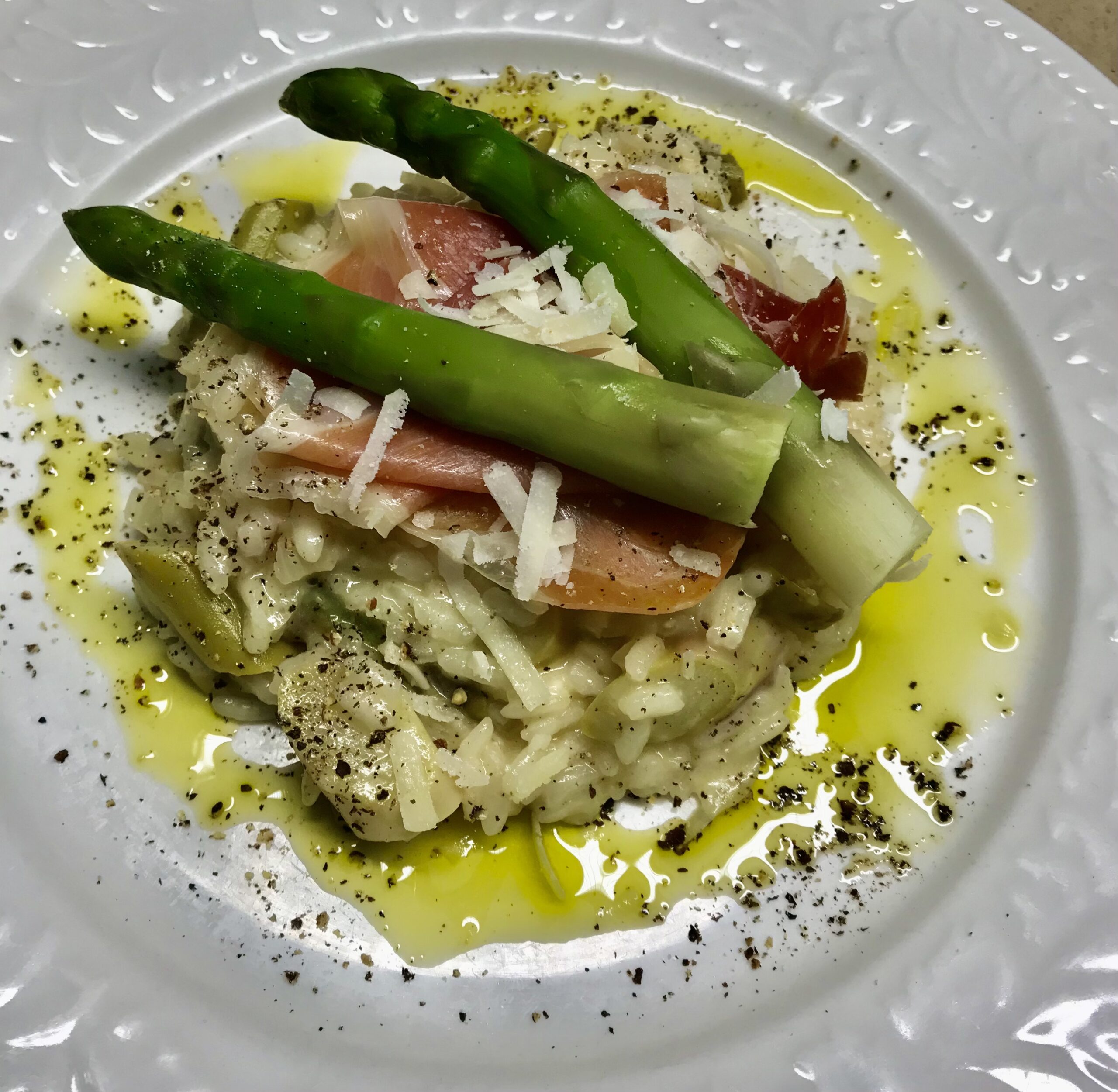
I’m always on the look out for new ways to serve this wonderful vegetable, such as this delicious risotto.

50g butter
1 Tbs olive oil
1 large onion, finely chopped
250ml white wine
2 litres chicken or vegetable stock
A large bunch of asparagus (20-24 stems)
1 cup Arborio rice
Salt and freshly ground black pepper to taste
1 cup grated Parmesan cheese
To garnish:
6 thin slices prosciutto
Extra virgin olive oil (optional)

Place half the butter and oil in a heavy-based pan over low heat. Add the onion and cook very gently for 15 minutes, stirring from time to time, until cooked but not coloured. Meanwhile trim off the tough ends from the asparagus. Choose 12 nice stems and trim them a bit shorter. Blanch them for 3 minutes in boiling salted water then refresh in cold water and dry on paper towels.

Cut the rest of the asparagus into bite sized pieces. When the onion is cooked add the wine, rice and chopped asparagus and cook, stirring, for a couple of minutes. Gradually add the stock, a cup or so at a time, adding more as it’s absorbed into the rice. When the rice is al dente (you may not need all the stock) add half the grated parmesan and the remaining butter and turn off the heat. The risotto should be slightly wet. Season to taste then cover and stand for 5 minutes.

Serve on six individual serving plates and top with remaining parmesan. Garnish each plate with two of the blanched asparagus spears, a slice of prosciutto and, if liked, a drizzle of oil.

Serves 6 as a starter or 3 as a main

Pumpkin and Leek Frittata

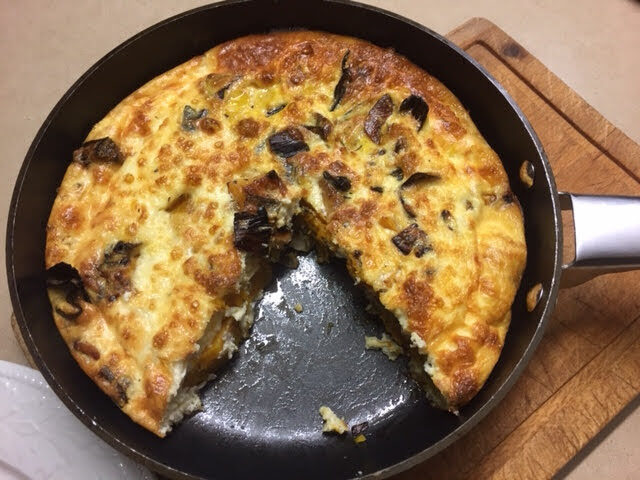
Frittata is a quiche without the pastry. Delicious straight out of the oven and leftovers make a tasty lunch the following day.

1 kg butternut pumpkin, peeled and cut into 2cm cubes
2-3 leeks depending on size, white part only, sliced
6-8 cloves garlic, chopped
1 Tbs fresh chopped thyme
1/3 cup olive oil
Salt and freshly ground black pepper to taste
8 eggs
1½ cups cream
½ cup grated parmesan
1 cup ricotta or cream cheese (optional)
Chopped parsley to garnish

Preheat oven to 220°C. Place pumpkin, leeks, garlic, thyme, oil, salt and pepper in a bowl and mix well. Spread out on a shallow baking tray lined with baking paper. Bake for 25-30 mins or until cooked and starting to brown. Meanwhile whisk eggs, cream and parmesan in a bowl and season.

Tip vegetable mixture into a non-stick frying pan with an oven-proof handle. Choose one measuring about 28cm in diameter. Pour the egg and cream mixture evenly over the vegetables, then if using put blobs of ricotta or cream cheese all over.

Bake for 25 minutes or until puffed and golden. Garnish with parsley.

Serves 4-6

Chargrilled Zucchini with Avocado Hummus

I recently spent a few days in hospital. As I ate the unimaginative, tasteless hospital food I watched the SBS food channel and made notes. This is one of the delicious recipes I wrote down which we had for lunch today. Why can’t hospitals do better?

6 zucchini (about 1kg) halved lengthwise
1 clove garlic, crushed
Finely grated zest and juice 1 lemon
3 Tbs extra virgin olive oil
Salt and freshly ground black pepper, to taste
½ tsp dried chilli flakes
3 Tbs dukkah
Lemon wedges, chopped parsley and olive oil, to serve
Avocado Hummus:
2 ripe avocados
½ cup tahini
1 clove garlic, crushed
Finely grated zest and juice 1 lemon
3 Tbs extra virgin olive oil
Salt and freshly ground black pepper, to taste

For the Hummus, place all ingredients in food processor and process until smooth and creamy, stopping halfway to scrape down the sides. Heat a large chargrill until hot and cook the zucchini halves, without oil, for 3 minutes each side, or until charred and cooked through.

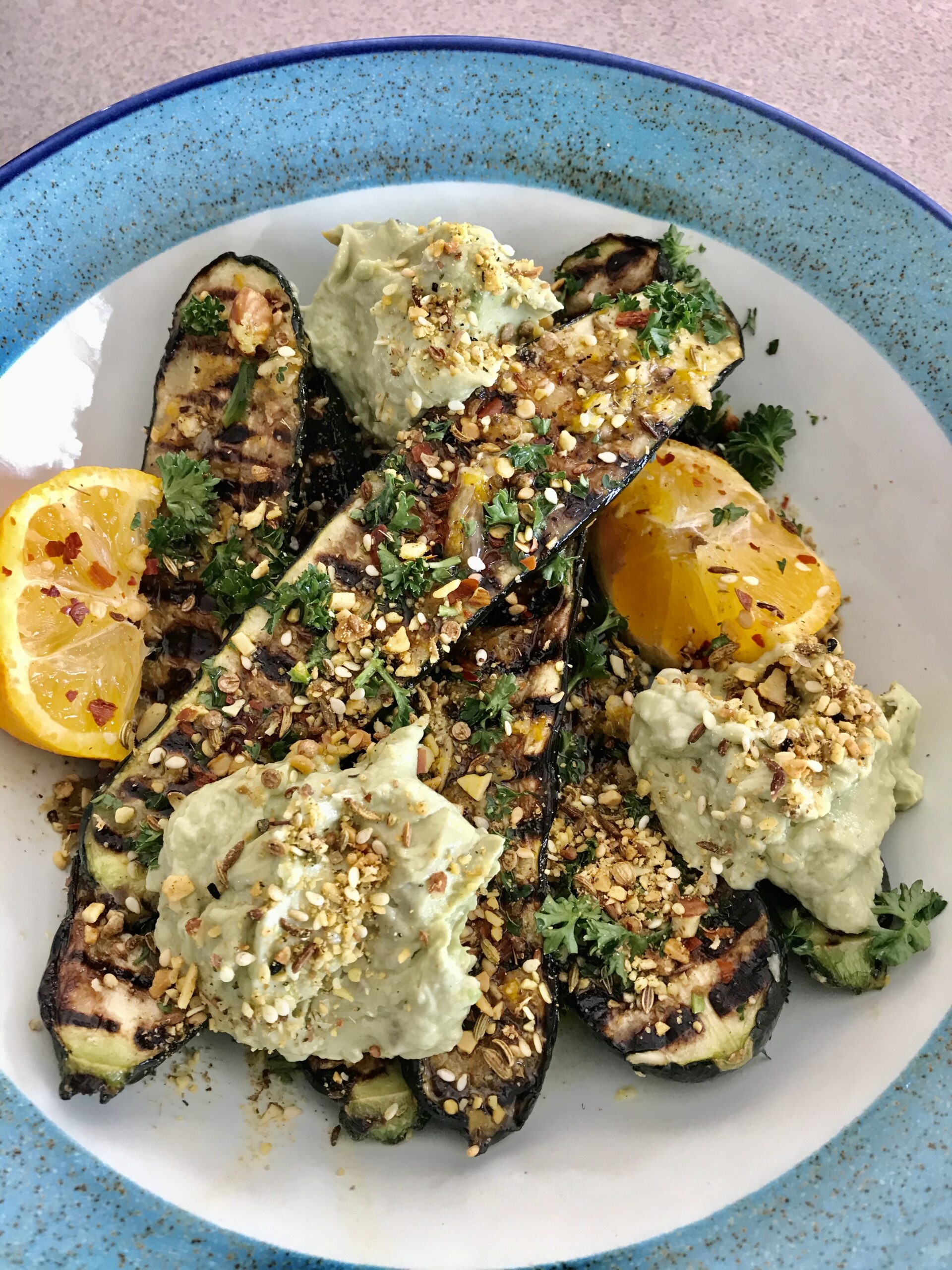
While zucchini is cooking mix garlic, lemon zest and juice, oil and seasoning in a large bowl. Add the cooked zucchini halves and toss gently. Pile onto a serving platter and scatter with the parsley. Finish with dollops of avocado hummus, a sprinkling of dukkah, a drizzle of olive oil and the lemon wedges. If liked make half the recipe which serves 2.

Serves 4

Crushed Carrots with Pistachio Pesto

I adapted this recipe from one by Noor Murad. She uses fresh coriander as the green herb in the pesto. I used mint and am confident that basil would work equally well. You could even use a mixture of fresh herbs. This recipe raises the humble old carrot to amazing heights. Serve as a side dish or as part of a buffet.

Carrots:
1 to 1½ kg carrots, peeled and thickly sliced
½ cup water
2 Tbs olive oil
6 cloves garlic, peeled
½ tsp turmeric
1 tsp cumin seeds
1 tsp ground coriander
¼ tsp chilli flakes
2 Tbs maple syrup
Pesto:
1 cup tightly packed coriander, mint or basil leaves
¾ cup pistachio nuts, lightly toasted
1 clove garlic
About ½ cup olive oil
Salt and pepper to taste
Garnish:
½ red onion, thinly sliced
Juice of 1 lime or half a lemon
¾ cup Greek yoghurt

Preheat oven to 200°C. Place carrots and remaining ingredients in a shallow roasting pan. Mix then roast for 30 mins, or until no liquid remains and carrots are glazed, turning once or twice during cooking time. Tip onto a shallow serving plate and crush the carrots roughly with a  fork.

While carrots are cooking make the garnishes by mixing about half the lemon or lime juice with the red onion and the other half with the yoghurt. Also make the pesto by placing all ingredients except the oil in a food processor. Process until chunky, adding the oil gradually through the feed tube with the motor running and stopping halfway to scrape down the sides. Season to taste.

Drizzle the pesto over the carrots, then put blobs of the yoghurt all over and finally the drained onions.

Serves 4-6 as a side dish

Variations: use pine nuts instead of pistachios, a little Harissa paste instead of chilli flakes, parsnips or sweet potatoes instead of carrots

Roasted Peas with Brown Butter & Garlic

Yotam Ottolenghi has taught me that all vegetables taste better roasted rather than boiled in water, the way our mother’s and grandmothers cooked them. Maybe not yours, but certainly mine. They knew how to roast potatoes, parsnips and pumpkin, but anything green went into boiling water. Roasting Brussels sprouts, asparagus and cauliflower takes them to a whole new level.

This recipe didn’t come from Mr Ottolenghi but from Pinterest, where you can find quite a few versions. I’m not going to give exact quantities. I used less butter than the recipes called for, so I’ll leave it up to you. Don’t be put off by the amount of garlic because the roasting makes it soft and sweet.

I served the peas with salmon topped with a mixture of finely chopped ginger and Thai sweet chilli sauce, baked in the oven on a tray lined with baking paper for for 8-10 minutes at 200°C.

Frozen Peas
Butter
Salt and freshly ground black pepper
Peeled cloves of garlic (about a dozen?)

Preheat oven to 200°C. Place the peas in a sieve and run hot water from the tap over them, drain and put in a bowl. Heat a large knob of butter in a saucepan until it turns golden brown. How much butter is up to you and depends on how many peas you are doing.

Add the butter, garlic cloves and seasoning to the peas. Line a baking tray with baking paper and tip the peas onto it, spreading them out into one layer. Bake for 10-20 minutes, turning once or twice. Time will depend on the size of the peas.

Variations: add some finely diced bacon or frozen corn kernels.

Brussels Sprouts with Black Garlic & Pasta

Black garlic is sweet and pungent. Ottolenghi calls it “licorice meets balsamic meets essence of garlic.” I have heard it called  Poor Man’s Truffles.

Like all vegetables, Brussels sprouts, which our mothers and grandmothers loved to boil to death, are completely transformed by roasting in a hot oven. This is a delicious recipe from Yotam Ottolenghi which I have adapted with the addition of pasta and a couple of tweaks to turn it from a vegetable side dish into a vegetarian main course for four. By the way, I used Orecchiette pasta shapes which look a bit like mushrooms in the photo!

A friend lent us a black garlic-making machine. It looks a bit like a rice cooker and you just put the garlic heads in for 270 hours on a very low heat. We had to banish it to the garage because it was stinking the house out, but now we have plenty of black garlic. You should be able to find black garlic at your local farmer’s market.

500g brussels sprouts, trimmed and halved lengthways
3 Tbs olive oil
Salt and pepper to taste
1 tsp cumin seeds
12 black garlic cloves
2 Tbs fresh thyme leaves or 1 Tbs dried
30g butter
2 Tbs pumpkin seeds
1 Tbs lemon juice
1 Tbs Tahini
250g pasta of your choice, cooked al dente
Sesame seeds, toasted, to garnish

Preheat oven to 200°C and put the water on to boil for the pasta.

Place sprouts in a bowl with 1 Tbs of the oil and salt and pepper to taste. Mix well then spread out in one layer on a baking sheet lined with baking paper. Bake for 10-15 mins until golden brown but still crunchy.

Meanwhile lightly crush the cumin seeds in a pestle and mortar, then place in food processor with the black garlic, thyme and the remaining 2 Tbs of olive oil. Blitz to form a paste.

Cook pasta according to package instructions. In a large wok or frying pan heat the butter until it turns a nutty brown. Add the black garlic paste, sprouts, pumpkin seeds, lemon juice and tahini. Cook, stirring, for 2-3 mins, then add the cooked pasta and a little of the cooking liquid. Check seasoning.

Serve in 4 individual bowls sprinkled with the sesame seeds.

Serves 4