I began collecting recipes when I was at school. Some of the recipes in my large collection have been in my family for generations, others were passed on by friends and chefs around the world. Many have been adapted over the years to make them lighter or update their presentation. I’ve served them to royalty, PMs and other VIPs and there have been no complaints. I hope you are inspired to make some of them.
When we had a house full of kids I made recipes using minced beef all the time. Lasagne, spaghetti bolognese, shepherd’s pie – they are all great ways to feed a family with just half a kilo of mince. Now there’s just the two of us I only buy mince occasionally – otherwise we’d be forever eating leftovers!
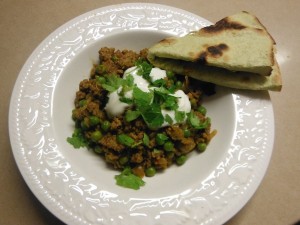
This recipe was posted recently by Jill Dupleix, a well-known food writer in Australia. I love anything with peas so I decided to make it, adjusting the quantities to go with half a kilo of mince rather than the 750g she used.
It’s very quick to make and sure to be a hit with all the family.
1 Tbs oil
1 large onion, chopped
1 large clove garlic, crushed
500g minced lamb or beef
1 Tbs tomato paste
1 Tbs grated ginger
½ tsp each turmeric, coriander
¼ to ½ tsp chilli powder or flakes (optional)
1 tsp garam masala
Two cups water or stock
Salt and freshly ground black pepper to taste
1 tsp sugar
2-3 cups frozen peas To serve:
Chopped fresh coriander
Steamed Rice
Indian bread such as Roti
Plain yoghurt
Heat oil in a large frying pan and cook onion and garlic until soft but not brown. Add meat and cook for 5 mins, breaking it up as you go, until browned. Add remaining ingredients except peas and simmer for 20 mins. Add peas and cook for a further 5-10 mins, or until peas are cooked and Kheema is thick.
Sprinkle with chopped coriander and serve with rice, bread and plain yoghurt on the side. Warm the Indian bread by heating for a minute or so on each side in a dry frying pan over moderate heat.
Serves 4
Variations: use a drained can of beans or chick peas instead of the green peas.
We recently watched a movie called Chef starring Jon Favreau who was also the writer and director.
Favreau plays an amiable chef who works in a high-end restaurant in Los Angeles. The owner of the restaurant – a controlling, nasty piece of work played by Dustin Hoffman – forces the chef to cook dated dishes he doesn’t want to cook and they end up getting a very bad review.
Encouraged by his Cuban ex-wife the chef quits his job and starts a mobile food truck business with a friend, selling Cuban fast food. It’s a huge success, the chef reconnects with his 10 year old son, remarries his gorgeous ex-wife and everyone lives happily ever after.
The toasted sandwiches called “Cubanos” looked so delicious I decided to do some research and make them for Café Cat. They’re pretty high in cholesterol so I wouldn’t recommend eating them every day!
Cubanos were often eaten for lunch by workers in sugar mills and cigar factories in Cuba in the late 1800s. They are now popular in various parts of the United States, especially Miami.
In the movie they made them with Cuban bread, which looked like a wide baguette called a Flute in France. Any roast pork will do, but if you want authentic Cubanos make the Cuban version below.
I once watched Nigella Lawson make toasted sandwiches in a frying pan with a chopping board and a weight on top. I couldn’t help wondering why she didn’t jusr buy a proper sandwich press. They aren’t expensive and allow you to make toasted sandwiches with any kind of bread or wrap.
Cubanos
Baguettes or large bread rolls
Sliced roast pork (see below)
Sliced ham
Sliced Swiss cheese
Sliced dill pickles
Your favourite mustard
Melted butter
Split baguettes lengthwise and cut into sandwich lengths – about 15cm – or split the bread rolls. Heat up a sandwich press until hot. On one side of the sandwich place a layer of ham, a layer of sliced pork, a layer of sliced cheese and then a few sliced pickles. Spread mustard generously on the other half, then stick the sandwich together. Brush both sides with melted butter, place in sandwich press, close lid and cook until the bread is golden brown and cheese is melting. Serve immediately.
Cuban Roast Pork
2-2½ kg pork shoulder roast
4 tsp salt
1 cup lemon, lime or Seville orange juice
1 bay leaf
3 tsp oregano
3 tsp ground cumin
15-20 cloves garlic, depending on size, peeled
Stab meat all over with a sharp knife to make deep holes. In a food processor or blender blend salt, fruit juice, bay leaf, oregano and cumin. Pour over the pork and rub in well, then cover and refrigerate overnight.
Next day remove pork from fridge and let come to room temperature for a good hour. Preheat oven to 140°C, tip off the marinade and reserve. Roast meat, uncovered for 4-5 hours or until well done. Baste often with the reserved marinade and turn occasionally. Remove from the oven and put the pork on a plate or cutting board. Cover loosely with foil and leave to rest. This pork is enough to feed a crowd with Cubanos.
As we were heading off to Europe last year for an extended holiday my friend Karen lent me a few good books.
We thoroughly enjoyed The House at Salvation Creek, a delightful memoir by Susan Duncan, but soon realised that it’s actually a sequel to her first book. So when we got back I borrowed the first one, Salvation Creek, from the local library.
Pittwater, where the narrative takes place, is described by Wikipedia as “a tide-dominated drowned valley estuary 40 km north of Sydney.” Duncan’s descriptions of the native flora and fauna are exceptional. A friend in Denmark to whom I recommended the books said “Susan Duncan brought some warm Australian sunshine into the bleak, grey days of a Danish winter.”
Duncan’s relationship with her ageing mother is something many readers will relate to. And of course I loved all the references to what she was cooking. This is her recipe for Lemon Drizzle Cake. Very easy and a real crowd pleaser.
Zest of 1 large lemon
250g caster sugar
250g butter (at room temp)
4 large eggs
250g SR flour
Pinch salt
1 level tsp baking powder Syrup:
Juice of 1 large lemon
150g sugar
Preheat oven to 160ºC and prepare a round or square cake pan. I used a 22cm (9″) square silicone pan, so there was no need to grease and line the bottom with baking paper, which you need to do with a metal pan.
Place lemon zest and sugar in food processor and blitz for 1-2 mins. Add butter and mix for a minute then add the eggs, sifted flour, baking powder and salt. Mix for 1- 2 mins then stop to scrape down the sides and mix for another minute. Scrape into cake pan, spread out evenly and bake for 30-40 mins or until golden and well risen. Test cake with a toothpick inserted in the middle, which should come out clean, but don’t overcook the cake. Remove from oven and pour over the syrup while hot, using a knife to distribute it evenly. If liked serve garnished with flowers e.g. potato vine as in photo.
Syrup: heat lemon juice and sugar together in a small saucepan to form a syrup.
Serve for afternoon tea or as a dessert with whipped cream and some berries. Duncan suggests mixing some icing sugar and passionfruit pulp into the cream.
Serves 16
Notes: The original recipe says to cook the cake for 30-35 mins but mine took 40. The recipe can be doubled and it makes very good cupcakes. She says it freezes well.
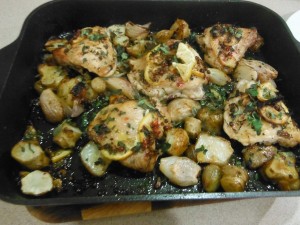
The Jerusalem artichokes from our veggie garden are ready to use, so I went through some cookbooks looking for new ways to use them. This easy and delicious recipe comes from Jerusalem by one of my favourite chefs, Yotam Ottolenghi and his partner Sami Tamimi.
I’ve made a few slight adjustments. The original recipe uses fresh tarragon which I didn’t have, so I used marjoram which grows profusely in our garden and doesn’t get hit so early by the frost. It worked well. If you don’t have any saffron add a couple of teaspoons of turmeric. Ottolenghi says to peel the artichokes but it’s such a fiddly job we just scrub them and trim off any black bits.
If you don’t have Jerusalem artichokes substitute parsnips, pumpkin, sweet potatoes or ordinary potatoes.
500g Jerusalem artichokes
8 chicken thighs, skin-on, trimmed
Juice of 1 lemon
12 garlic cloves, peeled and sliced
12 shallots, peeled & halved lengthwise
1 lemon, halved lengthwise & sliced thinly
1 tsp saffron threads
¼ cup olive oil
¾ cup water
1½ Tbs pink peppercorns (optional – see note)
1 Tbs fresh thyme leaves or 2 tsp dried
2 Tbs fresh marjoram or tarragon, chopped
1 to 2 tsp salt, to taste
Freshly ground black pepper To serve:
Extra chopped herbs
Extra lemon juice
Scrub and trim the artichokes, then cut into even chunks about 2cm thick. Place in a saucepan and cover with water. Bring to the boil and simmer for 10 mins, drain. Place all ingredients in a large mixing bowl and mix well with hands. Cover and leave to marinate for 1-2 hours or overnight.
Preheat oven to 220°C. Tip chicken and marinade into a rectangular roasting tin (mine is non-stick) and spread out evenly. Cover with foil and roast for half an hour. Remove foil, baste chicken with the juices, then roast for a further 15 mins or until cooked and nicely browned.
Serve garnished with some extra chopped fresh herbs and a squeeze of lemon juice.
Serves 4
Note: pink peppercorns are not really peppercorns at all (look them up on Google if you’re interested). You can buy them in specialty shops such as The Essential Ingredient. They go well with smoked salmon, Gravlax, chicken and fish dishes.
Aldi had Tomahawk steaks on special so I bought one. Never having cooked this cut of beef before, I had a look on Google and learnt that it’s the rib-eye or Scotch fillet with the bone left in.
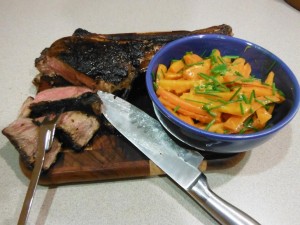
There was a fair amount of fat on the meat so I decided to cook it simply, on a very hot BBQ, in order to render most of it off and crisp up the rest. The result was delicious and very tender.
Whisky-Glazed Carrots – an old recipe from the 1970s – and some good mustard completed the meal. We didn’t feel the need for potatoes or other accoutrements which might have detracted from the simple combination of succulent savoury beef with sweet carrots.
After a week of abstinence, a very good bottle of Padthaway Shiraz we had been saving for a special occasion, or in this case no occasion at all, went down a treat.
1 Tomahawk Steak weighing 1.3-1.5kg
Salt and freshly ground black pepper
500g carrots cut into sticks
Juice and grated rind 2 oranges
1 tsp sugar or honey
2 Tbs whisky
Salt and pepper to taste
1 Tbs butter
Snipped chives To serve: your favourite mustard
Pre-heat BBQ on maximum for 10 minutes until very hot. For medium-rare, cook steak for 7-8 minutes each side, then a further 7-8 minutes each side. In addition, cook for about 5 minutes on the curved long side of the steak – you may need to hold it in place with some tongs while it cooks on this third side. Place on cutting board, cover loosely with foil and rest for 10-15 mins.
Meanwhile cook the carrots. Place in a saucepan with the orange rind and juice, sugar or honey, salt and pepper to taste. Cover and cook for 10 minutes or until almost cooked. Remove lid, add whisky and butter and cook for a few minutes more, shaking pan often, until liquid has been absorbed and carrots are just cooked and slightly glazed. Add chives and serve.
Slice meat downwards, across the grain and serve with mustard and carrots.
I’m what you might call an abstemious cook, thanks to Scottish genes from my paternal grandmother and waste not want not mentality from my mother, who spent the Second World War in Malta with strict rationing.
Throwing away food – unless it’s gone off – is something I can’t bear to do. A few tired looking vegies in the bottom of the fridge? In no time you can convert them into a delicious cream of vegetable soup. My kids tell me they’ve inherited this trait, so they must be strong genes.
On the shelves of a Bed and Breakfast in rural France I once found a very old hand-written recipe book. I copied out lots of recipes, including this delicious soup made entirely from prawn heads and tails. I had always hated throwing out juicy prawn heads and tails and since acquiring this recipe I don’t have to.
Next time you buy some big fat prawns – cooked or raw – save the heads and tails in a bag in the freezer and keep adding to them. For every kilo of prawns you usually end up with about half a kilo of heads and tails. I know there are rules about refreezing things, but if you use very fresh prawns and get them into the freezer ASAP you won’t have a problem. I’ve been doing it for years and I’m still here to tell the tale. If you prefer not to freeze them, you can always make the bisque straight away, but I never seem to have enough prawn heads when I have time to cook. The recipe isn’t all that time-consuming, but it’s not something I would do on a mid-week evening while trying to prepare dinner.
When you have enough in the bag and a quiet weekend make this scrumptious soup. It will keep in the fridge for 2-3 days, or can be frozen for several months. Freeze it without the cream, then add the cream when you thaw and reheat it. Serve it as a soup or as a sauce for scallops, fish, prawns or prawn-filled wontons.
Once when we were living in Chile we had a power cut which lasted two days. The only thing Matthew was worried about was getting the Prawn Bisque across town and into the custody of a friend whose freezer was still working.
This is one of my top ten recipes of all times – just as good as a seafood bisque seved in a top French restaurant – so do try it.
Between 1kg and 2kg prawn heads and tails
125g butter
1 clove garlic, crushed
2 onions, chopped
1 cup flour
2-3 carrots depending on size, chopped
2 sticks celery, chopped
750ml white wine
½ cup brandy
1 cup tomato paste
Water
Salt and freshly ground black pepper to taste
500ml cream To serve:
Cream
Croutons (optional)
Chopped parsley
With a sharp knife or cleaver, cut prawn heads in two. Heat butter in a very large heavy-based saucepan, add prawn heads and tails and cook, stirring, for about 5 minutes. Add onions and garlic and continue to cook, stirring until softened. Add flour and stir for a minute or two until cooked. Add carrots, celery, wine, brandy, tomato paste, salt and pepper and enough water to cover everything.
Simmer covered for between one and one and a half hours, stirring often (especially the bottom so it doesn’t stick), pushing down with a potato masher to help remove all the flavour from the prawns and topping up the water level as it evaporates.
Strain soup through a sieve in batches, pressing down hard on solids then discarding them. To serve, reheat with cream. Adjust seasoning and serve garnished with a swirl of cream, croutons (if using – I didn’t in the photo) and chopped parsley.
Serves 12
Notes:
To make a hearty main course soup, serve in large bowls and add cubes of oven roasted pumpkin, whole cooked prawns, chopped parsley and croutons.
Before adding cream you can freeze this soup in one container. To serve, thaw, reheat with the cream and adjust seasoning.
You can also freeze it in several smaller plastic containers to use as a delicious sauce with home-made seafood ravioli, pan fried white fish or scallops.
This colourful salad is perfect for late summer entertaining, when tomatoes are at their best and you may have some in the garden.
250g baby tomatoes (preferably some red, some yellow)
4 slices Spanish Jamon or Prosciutto
About 16 black olives, stoned if preferred
½ red onion, thinly sliced
Basil and flat leaf parsley to garnish Dressing:
1 Tbs sherry or red wine vinegar
2 Tbs Extra Virgin Olive Oil
1 small clove garlic, crushed
Salt and freshly ground black pepper to taste
Halve tomatoes and arrange on one shallow serving dish or 2 individual plates.
Cut jamon slices into about 4 pieces and arrange in between the tomatoes. Scatter with the olives and onion. Shake dressing ingredients in a jar and drizzle over. Garnish with the torn basil and parsley leaves and serve with crusty bread.
Serves 2 as a starter or 4 as a side dish
Variation: add some cubes of Spanish manchego cheese. Or feta or goat’s cheese.
We all need a few desserts in our repertoire which can be made in a jiffy.
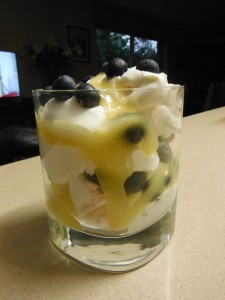
The secret is to have a few basic ingredients on hand. For the Blueberry Parfait, for example, you need some Lemon Curd in the fridge and a packet of bought meringues (which keep for ages) in the pantry. Just add berries and cream to your shopping list, or nip down to the corner shop.
When I served this dessert recently and said “Would anyone like any more?” everyone said “Yes please”, so I had to re-load all the glasses!
In Australia you can buy a whole pavlova in a box and I used chunks of that instead of meringues because it’s softer and more marshmallowy. But either will do.
Blueberry Parfaits – in tall parfait glasses or tumblers place a dollop of whipped cream or thick Greek yoghurt, a dollop of Lemon Curd (preferably home-made), some crumbled meringue, more cream or yoghurt, then a few fresh blueberries. Repeat layers and serve immediately.
Mocha Mousse – dissolve 2 tsp instant coffee in 2 Tbs hot water. Mix into 1 cup Nutella chocolate spread. Whip 1 cup cream in another bowl and fold in. Lightly toast ½ cup skinned hazelnuts or almonds and chop coarsely. Break 8 sponge fingers into 6 to 8 small wine or Martini glasses. Drizzle with some Kahlúa or Bailey’s Irish Cream, top with half the chocolate mixture, half the nuts, then repeat. Dust tops with sieved cocoa. Chill before serving.
Blancmange – mix 6 slightly rounded tablespoons cornflour with 1 Tbs sugar and a little cold milk. Bring 1 litre milk and ½ cup cream to the boil then add the cornflour mixture and 1-2 tsp vanilla essence, stirring till thick. Pour into coffee cups which have been rinsed out with cold water. Refrigerate till set. To serve dip quickly in hot water and tip onto serving plates. Meanwhile thaw half a kilo of frozen raspberries with some sugar (to taste) and serve this compote with the blancmanges with some thick cream.
Mangoes with Ginger Wine – peel and slice 4 mangoes and place in serving dish. Heat ¼ cup Stone’s Ginger Wine with 2 Tbs finely chopped glacé ginger until hot, then pour over mangoes. Chill before serving.
Baked Apples – Use a large biscuit cutter to cut 4 circles from 4 slices of bread. Place in a buttered shallow baking dish, top each circle with a whole unpeeled apple, cored. Mix equal quantities melted butter, dried fruit/nuts and brown sugar – a couple of Tbs of each. Add juice and grated rind of an orange then use mixture to stuff the apples. Bake for an hour at 160ºC, basting often. Serve hot with vanilla ice cream or cream. The bread goes all crunchy and delicious.
Moroccan Fruit Salad – in a small saucepan heat the rind and grated juice of an orange with ¼ cup brandy or rum, ¼ cup honey, ½ cup water and a broken cinnamon stick. Pour over 4-6 cups mixed dried fruit such as sultanas, apricots and sliced figs and leave to macerate for several hours or overnight. Serve with toasted pine nuts and Labneh.
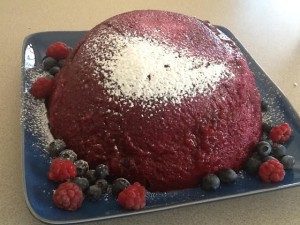
This is an old English recipe which was traditionally made in summer when the red berries are in season. Nowadays you can make it any time of the year with frozen fruit.
I made double the recipe in an 8 cup (two litre) bowl using a 1.5kg bag of mixed frozen berries from Costco. The mix consisted of blueberries, blackberries and raspberries. In England they would also have added a few blackcurrants, but unless you grow them yourself (as we do, but we’ve eaten them all this year!) they’re hard to find in Australia, even in season. It’s hard to say how much bread you will need – I used about two thirds of a loaf. There were just enough raspberries and blueberries in the garden to use as decoration.
750g mixed red berries, thawed if frozen
Sliced homemade-style white bread
100-150g sugar To serve:
Icing sugar
Thick cream or whipped cream
A few fresh berries
Remove crusts from bread and cut to fit bottom and sides of 4 cup pudding bowl. It’s like doing a jig-saw puzzle! Put fruit and sugar in a shallow pan, cover and cook gently for 5-10 mins, shaking occasionally. Cool a bit and adjust sugar.
Using a slotted spoon, half fill basin with fruit, then a layer of bread, fill with remaining fruit and cover with bread. Spoon in enough juice to fill the basin. Use a knife around the edge of the bowl to make sure the juice goes down and colours all the bread. You will probably use it all. Place a small plate and a 1 kg weight on top and stand the bowl in a dish to catch juices. Refrigerate overnight.
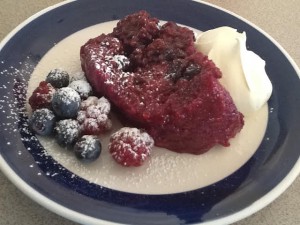
To serve, run a knife with a thin blade around the pudding to loosen it from the bowl. Invert onto a serving plate then shake and it should drop out. Dust with icing sugar and serve with thick cream or whipped cream and a few fresh berries.
On our way back from Europe recently we spent 2 days with our friends Maija and Nestor who live in Turku, on the south western coast of Finland.
Turku was settled in the 13th century, making it the oldest city in Finland. During our brief stay we visited the town, including the museum and the cathedral and spent an afternoon in a motor launch, meandering through the Turku archipelago which consists over over 20,000 islands. Amazing.
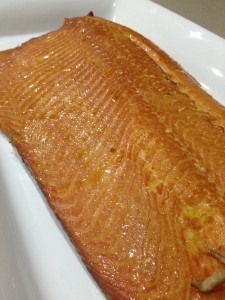
On our last evening Maija served a Finnish speciality: Hot Smoked Salmon with Mushroom Sauce, accompanied by potatoes, green beans and dark bread and butter. Maija used wild mushrooms she had bought at the farmer’s market that morning. I’m not sure what they’re called in English, but any combination of unusual mushrooms would work for this sauce. Any leftover fish and mushroom sauce are nice next day on their own or served with scrambled eggs on toast.
1 fillet of salmon, skin on, pin bones removed (about 1.2kg)
Olive oil Curing mix: 2 Tbs sugar
2 Tbs coarse salt Smoking material: 1 cup Jasmine rice
½ cup Jasmine tea
½ cup brown sugar Mushroom Sauce: 500g mixed mushrooms (shitake, oyster, enokitake) or just ordinary mushrooms will do
50g butter
1 cup cream or sour cream
Salt and freshly ground black pepper, to taste
Mix sugar and salt. Place salmon in a shallow dish and spread the mixture over both sides, then leave to cure for 2-3 hours. Rinse off the salt and sugar mixture, pat fish dry with paper towels, then leave to air dry for an hour or two.
For this recipe you need a kettle BBQ which uses either burners, coals or heat beads. Remove grill plate, give it a good clean then brush it with oil to prevent fish from sticking. Get the BBQ going and while you’re waiting mix the rice, tea and sugar and put it in one of those shallow foil containers you can buy in supermarkets. Place foil container directly on top of the burners and cover the BBQ with the lid. Brush salmon fillet on both sides with olive oil and place it on the clean grill plate. When BBQ has heated to medium heat and you can smell the aroma of the smoking material, place grill plate onto BBQ, shut the lid and let the salmon cook in the smoke for 15 minutes.
Transfer fish to a large plate and set aside to rest. Serve warm or at room temperature with the Mushroom Sauce, boiled new potatoes, green beans and if liked some dark Scandinavian bread and unsalted butter.
Mushroom Sauce: wipe mushrooms, trim and slice or cut into pieces. Don’t cut them too small as the sauce should have some texture. Heat butter in a large frying pan. Add mushrooms and cook gently, stirring often, for 15-20 minutes, or until softened. Add cream and season. Cook, stirring until cream has reduced and thickened a bit. Serve warm.

 1 Tbs oil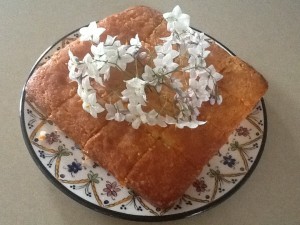
 1 Tomahawk Steak weighing 1.3-1.5kg
 Between 1kg and 2kg prawn heads and tails
 Blueberry Parfaits – in tall parfait glasses or tumblers place a dollop of whipped cream or thick Greek yoghurt, a dollop of
  750g mixed red berries, thawed if frozen
 Using a slotted spoon, half fill basin with fruit, then a layer of bread, fill with remaining fruit and cover with bread. Spoon in enough juice to fill the basin. Use a knife around the edge of the bowl to make sure the juice goes down and colours all the bread. You will probably use it all. Place a small plate and a 1 kg weight on top and stand the bowl in a dish to catch juices. Refrigerate overnight.
 1 fillet of salmon, skin on, pin bones removed (about 1.2kg)