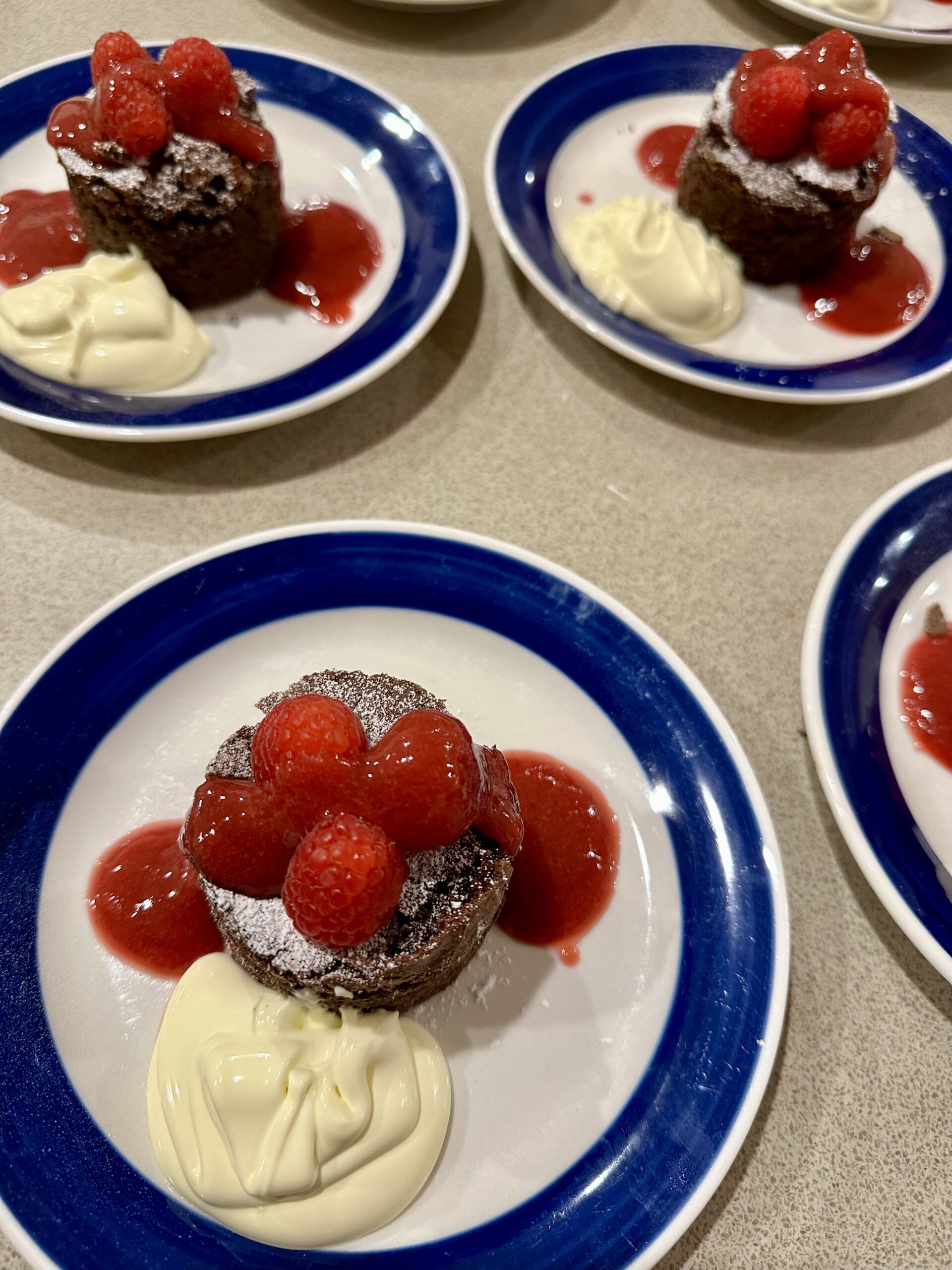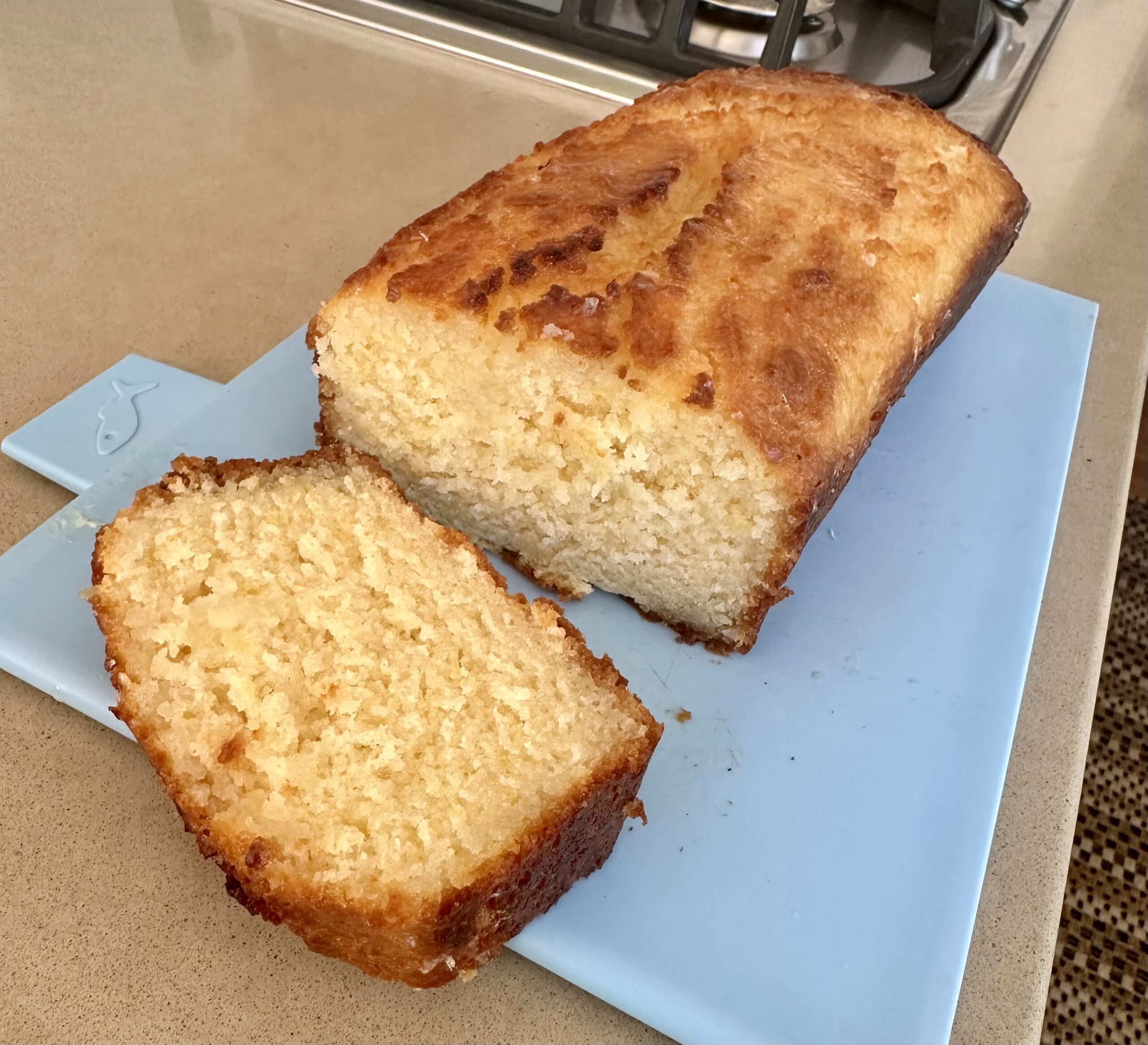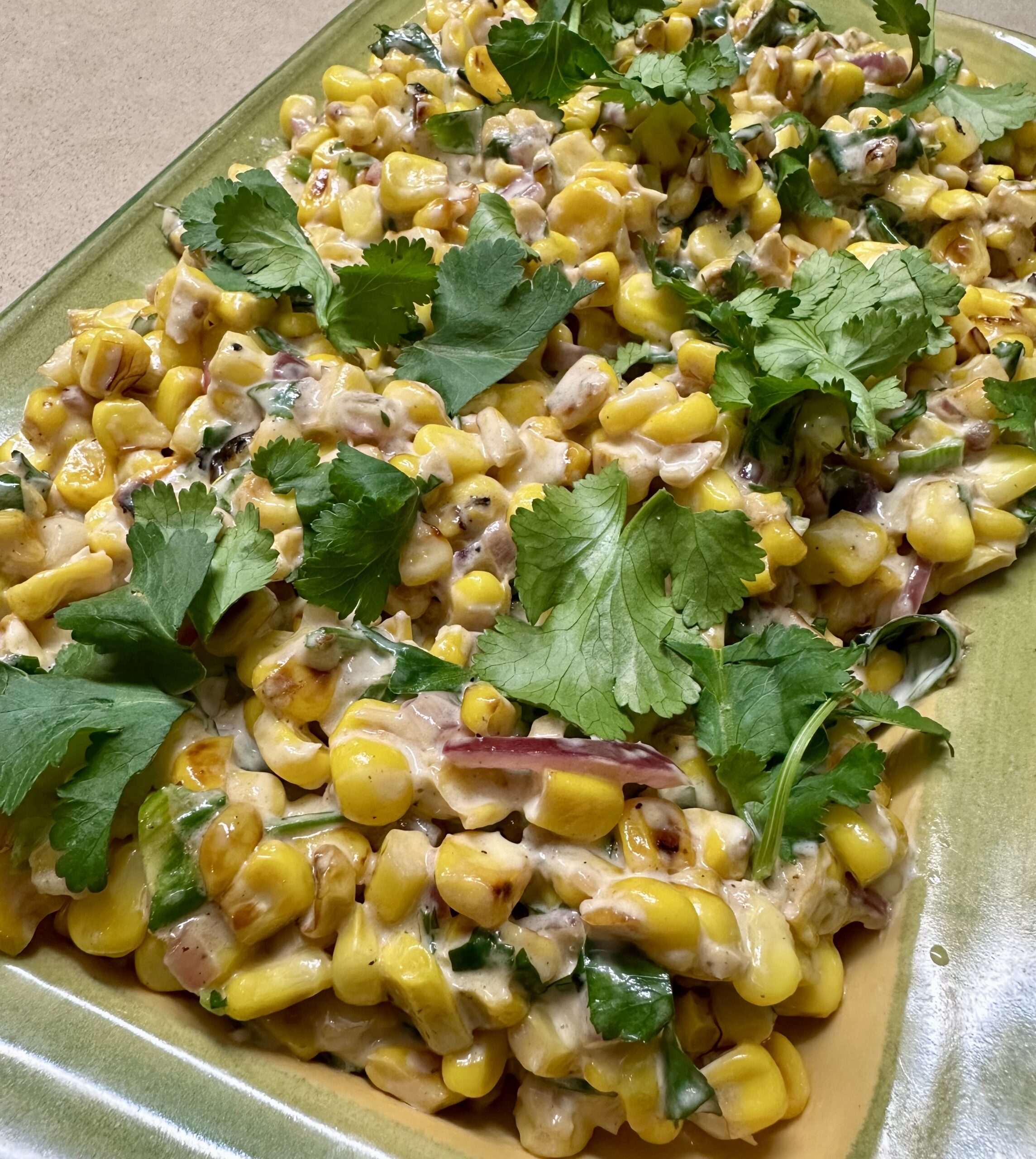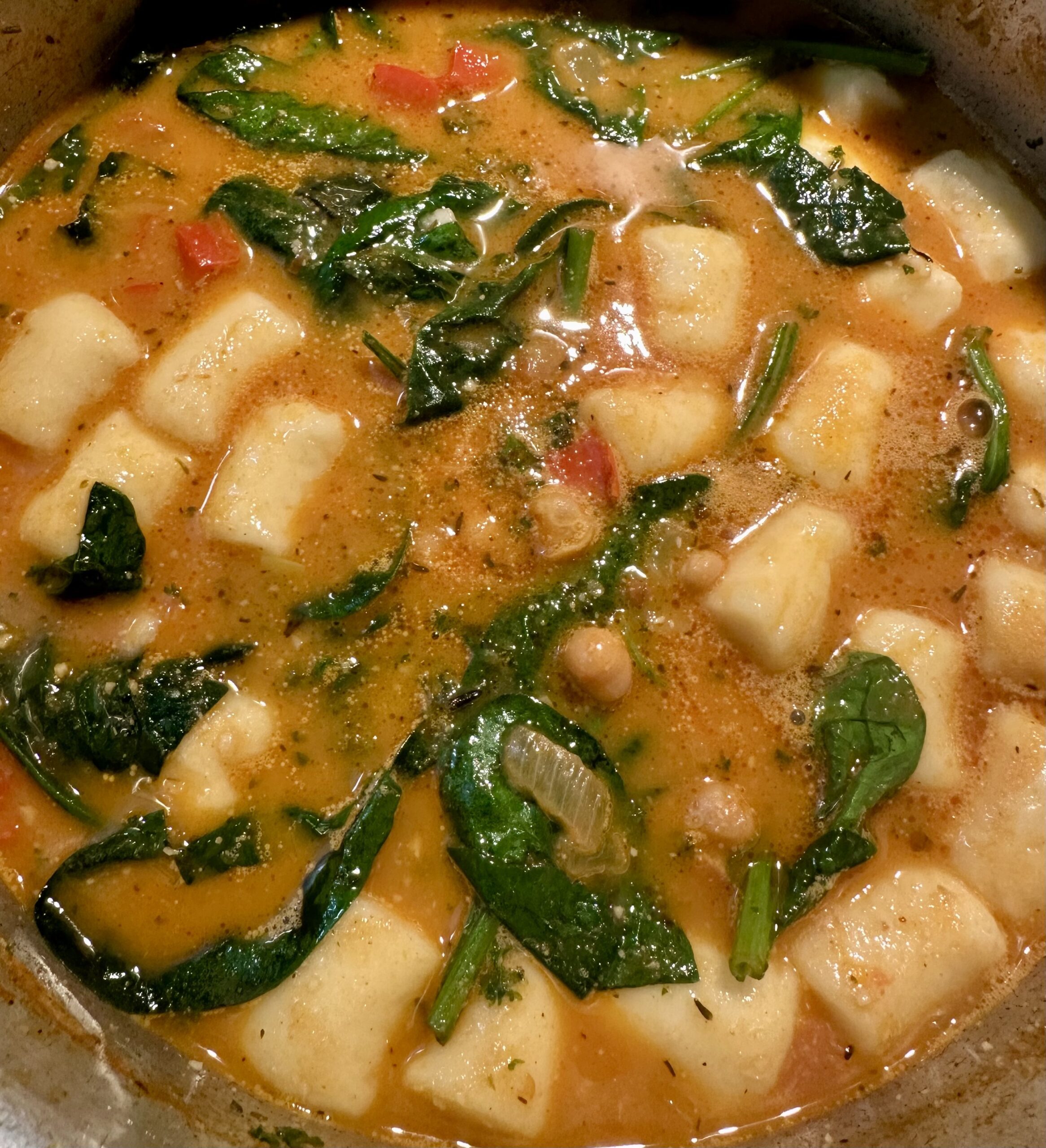
Big Mary’s Mexican Bombe

This recipe was given to me by one of my father’s first cousins from the Hutchinson family who live near Barnard Castle in the north of England. Big Mary was nicknamed to distinguish her from Little Mary, wife of one of her brothers, who was much shorter.

This dessert is one I serve for special occasions when I  need a wow factor. It’s always a winner. If you make it over the holiday season please comment and post a photo.

The longer you leave the Bombe in the fridge after assembling it, the more the meringues will soften into a cake-like consistency.  The recipe does have a lot of sugar in it, but a thin slice with a few unsweetened berries on the side really hits the spot.

4 large egg whites
250g brown sugar
2 tsp instant coffee, dissolved in 1 tsp water
Filling:
125g caster sugar
2 Tbs water
2 Tbs water, extra
125g dark chocolate
600 ml (one pint) thick cream
To finish:
300 ml (half a pint) thick cream, extra
Fresh berries to serve

Line 3 baking sheets with foil or non-stick baking paper and draw a 20 cm diameter circle on each.  Set oven to 120°C.  Whip egg whites until stiff.  Gradually beat in brown sugar and continue beating until sugar has dissolved and meringue is stiff and shiny, then fold in the coffee mixture.

Divide meringue evenly amongst the three baking sheets, spreading it evenly into three 20cm discs of even thickness.  Bake for 1 to 1½ hours or until crisp.  If your oven heats unevenly, swap the tins around halfway through cooking time.  A fan-forced oven helps avoid this.  Turn oven off and leave until cold.

Filling: melt chocolate and cool.  Whip cream until thick and divide in two. Heat sugar and water gently until dissolved. Increase heat and cook, without stirring, swirling pan from time to time, until you have a rich caramel.  Add extra cold water, being careful to protect your arm from the steam.  Swirl the pan to dissolve the caramel, then cool.

Gradually beat the cooled caramel into half the whipped cream. Fold the cooled melted chocolate into the other half.  Peel the paper or foil off the meringues.  Place one on a large flat plate, flat side down, with a couple of blobs of whipped cream on the plate to stop it from sliding around.  Spread evenly with chocolate cream.  Place another meringue on top and spread with caramel cream.  Place remaining meringue on top and gently press down.  Refrigerate for several hours.

An hour or two before guests arrive, whip extra cream and spread around the sides of the bombe, filling in the holes to create a smooth surface and spread the rest on top. Or, as in the photo, just spread cream on top. Decorate with berries. Refrigerate until serving time.  Serve the bombe in thin slices.

Note: instead of making the caramel you can use instead one can or jar or cup of dulce de leche (also known as manjar) or Nestle Caramel Top ‘n Fill and fold that into half the whipped cream for the caramel layer.

Serves 12-16

Festive Dipping Oil

Served with warm crusty bread this recipe is a real crowd pleaser, perfect for the holiday season. And it takes less than ten minutes to make.

Leftovers can be served on grilled salmon or chicken and it also makes a delicious topping for scrambled eggs.  Crispy chill oil, an optional addition, comes in a jar and can be found in most Australian supermarkets. I reckon you’ll be making double the recipe next time.

½ cup extra virgin olive oil
1 Tbs dried cranberries, chopped
1 Tbs dried apricots, chopped
2 Tbs pistachios, chopped
1/3 cup grated parmesan cheese
¼ cup sun-dried tomatoes, chopped
2 cloves garlic, crushed
2 Tbs rosemary leaves, chopped
1 Tbs sage leaves, chopped
1 Tbs crispy chilli oil, or to taste (optional)
Grated rind of 1 orange
1 tsp balsamic vinegar
A good pinch of salt
To serve:
Warm crusty bread such as focaccia (photo shows toasted Turkish bread)

Mix all the ingredients together, then spread out on a shallow serving dish and surround with fresh or toasted bread.

Any leftover will keep for at least a week in the refrigerator in a covered container.


Christmas Cake and Christmas Pudding

Those of you who have been following my blog for years will have seen this post before. For new readers here are my tried and tested Christmas cake and pudding recipes.

They are best made in November or even earlier, so they have time to mature. But don’t worry if you haven’t made yours yet, there’s still time. Anything home-made always tastes so much better than the bought variety. Better late than never.

I usually make them on the same day, so I can weigh out the fruit and nuts into two big bowls, one for each recipe, which saves time. After the initial steaming, the puddings will keep in the fridge for a year or more.

Christmas cakes and puddings make wonderful gifts, especially for elderly people living on their own. The pudding recipe makes 3 or 4, depending on the size, so if you just want to make one large pudding, halve the ingredients. I have several Christmas pudding bowls in various sizes, which I have collected in Op shops.

I’ve been making these old family recipes since I was at school.  The original versions came from my paternal grandmother, Nana Hutchinson who was born in Falkirk, Scotland. They’ve evolved over the years with slight modifications. I now use melted butter instead of the traditional suet in the pudding mixture, but you can use suet if you prefer.  Covering the cake with marzipan and then white royal icing to look like snow was all part of the tradition when I was growing up in England. Most of my family don’t like marzipan and we’re all trying to cut down on sugar, so nowadays I cover the top with nuts instead.

I’ve also started using the “all in one” method for the cake which uses melted butter. When we made Christmas cakes at school, in my Home Economics classes, creaming the butter and sugar with a wooden spoon took forever. The teacher whose name was Mrs Wood came round to inspect and decide whether or not it was time to start adding the eggs. No electric mixers back then, so by the time you got the tick of approval you felt as if your arm was about to drop off. The “all in one” method is so much quicker and works well.

Feel free to substitute – dried apricots instead of the cherries or mixed peel; walnuts, macadamias (shown in the photo) or pecans instead of almonds; whisky instead of rum or brandy. Making little changes will allow you to make the recipe your own, to hand down to your grandchildren. I don’t use glacé cherries any more. Instead I buy dried cherries from a Middle Eastern grocer. They work well and make a delicious snack or addition to salads.

Christmas Cake

Christmas Cake250g butter, melted
250g brown sugar
6 large eggs, beaten with a fork
300g plain flour
2 Tbs black treacle
450g currants
300g sultanas
175g raisins
125g dried cherries
125g slivered almonds
125g mixed peel (optional)
1 orange (zest and juice)
4 Tbs Brandy or dark Rum
2 tsp mixed spice
1 tsp ground nutmeg
75g ground almonds
To decorate the top:
200g whole almonds (blanched) or hazelnuts, shelled, roasted and
skins rubbed off, pecans or macadamias (shown in the photo)

Soak fruit and nuts in brandy or rum overnight, or if you’re in a hurry, for at least an hour. Line a 25cm round or square cake tin with a double layer of baking paper. Place the tin on a baking sheet on which you have placed 4 thicknesses of newspaper. Wrap a band of newspaper or brown paper of the same thickness around the outside of the tin, using a stapler to join the ends. Preheat oven to 150°C. If you have the option to use your oven in conventional mode, without the fan, the results will be better. If you have to use the fan the cake will cook more quickly than without.

Place all the ingredients in a large mixing bowl and mix thoroughly, then spoon into tin and smooth the top. Cover the surface evenly with whole blanched almonds, hazelnuts or macadamias, pressing them in a bit with your hand. Bake for between 1¾ and 2¼ hours on the middle shelf of the oven. Test with a toothpick after an hour and a half.

If the top gets too brown before the middle is ready, place some foil loosely over the top of the cake to stop the nuts from burning.  When it’s ready the top of the cake will have an even colour, feel firm to the touch and a toothpick inserted in the middle will come out clean.

Cool thoroughly then store in an airtight tin in a cool, dark place. If liked, halfway through storage time pierce all over the top with a skewer and drizzle with a little extra brandy or rum which will soak in.

Keeps for several months in a sealed tin. If you live in a warm humid climate keep it in the fridge.

To serve, tie a wide red ribbon around the outside of the cake and decorate the top with some holly leaves and berries – real or plastic!

Christmas Pudding

Christmas Pudding and Brandy Butter125g currants
200g dried figs (remove stalks) or pitted dates
400g sultanas or raisins or a mixture
60g mixed peel (or substitute dried apricots)
60g almonds, blanched or unblanched (or substitute walnuts or macadamias)
60g glacé cherries or dried cherries
2 apples, unpeeled and cored
125g plain flour
1 tsp salt
1 rounded tsp each ground cinnamon, nutmeg & cloves
200g brown sugar
400g brown breadcrumbs
4 eggs
1 orange
4 Tbs Brandy or dark Rum
2 Tbs black treacle
250g melted butter or grated suet
¾ cup beer
1 tsp bicarbonate of soda

Weigh out the fruit and nuts into a large bowl. Make the breadcrumbs in the food processor. Use the food processor to grate or finely chop the apples. Cut orange into four, remove any seeds then process till finely chopped and pulpy. Chop figs or dates and apricots (if using) in the food processor. Roughly chop the nuts.

Add remaining ingredients to the bowl and mix well. Place mixture in lightly greased pudding bowls, filling them to about 2cm below the top. The mixture is enough to make 3 or 4 puddings, depending on size of the bowls, so you might prefer to make half the recipe. Cover with buttered baking paper, butter side down and tie with string. Or cover with foil.

Steam for 4 hours, or until puddings are evenly dark brown all over the top. I use a very large saucepan, place a metal trivet in the bottom to lift the pudding off the bottom, then place one pudding, then an upturned plate on top of that, then the second pudding, then the lid. If you don’t have a pan large enough to do this (needs to be high enough to put the lid on) you will have to use two pans. Add enough water to come about a quarter to half way up the bottom pudding bowl and keep it simmering. Be careful to keep topping up the water, so it doesn’t boil dry. (I speak from experience!)

When cooked allow to cool then cover snugly with aluminium foil and store in a cool, dark cupboard or in warmer climates, in the fridge. To serve, steam again for 2-3 hours. Tip the pudding onto a serving dish. Heat some brandy then set it alight and pour over and bring to the table while still burning. Serve the pudding with thick cream or brandy butter.

Makes 3 or 4 puddings

Brandy Butter

125g unsalted butter, at room temperature
125g icing sugar
½ tsp vanilla essence
2-3 Tbs Brandy
Grated nutmeg

In a small bowl with a wooden spoon, beat butter with the sugar until light and fluffy. Gradually beat in vanilla and brandy. Pile into a small dish and sprinkle with grated nutmeg. Chill well and serve with Christmas pudding or Sago Plum Pudding.

Hobz biz-zejt

This recipe comes from Maltese-Australian chef Mark Mizzi whose restaurant and wedding venue Nanna’s Place has been serving delicious Mediterranean dishes since it opened in South Melbourne in 2018.

Hobz biz-zejt is a traditional Maltese sandwich which translates as bread with oil. But it’s much more than that. Indeed, there are so many ingredients, that when it’s ready to serve it looks more like a “burger with the lot” than a sandwich. For this reason, I haven’t put quantities: it’s basically a question of what you can fit in! An optional extra is to mash a clove of garlic into the olive oil. Sun-dried tomatoes and local cheese are also sometimes added.

Nanna’s bake their own traditional Maltese bread called Ftira, but any fresh bread – preferably sourdough – can be used. Going to Malta on holiday? This satisfying snack can be enjoyed all over the island.

1 large, crusty bread roll (size of a burger bun) or 10-15cm of baguette
Extra virgin olive oil
Tomato paste
Canned tuna, drained
Anchovies in oil drained (optional)
Diced or sliced raw onion
Diced or sliced tomatoes
Chopped parsley
Capers
Sliced pitted olives
A few canned white beans, drained (optional)
Freshly ground black pepper, to taste

Cut the roll or piece of baguette in two, horizontally.  Drizzle both sides with olive oil then spread a thin layer of tomato paste on both halves. Add the remaining ingredients in layers. Drizzle with a bit more olive oil. Place the lid on top, cut the sandwich in two and stick a toothpick with a whole pitted olive in the top of each half, as decoration.

If preferred, divide the filling between the two sides and make open sandwiches. They’re a bit easier to eat.

Serves one

Rice Paper and Nori Crisps with Gravlax

These homemade rice paper and nori two-bite crisps are the perfect way to serve gravlax, smoked salmon or trout. They’re also quite tasty as a snack on their own. Easy peasy to make and so light.

4 sheets rice paper spring roll sheets
4 sheets nori (the ones used to wrap sushi)
Vegetable oil to fry
Gravlax (bought or home made) or smoked salmon or trout
Sour cream
Fresh parsley or coriander

Place rice paper sheets on a kitchen surface. Spray all over with water then lay a sheet of nori on top of each one so they stick together. Use scissors to cut each one into four. Heat 2-3cm oil in a small frying pan. Fry each square of rice paper/nori in the oil, rice paper side down and turning to cook the other side. They will cook in just a few seconds. Remove and drain on paper towels. If serving the crisps on their own, you might like to sprinkle them with some sea salt at this stage.

Cut gravlax or smoked salmon or trout into small pieces and arrange on the crisps. Top with a blob of sour cream and some parsley or coriander to garnish.


Makes 16

Crunchy Granola

Are you a cereal or a toast person? Or perhaps you have both for breakfast.

I’ve always been a cereal person and like to eat a combination of fresh fruit and plain, Greek yoghurt. topped with some crunchy granola, Lately I’ve also been adding a dollop of chia seeds, soaked overnight in milk.

Unfortunately, the granola you buy in the supermarket is mostly made up of oats and far too sweet. The ones that contain more interesting ingredients and less sugar tend to be quite expensive.

For the past few years I’ve been making my own granola and it’s so easy. You basically mix all the dry ingredients with some olive oil and a sweetener, such as honey or maple syrup, spread it out on a couple of baking trays lined with paper and bake for 30-45 minutes. Once you’ve made a batch you’ll wonder why it took you so long to do so.

The two big pluses with making your own is that you can use only ingredients you like and add as much sweetener as you want. Or leave the sweetener out altogether. And definitely no salt.

The quantities in this recipe are flexible and there’s no need for accurate measuring. Start with the oats, then add whatever you have on hand. Feel free to leave out anything you haven’t got – maybe put it on your shopping list so you have it for next time – or to add something different.  Matthew doesn’t like coconut, but as he’s a toast or hot porridge person I usually put it in anyway!

After a week or so, the slight moisture from the dried fruit can make the granola lose its crunch. To avoid this, keep your dried fruit mixture separately and add it to your bowl each morning. Or leave the dried fruit out altogether. The photo shows the muesli before adding the dried fruit.

If there’s only one person in your house who eats granola for breakfast, you might prefer to make half the recipe.

4 cups rolled oats
½ cup almond meal or ground flaxseeds (also called linseeds)
½ cup pumpkin seeds
½ cup sunflower seeds
1-2 cups roughly chopped nuts (I used almonds, pecans & walnuts)
½ cup shredded coconut
3 Tbs chia seeds
3 Tbs sesame seeds
3-4 Tbs olive oil (or vegetable oil if preferred)
3-4 Tbs runny honey or maple syrup (adjust to suit your taste)
Dried fruit:
2-3 cups sultanas, cranberries, dried cherries, goji berries (optional)

Preheat oven to 160°C. Line two baking sheets with baking paper. For half the recipe you will only need one.

Place all ingredients, except the dried fruit, in a large bowl. Heat the olive oil and honey or maple syrup in a small saucepan until dissolved then mix in.

Spread the granola evenly onto the baking trays and bake for 20-30 minutes. During the baking time remove the trays from the oven every 10 minutes or so and stir the granola, moving the outer edges into the middle, so it cooks evenly. When the granola is golden brown and evenly cooked remove it from the oven and cool thoroughly.

Don’t overcook or the nuts will be bitter. Mix in the dried fruit (if using) and store in a large container in the pantry. Or mix the dried fruit and store in a separate contaienr.

Makes about 8 cups

Optional additions: vanilla essence, ground cinnamon, ground cardamom


Roast Pumpkin with Miso & Ginger

Miso is a traditional Japanese seasoning.

Miso paste is produced by mixing fermented soybeans with salt and a fungus called Koji. Sometimes rice, parsley, seaweed or other ingredients are added. It can be used in sauces, dips, soups and other dishes to produce a rich “umami” intensity of flavour.

Miso paste is usually salty, but its flavour and aroma depend on the ingredients and fermentation process. It comes in either white or red, with the latter having a slightly stronger flavour. Use whichever one you have or can find in your local supermarket or Asian grocery store. Once opened it keeps for ages in the fridge.

Today’s recipe was inspired by a dish we were served at Raku restaurant in Canberra.

1 kg pumpkin
2 Tbs olive oil
Miso sauce:
¼ cup Miso paste
1 Tbs grated ginger
1 Tbs sesame oil
1 Tbs runny honey
1 Tbs water
2 tsp rice vinegar (or any other vinegar)
1 tsp chilli paste or sauce
To garnish:
1 Tbs sesame seeds, lightly toasted
Fresh coriander leaves

Preheat oven to 180°C. Leave skin on the pumpkin, remove seeds and cut into wedges about 2cm thick. Place on a baking tray lined with baking paper, in a single layer. Brush pumpkin with the olive oil. Bake for 15 minutes then remove from the oven, turn pumpkin wedges over and brush them with the remaining olive oil. Return to the oven for 10 minutes.

Meanwhile mix all ingredients for the Miso sauce in a food processor. Spoon over the pumpkin. Return to the oven for 10 minutes, or until starting to brown. It might need 15 mins. Turn the wedges over and coat them with remaining Miso sauce. Cook for a further 10-15 minutes or until nicely glazed as in the photo.

Garnish with sesame seeds and coriander. Serve hot or at room temperature either alone or with steamed rice, or as a side dish with salmon, chicken or beef.

Serves 4-6


Shakshuka

Shakshuka originated in north Africa and is now popular all over the Middle East.

Serve with toasted sourdough or Turkish bread for brunch, lunch or Sunday evening supper. You probably have all the ingredients in the pantry. We had to nip out to buy one red capsicum from the corner shop.

2 Tbs olive oil
1 red capsicum (pepper)
1 onion
2 Tbs harissa, or to taste
1 tsp chilli paste, or to taste
1 x 400g can chopped tomatoes
4 eggs
1 tsp sugar
Salt and freshly ground black pepper to taste
To serve:
4 Tbs thick Greek yoghurt
1 Tbs chopped fresh coriander

Thinly slice the capsicum and onion. Heat olive oil in a medium-sized deep non-stick frying pan and cook the capsicum and onion over medium to high heat for 5-10 minutes, or until soft and starting to caramelise. Add harissa and chilli paste to taste and cook, stirring for one minute. Add the tomatoes and sugar and cook over medium heat until the tomatoes are reduced by half, stirring often.

Season to taste, turn heat down to a simmer, then make four indents in the mixture and break an egg into each. Cover with a lid and cook for 5 minutes, or until the eggs are cooked to your liking. Test by pressing with your finger.

Garnish with dollops of yoghurt and the coriander. Serve with toasted sourdough or Turkish bread.

Serves 4 as a snack, 2 as a meal


Japanese Salad with Sushi Flavours

This salad combines all the flavours we love in Japanese sushis and it’s delicious.

Serve it on steamed rice for a quick poke bowl, or on a bed of shredded iceberg lettuce, lightly dressed with Kewpie toasted sesame dressing, which you can find in most Australian supermarkets. Or use the salad as a filling for sandwiches or wraps. Or just eat it as it is for a high protein, low carbs light meal.

2 cooked chicken breasts, cut into strips or chunks (buy a rotisserie chicken from the supermarket for ease) or 300g cooked prawn meat, coarsely chopped
1 large ripe avocado, cubed
2 Tbs lemon or lime juice
1 Tbs Kewpie mayonnaise* (or ordinary mayonnaise)
1 Tbs Thai sweet chilli sauce
2 tsp sesame seeds (preferably black)*
1 tsp soy sauce
1 Tbs pickled ginger, chopped*
1 Tbs Asian crispy shallots*
Salt to taste
2 spring onions, thinly sliced on the diagonal
1 Lebanese cucumber, quartered lengthwise then cut into small cubes
1 clove garlic, crushed
To garnish:
A handful of fresh coriander, roughly chopped
1 sheet nori cut into strips, then into small julienne pieces*

Place all ingredients for salad in a large bowl and mix well.

Serve garnished with the coriander and nori pieces. Serve alone, or on steamed rice or in wraps or sandwiches.

Serves 4 on rice or in wraps or 2 on its own

*if you can’t find black sesame seeds, Asian crispy shallots, pickled ginger, Kewpie mayonnaise and nori seaweed sheets in the Asian section of your supermarket, go to an Asian grocery store

Lamb with Spicy Labneh and Carrot Salad

This recipe was inspired by a dish I was served at the annual lunch of the International Women’s Club which was held at the Marion restaurant in Canberra in late August.

There were 180 women seated at tables for 10 and the food and service were both excellent. The main course was an alternate serve, where half had salmon with baked Jerusalem artichokes and half had sliced lamb rump on a bed of spicy labneh, with a shredded carrot salad.

This is my interpretation, but I have used lamb cutlets instead of rump. The carrot salad is delicious on it’s own or as a filler for sandwiches or wraps, or as part of a buffet.

2 cups thick Greek-style plain yoghurt
2 tsp harissa paste (or to taste)
8 lamb cutlets, trimmed
Salt and freshly ground black pepper, to taste
Paprika
Carrot Salad:
500g carrots, cut into thin julienne or very coarsely grated
1/3 cup dried currants
1/3 cup toasted pine nuts
Juice of half a lemon
1 tsp Dijon mustard
1/2 tsp each cinnamon, cumin and paprika
2 tsp honey (or more to taste)
1/4 cup olive oil
Salt and freshly ground black pepper, to taste
To garnish:
Chopped parsley or another green herb
Balsamic Glaze (optional)

To make Labneh, strain yoghurt for a few hours or overnight in a sieve lined with muslin or a man’s handkerchief, in the fridge. Discard the liquid and mix in the harissa.

Place currants in a small bowl and add just enough warm water to cover. Leave to plump up for half an hour.

Place all ingredients for the carrot salad in a frying pan, including the currants and water, and stir fry for 2-3 minutes or until the dressing has thickened a bit. The carrots should remain fairly crunchy. Meanwhile season the cutlets with salt, pepper and paprika and cook them on a hot griddle, barbecue or in an air fryer, until they are cooked the way you like them – about 3-4 minutes each side.

Divide the labneh between 4 serving places and spread into a circle. Top with some carrot salad (you will probably have leftovers) and two cutlets per person. Garnish with chopped parsley and, if liked, a drizzle of balsamic glaze around the edge of the plate.

Serves 4

Variations: if you don’t have harissa paste, any chilli paste will do.